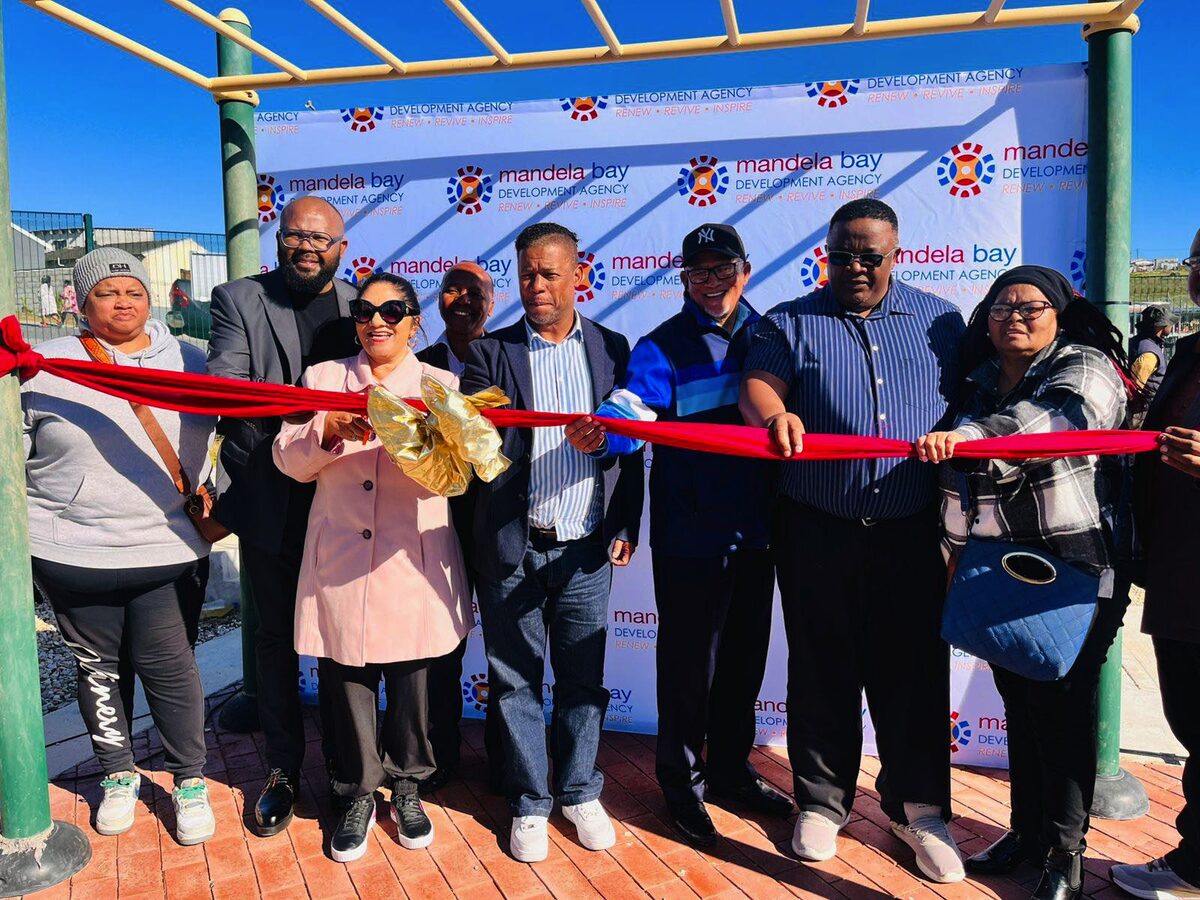


THE New Brighton Singapi Street environmental upgrade, a project by the Mandela Bay Development Agency (MBDA), recently won an award commendation from the South African Institute of Architects.
The acclamation rewards excellence in architecture – recognising the vital contribution to the urban rejuvenation of Singapi Street.
Singapi Street is a major thoroughfare in Red Location in New Brighton, an area with a rich history, dating back more than a century and is a gateway to the celebrated Red Location Cultural Precinct.
The environmental upgrade of the street was a key connector for creating a continuity in the inner city and the Red Location Museum.
The project which commenced in 2013 (and concluded in 2018) is a ‘model’ community heritage urban conservation project, extending from the southernmost end of Olaf Palme Street to Ferguson Road.
The design was informed by generators of local importance such as pedestrian safety, youth education, storytelling, general maintenance and service delivery.
According to the MBDA’s project manager and urban designer, Dorelle Sapere, urban planning throughout the Nelson Mandela Bay has become much more integrated in the MBDA’s scope, adding to the built environment, economic and social policies.
“The upgrades have seen several parks being established, benches made through the public art process, storm drainage improved, trees planted, and sidewalks paved,” Sapere said.
Rich in arts and culture, heritage and history, the area attracts diverse users and creates a space where people can actively play and interact alongside their family, friends and community. It showcases bespoke accessible play elements that incorporate and celebrate the surrounding environment.
Stakeholder participation was a precondition to the successful implementation of the project. The participation process allowed patrons to influence and share control over the development initiatives and resources which affect them.
Debbie Wintermeyer, of The Workplace Agency, said, “As part of driving an all-inclusive method, we understood that the end-user would form an integral part of the discussions.
“The aim was to empower residents of New Brighton by ensuring that skills are developed and that employment opportunities are created within the area.”
The impact of the upgraded spaces has provided intrinsic environmental, aesthetic and recreational benefits for the area.
The upgrades have had positive economic benefits – enhancing property values and serving as a tourist attraction.