
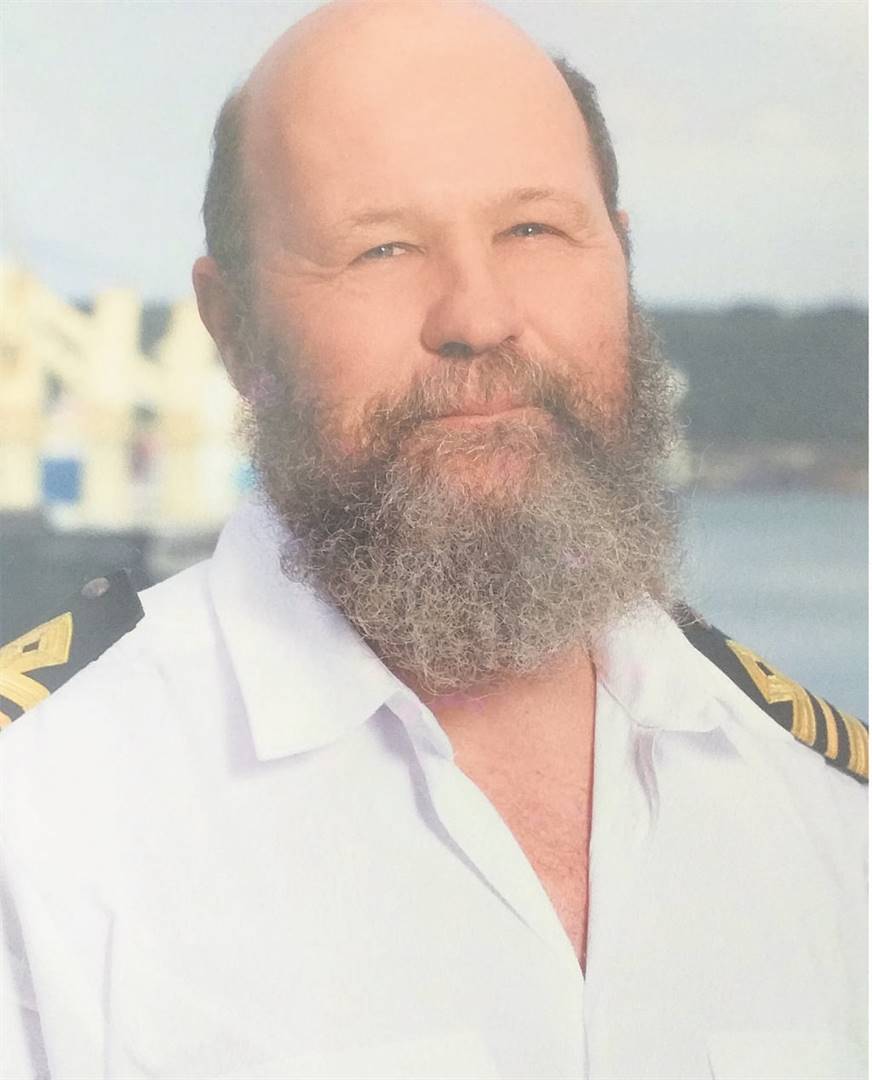
IT is a rare skill for a person to manoeuvre gigantic ships to safely enter, exit and move inside ports, but for this marine pilot, it is basically child’s play after he recently reached a record of more than 4 000 ship movements in the last 12 years.
Siegfried “Ziggy” Duwe (62), stationed at the Transnet National Ports Authority (TNPA’s) Port of Ngqura, is the first pilot in Nelson Mandela Bay to have accomplished this, according to company records.
“I regard this achievement as significant as we don’t have the high volumes of the ports of Durban and Cape Town in the Nelson Mandela Bay ports.
“I guess the sea is in my veins. I really enjoy piloting. I am grateful for good health and a measure of fitness.
“You need this, especially if the ship’s lift is not working you have to climb the equivalent of 13 stories on some ships!”
When asked exactly what his job entails, Ziggy explained that his responsibility is to navigate ships safely in and out of the port. He is the master of the harbour tug when it travels to East London and back for dry docking. He also mentors understudy pilots.
“Port Control, in conjunction with other role players, compiles a daily schedule of ship movements. For docking, I will board the pilot boat, which will take me to the approaching vessel. Once the pilot boat comes parallel with the moving ship, I climb aboard using the pilot ladder provided by the vessel.
“The captain of the vessel and I will exchange information, after which I assume command and give instructions regarding the vessel’s engines, bow-thruster and rudder. I communicate with and give instructions to the harbour tugs about and during the movement,” Ziggy explained.
“Likewise, the berthing master will relay instructions regarding the receiving of the vessel’s mooring lines.
“I will then manoeuvre the vessel until it is safely alongside the designated position, hand the vessel back to the captain and return to the office to complete the paperwork.
“I also do the reverse when the vessel has to leave the port. Sometimes we have to move vessels to different berths within the harbour.”
This former pastor, who was raised in Vereeniging and Middelburg in Mpumalanga, obtained a Class I (Master Certificate of Competency) and a Diploma in Theology whilst working as a deck cadet at SafMarine after high school.
He also worked as a marine surveyor before he joined the Port of PE in 2007 as a tug master trainee. He completed his open licence in 2009, the year that shipping commenced in the Port of Ngqura and worked for both ports until the Port of Ngqura received its own tugs.
Ziggy elaborated on challenges he had faced since 2008 as he moved 10% of the vessels in the Port of PE and 90% in the Port of Ngqura. “Each movement is unique regarding vessel size and weather conditions. Sometimes there are issues with tugs; some vessels don’t have English speaking officers and some don’t follow the pilot’s instructions. If unchecked, this can negatively impact a movement,” he said.
The challenges that Ziggy has overcome have become the highlights of his career. These include sailing two ships in a 68-knot wind and one in a 72-knot wind in the windy city of Port Elizabeth.
“The latter was breaking away from the quayside and I had to stay on board the vessel for eight hours before I could disembark. Another highlight was when we had to salvage a ship with engine problems off Mbashe during one of the tug trips from East London about three years ago. We eventually had to tow the vessel to East London. I had to manoeuvre several ‘dead ships’ with engine problems into the harbour.”
Harbour Master of the Port of Ngqura, Captain Thulani Dubeko, said that Ziggy’s customer focus, pride and willingness to go the extra mile, have contributed to his success. “His piloting service is based on professionalism and centred on fulfilling the customers’ needs. Our pilots are true ambassadors for our country as they are the first and last people to see the ships’ crew,” Dubeko said.
Ziggy’s advice to newcomers is straightforward.
“When I was at sea, many of my colleagues didn’t last long, as they did not realise the type of dedication required. We work any hour of the day or night, in all weather conditions.
“Go out to sea on a yacht or fishing trip in rough seas to see if you can manage. There is no shortcut of moving quickly through the ranks to be in an office without the rigours of sea life.”