
Nelson Mandela Bay may have a potential environmental and health crisis on its hands with certain manganese ore companies in the Markman Industrial Area allegedly being non-compliant when it comes to the storing and transporting of the substance.
When manganese ore is left uncovered, the dust it creates is hazardous, if people are exposed to it for a long time, it may lead to eventual kidney and liver diseases, anaemia and even brain damage.
Added to that, since manganese ore is an extremely heavy substance, the approximately 1 000 trucks transporting the substance from the storage warehouses to the harbour and back multiple times a day, are allegedly causing damage to the roads and stormwater infrastructure in this area.
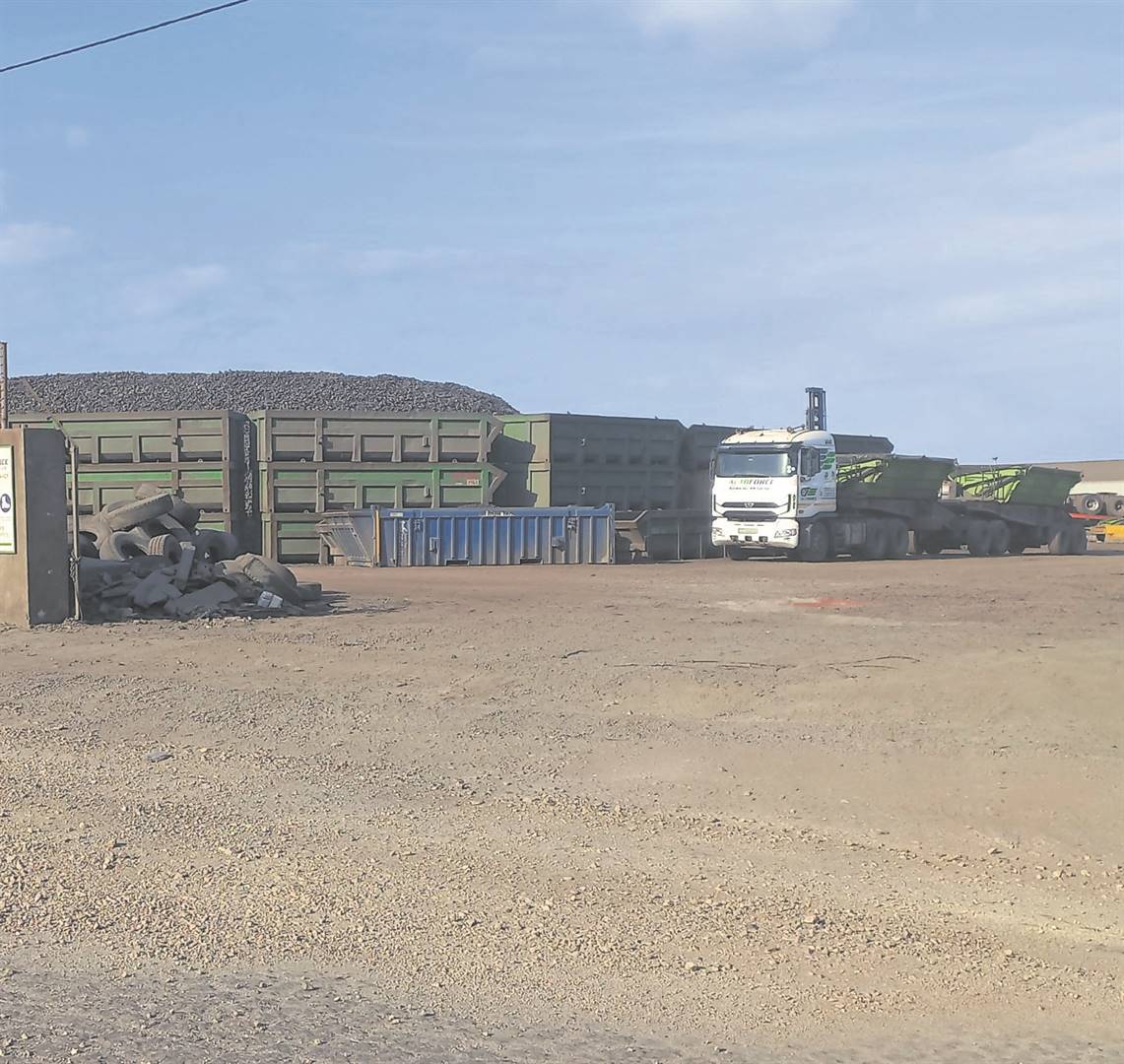
During a recent inspection of the area, DA spokesperson for economic development, tourism and agriculture, Kobus Botha, said that unregulated bulk storage of the manganese ore is taking place in Markman and that, due to the toxicity of manganese dust, it should be covered when stored and transported, something that is currently not happening.
“There are unregulated storage facilities here. Some are compliant but others are not. When the trucks load the manganese, most of the time they are not covered and mostly overloaded too.”
Botha added that the increased traffic of the trucks carrying a massive load causes severe damage to and potholes in the roads.
The kerbs and pavements are breaking into pieces and manganese particles are flying everywhere.
“There are schools and residential areas here. Every truck transporting the uncovered manganese disperses dust into the air and everyone is breathing it in. It’s toxic. The dust goes into the stormwater pipes and into the Swartkops River,” he added.

During PE Express’s visit to the area, a cloud of dust, reportedly manganese dust, hung low over the whole area. Employees at the nearest petrol station walked around with masks and said that they do so to prevent them from inhaling the toxic dust.
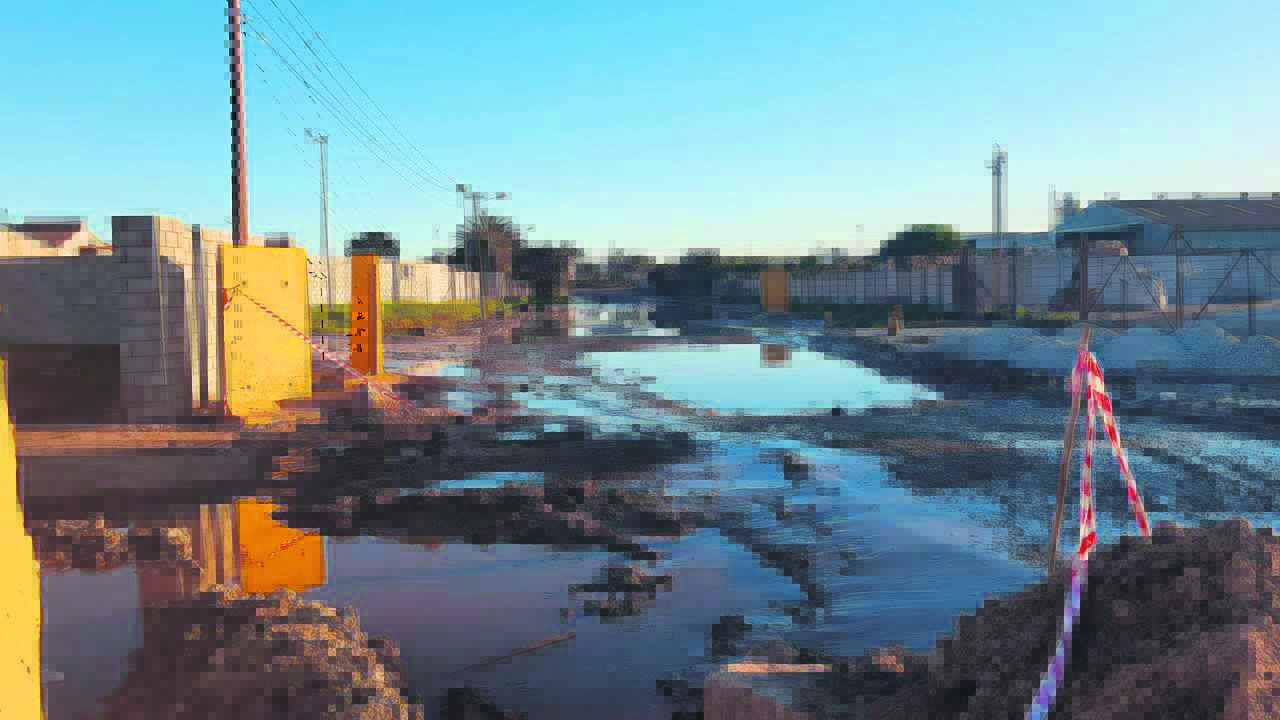
There were also several premises where uncovered manganese was stocked in massive piles. The roads are badly damaged, making it very difficult for a small vehicle to drive there and several drains were blocked, with pavements damaged.
The environmental risks of manganese ore in the area have also been confirmed by the Algoa Bay Conservation’s Ronelle Friend, in an official report compiled on Markman Industrial Area.
According to Friend, since this issue has started affecting other businesses in the area, including Algoa Cement Industries (ACI) situated in Chrysler Street, Enviro-Quest was commissioned by this company to assess the manganese contamination. Their findings included that Chrysler Street is a cul-de-sac, meaning that all traffic entering must also leave. They have done vehicle counts which prove that more than 1 000 heavy manganese trucks can pass ACI in a 24-hour period.
“The manganese industry operates 24 hours a day, seven days a week. The roads and stormwater systems were never designed or built for this level of traffic. This has resulted in severe traffic contraventions, negative impacts on the environment and health and safety risks. The deterioration of buildings, roads, stormwater systems and the illegal storage of manganese outside covered buildings is plain for all to see,” Friend said.
Owner of ACI, which is situated right across the road from a few of the warehouses housing manganese, Chris Collett, said that the warehouses were initially intended to be storage facilities for a dairy but during the national lockdown that started in 2020, the manganese companies took over the facilities.
“We came back from lockdown and here they were. Trucks drive in and out countless times a day and this road was not made for those heavy vehicles; hence the damage,” he said, pointing to the muddy sludge that once used to be the street.
According to Collett, the trucks have damaged the roads and drains, leading to the drains being blocked and water and mud mixing everywhere. During PE Express’s visit to this site, Collett’s voice could hardly be heard over the deafening noise of a construction vehicle trying to scrape the mud away.
“The municipality has been so inactive and there is zero law enforcement. They (the warehouses) were shut down for a few days but just reopened again,” he added.
He also mentioned that it is affecting their business since clients are not keen on entering the area anymore and a layer of dust now covers their products.
“The ACI acknowledges and appreciates the business that the manganese industry creates in the metro but there is legislation that should be applied,” he added.
Numerous queries were sent to the Nelson Mandela Bay Municipality for comment.
“The issue of fixing potholes and pavements is under this financial year’s planning and implementation,” Mthubanzi Mniki, municipal spokesperson, said.