
The Nelson Mandela Bay economy has been losing approximately R1 billion a month or the equivalent of R200 million a day, since the start of this year due to severe load shedding.
These losses can be attributed to the cost of purchasing generators and operating costs, such as diesel fuel, installing inverters, damage to equipment and machinery and the loss of production and revenue as a result of not meeting domestic and export orders.
The chamber’s second quarter survey on the impact of load shedding on local businesses has shown that, conservatively, 243 jobs have been lost since the start of the year, says Denise van Huyssteen, chief executive of the Nelson Mandela Bay Business Chamber.
“These job losses only relate to those businesses who participated in the survey.”
The survey was undertaken among more than 100 businesses, including the largest manufacturers, which represented 54 percent of the respondents and a mix of small businesses, representing 46 percent of the respondents.
Short-time has been implemented by 48 percent of the businesses surveyed and on average employees’ wages have been reduced by 20 percent.
Over 52 percent of businesses indicated that their investment and expansion plans have been put on hold, while 33 percent do not have expansion plans, and 14.5 percent will continue to proceed with their investment plans.
Around 64 percent of businesses are using generators and inverters to mitigate the impact of load shedding, while 22 percent are currently not doing anything to mitigate the impact, as they do not have the required resources to do so.
The majority of those businesses who do not have the resources to undertake mitigation actions are smaller-sized businesses.
“Extreme load shedding has been the most harmful development to impact business in recent years, and has essentially caused an economic survival emergency for both small and large businesses.”
The survey highlights that small businesses are disproportionately more severely impacted by load shedding.
“It is recommended they approach organisations who offer alternative energy incentives and grants, such as Productivity SA, the National Empowerment Fund, and via government’s Energy Bounce Back Scheme. In addition financial institutions, like the IDC, offer business loans to companies experiencing financial distress.”
Van Huyssteen said that it is absolutely vital that the chamber continues to collaborate with the municipality in expanding the reach of load shedding mitigation.
“The 24-hour stage 5+ voluntary schedule has played a vital role in providing less frequent disruptions and better predictability for those large manufacturers who have met the criteria to participate in this intervention. Not operating for 24 hours in a row, while not ideal, is preferable to frequent on/off disruptions,”
To date, 35 large manufacturers participate on the 24-hour stage 5+ schedule, while 36 others did not meet the criteria of having a clean electricity feed and the minimum required megawatt output.
“It is thus vital that we continue to engage with the municipality to find ways of enabling more manufacturers to mitigate the risks associated with load shedding. In particular, it is vital that load curtailment is offered as a potential additional solution for those who operate according to more flexible production processes.”
There are over 55 000 informal and formal businesses in Nelson Mandela Bay, with 150 of these considered to be medium to large businesses as they employ 200 or more people.
“These 150 businesses provide 61 percent of employment opportunities in the metro, so it is important that as many as possible of these businesses can be supported with mitigation solutions.”
She said that the chamber has initiated a trailblazing Renewable Energy Cluster which is supported by 34 manufacturers, representing approximately 20 percent of the metro’s electricity usage.
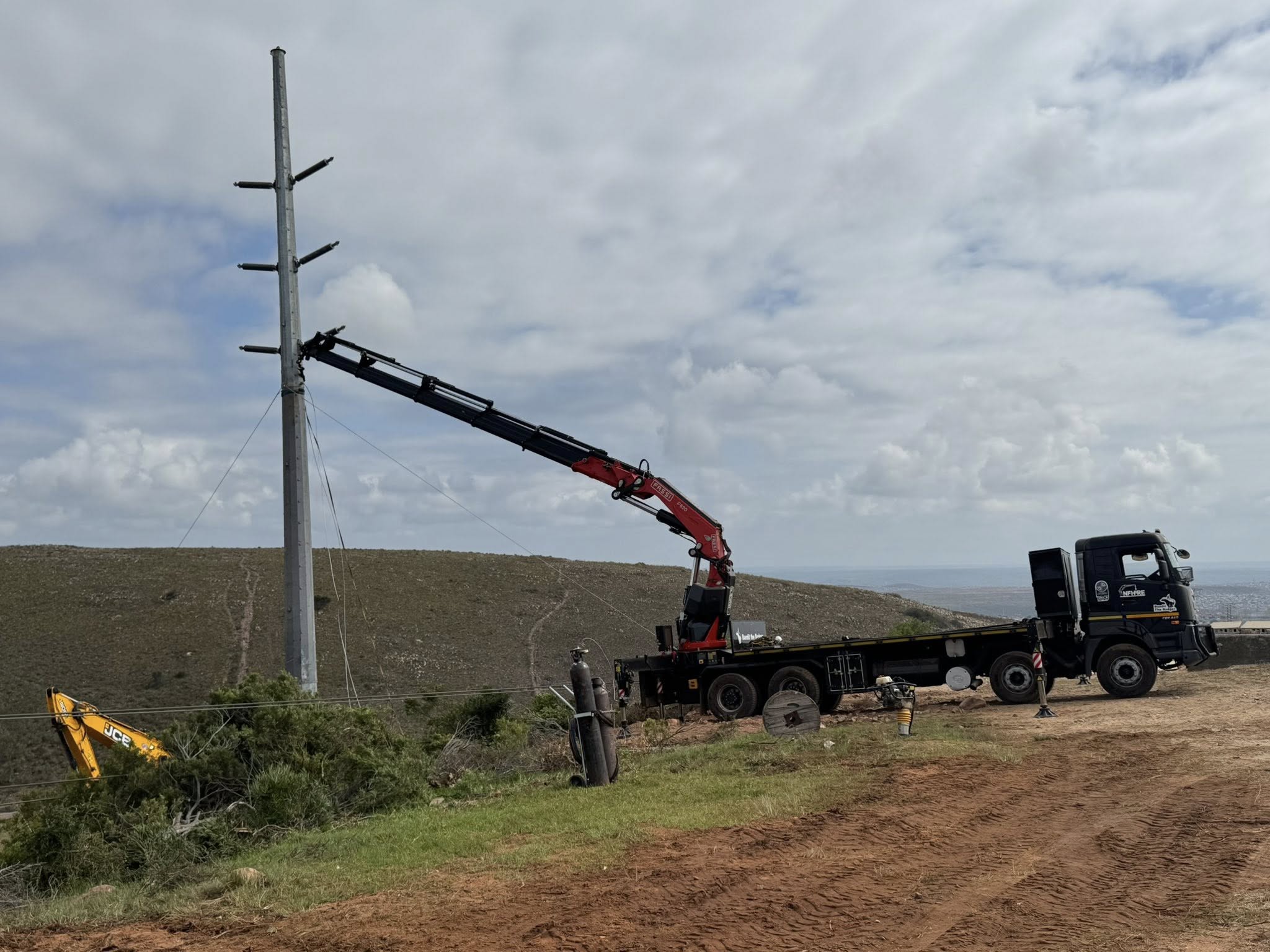
Van Huyssteen also highlighted the risks of sub-station failures on causing additional and unplanned power outages for business.
“Since the start of the year there have been 34 power outages in key industrial areas of the metro. This is a high risk issue to business, and is caused by vandalism and theft of sub-station infrastructure, lack of maintenance and damage to infrastructure which was not been designed to be switched on and off intermittently.”
In an attempt to prevent vandalism of sub-station infrastructure, the chamber has an Adopt a Sub-station intervention in place which has resulted in businesses extending their own security to their feeder sub-stations at their own cost. To date, 19 sub-stations have been adopted by business.
“If required, we are willing to assist the municipality with sub-station maintenance as we believe that a proactive approach will limit the number of sub-station failures.
“Furthermore the chamber, which has a master Memorandum of Understanding in place with the Municipality which enables collaboration in various areas, is keen to strengthen this partnership in the roll-out of other similar initiatives in its quest to retain investment and protect jobs in our Metro.”