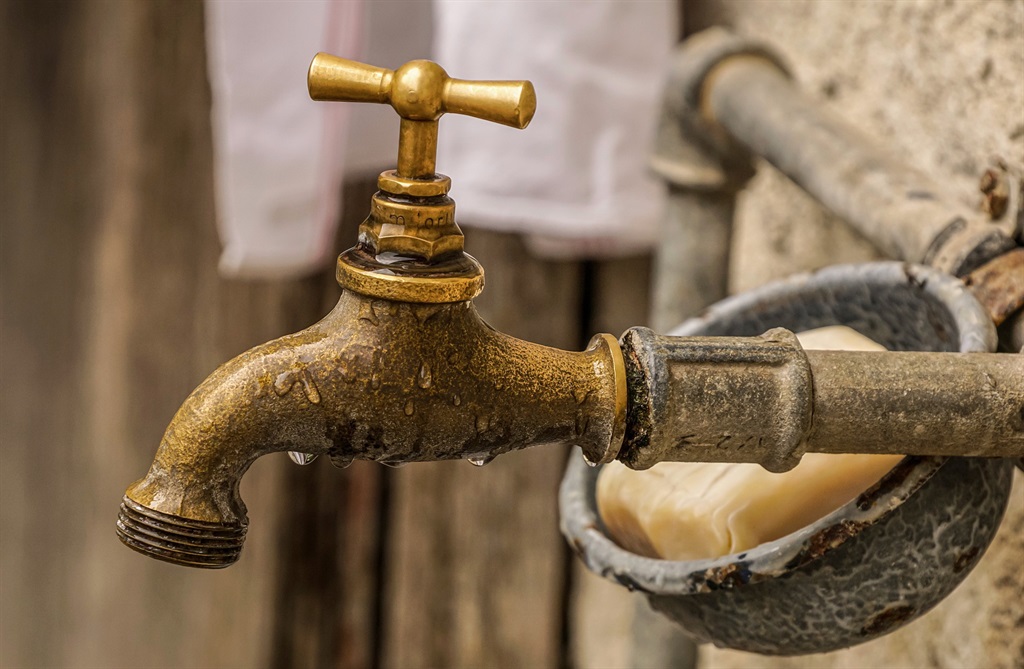


The water crisis in the Nelson Mandela Bay Metro is spiralling out of control and Day Zero has basically arrived for certain areas.
These were the words of the DA leader in the Eastern Cape, Nqaba Bhanga, at an urgent media briefing held at the party’s office in Walmer on Thursday, February 6.
Bhanga, along with the MMC for Infrastructure and Engineering, Masixole Zinto and DA caucus leader, Jonathan Lawack, addressed the media about the metro’s dire water situation after holding a meeting with metro officials the previous day and said that some areas could be without water for up to three weeks.
“You might have seen that some western parts have been without water for the past two days, meaning that those areas have reached Day Zero,” Bhanga pointed out bleakly.
He said suburbs in the western parts of the metro were running dry due to the fact that water can no longer be extracted from the Impofu Dam, which currently stands at 16,7% capacity.
Bhanga also claimed that the NMBM had been aware of the looming Day Zero since August 2018, but that they had failed to procure a barge, which would enable water to effectively be extracted without any mud from below the 20% mark of the Impofu Dam. “The procurement of a barge could have prevented this problem.”
He added that the water source of the eastern parts of the metro, the Nooitgedacht Low-level Water Scheme, was also under threat, because the canal transporting water from the Gariep Dam to Nooitgedacht, needed to be repaired and this might take up to six months to complete. “The problem we are facing now is that this canal supplied one of the metro’s dams with 140 mega-litres of water and is now unable to continue the supply.”
Huge amounts of water losses
Lawack said they were informed in the meeting that there were currently 11 000 water leaks across the Bay. “According to the annual report for the 2018/19 financial year, our water losses amounted to almost 44%.
“For the first six months of this (financial) year, water loss stands at 46,6%. That means that all this water that comes from the dam into our reticulation system, is lost before it reaches our taps.”
Zinto pointed out that one of a politician’s main duties was to do oversights, but that the standing committee of the Infrastructure and Engineering Department had postponed these oversights numerous times.
“We also have consultancy contracts that expired in June 2019.
“We used to have contractors assisting with the ATTP (assistance to the poor) houses because these homes have straight connections.
“This means that water is supplied and if there are leaks, we lose the water because there are no water meters, as residents don’t pay for water.”
Bhanga said the DA would write to the speaker of the metro’s council, the ANC’s Buyelwa Mafaya, to urgently convene a council meeting in order to find a solution for the water crisis.
He also mentioned that, apart from asking the DA in the Western Cape for advice on how to solve the Bay’s problems, the party would also ask the Eastern Cape Premier, Lubabalo Oscar Mabuyane, to extend the province’s drought disaster declaration. This would allow the metro to still apply for drought funding in future.
‘No Day Zero’ – Andile Lungisa
Meanwhile, the MMC for Infrastructure, Engineering and Energy, Andile Lungisa, said that there is no Day Zero in the metro and that plans have been put in place to help alleviate the drought.
According to Lungisa, they are working closely with the Coega Development Corporation to ensure the desalination of sea water. “We are fixing water leaks and we know that this a period of rainfall for the metro. It will rain, especially in the catchment areas,” said Lungisa.
Water leaks repair programme to be implemented
To avoid the catastrophic situation of running dry, the city has decided to implement a massive water leaks repair programme, according to NMBM spokesperson, Mthubanzi Mniki.
“This process will include acquiring the services of seven plumbing contractors and a strict monitoring system is being developed to evaluate the work to be done,” said Mniki.
He added that the municipality would embark on a robust awareness campaign that would focus on high water users such as manufacturing industries, schools and the hospitality industry.
“Our message is clear: Nelson Mandela Bay is running out of water. Save water now or bear the consequences.”