
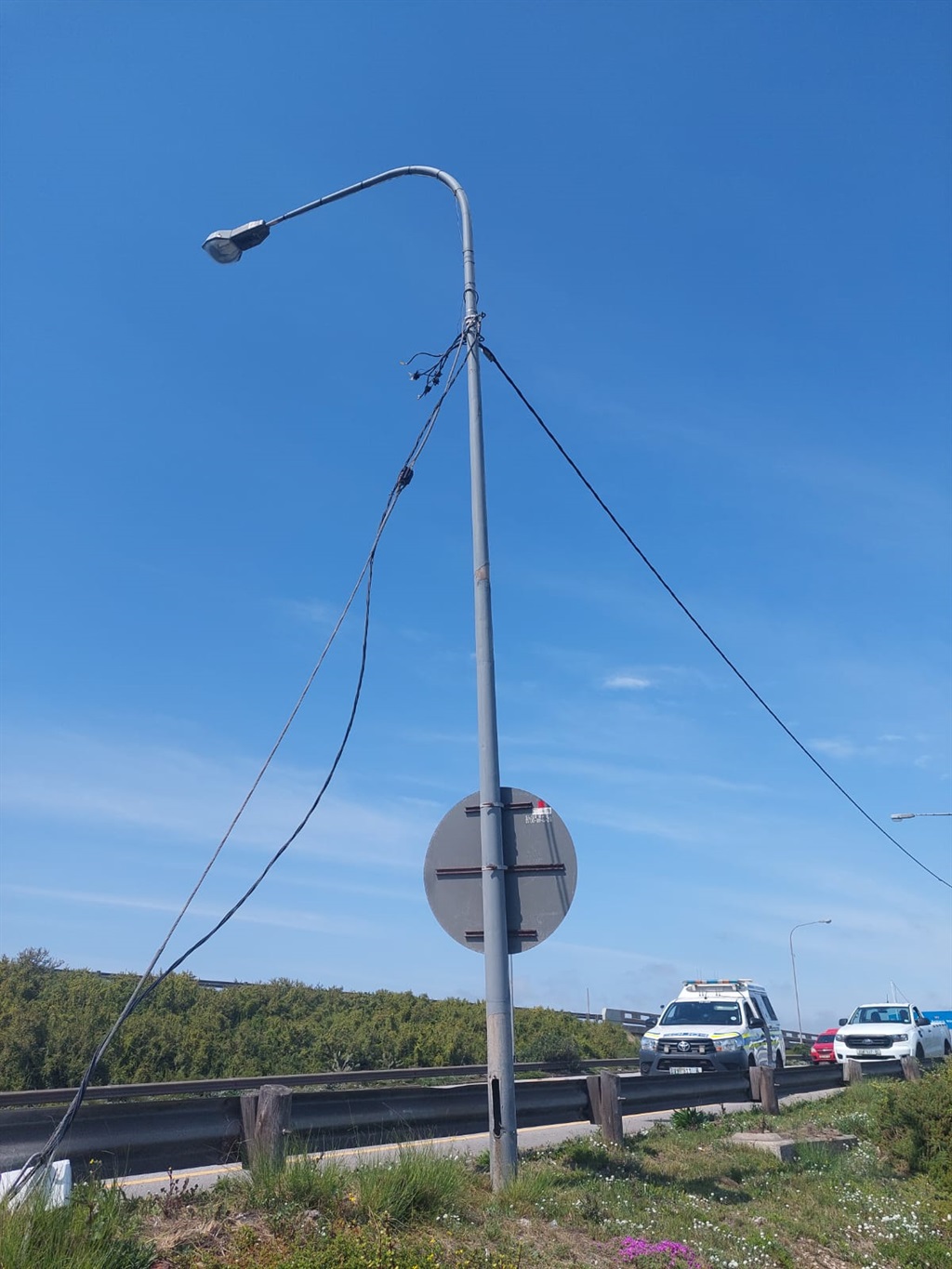
The declaration of a State of Disaster on the vandalism of infrastructure should lead government’s response to cable and infrastructure theft that is occurring at an industrial scale and crippling the South African economy.
The Nelson Mandela Bay Business Chamber has sent a formal request to Cooperative Governance and Traditional Affairs (COGTA) Minister, Nkosazana Dlamini Zuma, to take this drastic step in order to protect public assets that are essential to service delivery and supporting investment and job creation.
Copper cable theft from rail and electricity networks alone is estimated to cost the economy R45 billion annually, while the wider knock-on impact of cable theft across the economy has been estimated at R187 billion.
NMB Business Chamber’s Chief Executive Officer, Denise van Huyssteen, said that out-of-control theft of cables and essential infrastructure amounted to economic sabotage of South Africa’s future growth prospects, threatening investment, employment security, livelihoods and community safety.
The scale of the problem, the likely involvement of cross-border organised crime syndicates and the wide-ranging socio-economic impacts warrant a State of Disaster that would enable a coordinated, national response driven from Cabinet-level.
“We don’t advocate for such a step lightly, especially given that the country has only recently emerged from two years of successive states of disaster imposed in response to the COVID-19 pandemic. However, a state of disaster of this nature should not affect the daily lives and movement of the general public, as it would be specifically targeted at protecting infrastructure and monitoring, tracking down and prosecuting the perpetrators of these crimes,” Van Huyssteen said.
She said that the Business Chamber Board believed that cable and infrastructure theft and vandalism was the greatest current threat to the South African economy, and that it met the criteria for a State of Disaster as specified in the Disaster Management Act.
In relation to the definition of a disaster in the Act, theft of cables and infrastructure, and associated vandalism, is widespread across the country. It is human-caused, and it can (and does) lead to death or injury.
It causes damage to property, infrastructure and the environment. There is also the knock-on effect of lost productivity and wages.
It is disruptive of the life of a community, in the inconvenience of electricity and water outages caused by theft, and in the resulting loss of lives and livelihoods.
“Finally, it is clear that the magnitude and scale of the problem is beyond the ability of individual municipalities, state-owned enterprises, metro police services and national security and intelligence services acting alone to adequately secure infrastructure, to prevent these crimes and to enforce the law with sufficient deterrent effect,” Van Huyssteen said.
The Business Chamber has welcomed the coordinating initiatives of the CEOs of Eskom, Prasa, Telkom and Transnet through the Economic Sabotage of Critical Infrastructure Forum, and believes that a State of Disaster would unlock the national resources to take this initiative further.
Van Huyssteen said the mechanisms of a State of Disaster that could be brought to bear on the scourge of cable theft and vandalism included release of national government resources and personnel as a focused, coordinated emergency response.
It would also enable checks on the movement of goods and suspects, cross-agency coordination of intelligence, policing and prosecutions, emergency procurement, and facilitate cross-border assistance to tackle organised crime.
“It is our view that declaration of a State of Disaster would enable the necessary urgency and priority, and coordinated efforts across government departments and law enforcement and prosecution agencies, required to turn the tide on cable and infrastructure theft and vandalism.
“A state of disaster would enable the assignment of short-term extraordinary powers to security services, intelligence and law enforcement agencies. The timeframe of a national disaster is relatively short, at an initial three months, which would ensure focused planning prior to a declaration and focused efforts during the declared period,” she said.
The recent moves by the Department of Trade, Industry and Competition to temporarily ban scrap metal exports and tighten up the regulations on local and international trade in scrap metal are welcomed, and should form part of the State of Disaster response.
This would ensure a coordinated approach with optimal impact through the value chain of illegal trade in metals and infrastructure equipment, from source to trade through to the “owners” of the criminal enterprises.
“At the same time, it is imperative that existing laws are used to their maximum effect in policing and prosecuting crimes relating to infrastructure theft and vandalism. Crime intelligence needs to play a greater role in monitoring organised crime activity, proactive alerts to security services, and ensuring that criminal syndicates are not driven further underground.
“The framework of criminal law is in place. What is needed is a stronger and more effective drive to enforce the law and prosecute the crimes. This requires investigators and prosecutors to correctly frame complaints, charges and pre-sentencing arguments with emphasis on the effect and impact on basic services due to stolen materials forming part of essential infrastructure. Securing convictions and maximum penalties where the crime involves an impact on essential infrastructure must act as a deterrent to these crimes,” Van Huyssteen said.
“Declaration of a State of Disaster is a drastic step, but is an imperative if we are to restore an environment conducive to community life, business, employment and socio-economic development.”