
Right off the bat, you’d be forgiven
for thinking that the black and white chequered flag, swung around at the end
of the race, is the most important flag in F1. After all, it declares the
provisional finishing positions and has been lackluster-ly waved by many an
uninterested celebrity.
There are quite a few other flags in
F1 that you familiarize yourself with if you’re new to the sport. It’s
important to know too that the flags are not only displayed manually, by
marshals around the track. They are also displayed on light panels that line
the circuit.
Green flag
The green flag is seen at the
beginning of each race as the marshal at the back of the gride uses his as
their signal that all is good to go. The other times a green flag may appear
after an incident to indicate that all is clear.
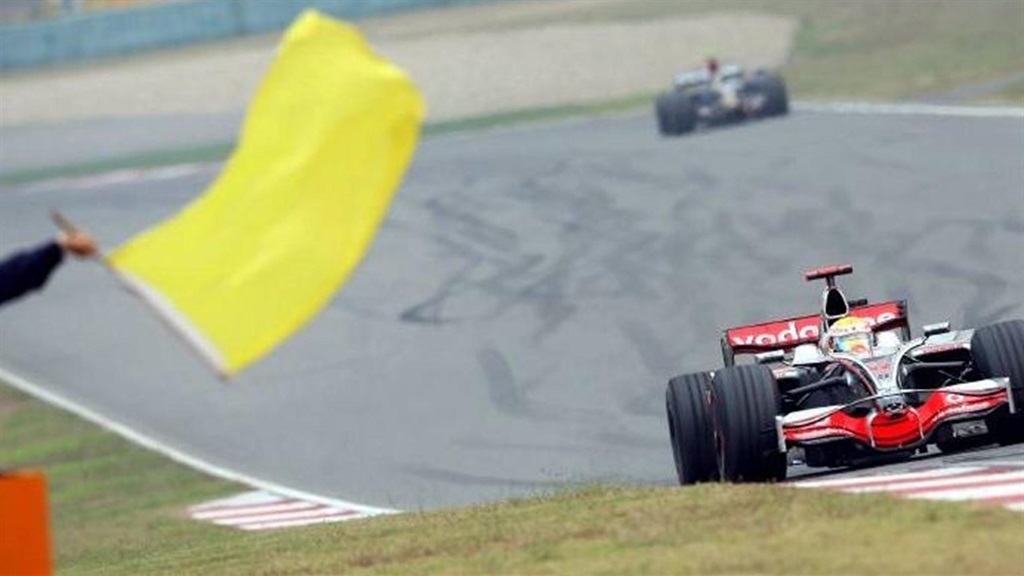
Yellow flag
This flag is displayed whenever
there is an incident on the track that may involve a slow-moving car, a
recovering car, or debris on the track. This is an indication to drivers to
lower their speed and to proceed with caution.
Double waved yellow flags
These flags are used whenever there
is a stationary car, and/or there are marshals and other vehicles on track. It
indicates to the driver to practice extreme caution and be prepared to stop if
necessary.
Red flag
This flag brings a halt to any timed
session. When the red flag is out in a practice session it is important to note
that the time on the clock does not stop. However, if the red flag appears in
qualifying the clock does stop.
In a race the clock continues to run
down and the rule states that a race must be completed within a four-hour
window. This rule came into working after the 2011 Canadian grand prix that was
details for seventeen hours. Ok, it was more like four to five hours. But you
get the point.
Orange and black flag
The black flag with an orange circle
is shown to a driver whose car may have mechanical issues and which pose a
danger to other competitors. If a driver is shown this flag he will need to pit
as soon as possible.
Black and white flag
Not to be confused with the
chequered flag. This flag is shown to a driver as a warning for either
unsportsmanlike conduct or for having exceeded track limits one too many times.
This flag will be accompanied by the driver’s number.
Black flag
The solid black flag, along with
driver number, is shown to a driver who has been disqualified from a race.
Coincidentally, 2007 was the last time a driver was black flagged. Felipe Massa
and Giancarlo Fisichella were disqualified for leaving the pitlane despite the
red light at the exit.
Yellow and red flag
The yellow and red striped flag is
used to indicate a slippery track surface. That’s it, nothing else to it.
Spectators’ flag
Last but no means least, the
spectators’ flag. Often known to be large and carrying either supportive,
wishful, or punny message. The spectators’ flag can also take the form of a
gigantic Ferrari logo at Monza or appear as a wave of orange at either of the
races in Austria or Holland. There is an array of colourful flags that populate
the grandstands and are used by supporters to demonstrate their allegiance to a
team and/or driver.