
As people around the world marked World Heart Day on September 29, a Gqeberha paediatric cardiologist wants to spread the message that children, too, can experience heart conditions.
Dr Samkelo Jiyana, who practises at the Netcare Greenacres Hospital, said World Heart Day is not only about educating the public about adult heart disease. “Many are unaware that approximately one in a hundred children are affected by heart conditions or heart disease. Raising awareness of paediatric heart conditions can lead to earlier diagnoses and more effective treatments using modern medical techniques. With timely intervention, children diagnosed with heart conditions often have the potential to live long, healthy lives.”
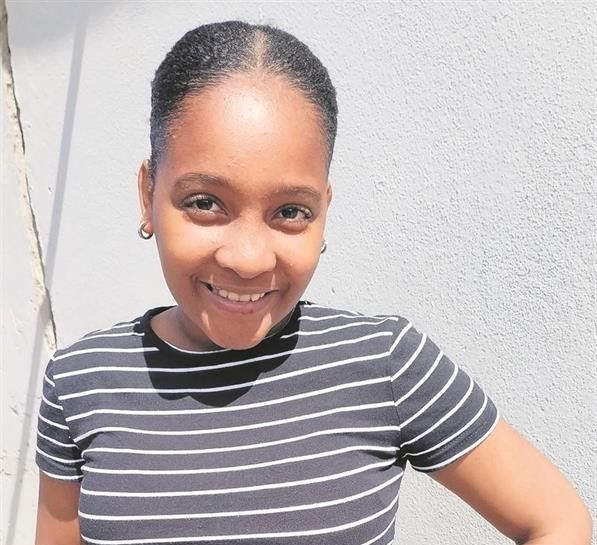
His patient, Kheera Mcetywa, is a bubbly 13-year-old with a quick sense of humour who enjoys drawing and writing her own songs. Although spirited and lively now, Dr Jiyana recalls that when he first met her, she was a frail child. “Kheera presented with recurrent chest infections and had been unwell since infancy. She was eventually diagnosed with a congenital ventricular septal defect (VSD), a condition characterised by a hole in the wall separating the two lower chambers of the heart. While there is always hope that a VSD will close on its own, Kheera’s did not, leading to recurrent chest infections. Additionally, her growth was stunted, and she was smaller than her peers. She had needed the procedure for quite some time,” he added.
Dr Jiyana explained that a VSD is typically present at birth and results from improper heart development during foetal growth.
Mcetywa’s family was initially shocked and afraid when they were told she needed treatment to close the hole in her heart. “But when I explained that we would repair the defect using a minimally invasive procedure through a small hole in her groin, they were more comfortable. It’s so much safer than open heart surgery. The patient can generally go home the next day, whereas with open heart surgery, patients remain in hospital for two weeks.”
Dr Jiyana cautioned that the procedure is not without risks. “There’s still anxiety because complications can occur. There’s also the sense that you’re working on a child, and this can present its own challenges. Each child has their own anatomy, and the procedure is not something you do every day.”
Dr Jiyana explained that when a VSD is closed percutaneously (through the skin) in a cath lab, the heart is accessed through the skin, typically via a small incision in the groin area where a catheter (a thin, flexible tube) is inserted into a blood vessel. “We insert a device to close the hole, with the pressure inside the heart keeping the device in place. In time, a membrane will develop over the device, which helps keep the hole closed. It wasn’t the simplest procedure, and it took about four hours, but there’s no need for a large chest incision or stopping the heart, leading to a shorter recovery time and less pain. Kheera was able to go home the very next day. There’s also a lower risk of complications than with open-heart surgery.”
Postoperatively, checks are done to ensure there’s no fluid around the heart; the device hasn’t dislodged, and there are no leaks around the device. “We also check that the valves we went through are not torn. Fortunately for Kheera, we didn’t have any of that. Once I was happy, I let her go home on aspirin to promote healing. She’ll still have regular check-ups, decreasing in regularity as she progresses.

“Now that she’s better, I’m seeing the real Kheera,” he smiled. “Initially, she was very reserved and shy, but now she is lively. She’s thriving.”
Micaela Mcetywa, Kheera’s mother, describes her daughter as a brave, intelligent child. “She’s not scared to take chances. She constantly seeks to improve herself and improve her knowledge.”
She said that initially they didn’t know there was a problem with Kheera’s heart, but they’d noticed she’d been a sickly child from birth. “She had no appetite and was always getting a cold. At two years old, she contracted TB. When she was four, she was sick with tonsillitis. The doctor we took her to then detected that her heart was making an unusual sound, so he referred her for tests, which revealed she had a VSD. I was overwhelmed by the news and thought it meant I was going to lose my child. We all know that a heart condition is a very serious thing. All I could think about was that my child was going to die.”
After a long journey through different hospitals and doctors and bouts of serious illness, including bacterial meningitis, which impacted Kheera’s heart, another disaster struck – COVID-19. Mcetywa said that because of her heart condition, Kheera had to be completely isolated and was not allowed to go outside at all. “We were so cautious. We were always anxious that she’d become ill.”
Last year, Dr Jiyana suggested that Kheera undergo treatment for the hole in her heart. “But we felt she was doing fine. We didn’t want any complications. However, they explained that Kheera could suffer from pulmonary hypertension when she grows up if the VSD was left untreated. That’s when we decided to go ahead. They also explained that the procedure didn’t involve open heart surgery. We realised that if we didn’t allow her to have the procedure, it could cut her life expectancy in the long run. That’s when we decided to step up our faith and get through this.”
Mcetywa said her daughter remained “very cool and calm” throughout her experience in the hospital. “We didn’t give her a chance to panic. There was a time when she was withdrawn from us. Her grandmother said this may be due to her upcoming surgery, so I talked to her, and she told me she realised there was no other option; she knew it had to be done, and she was optimistic.”
When Kheera went for the procedure, her mother had just begun a new job, working out of town. “My sister was with her. I was at work but worrying all the time. It was very hard. I video-called her and told her, ‘Make sure you pray before you go in for the procedure and make sure you believe in your prayers’. I also kept my faith.
“I really want to thank the staff at Netcare Greenacres Hospital. They were so friendly, helpful and accommodating. Dr Jiyana is so professional and approachable. He individualises his clients.”
Kheera has a good support system at home. Her loving grandmother, Mary-Ann Mcetywa, who is part of her extended family, cares for her and guides her to health and healing.
For Kheera, while recovering from the procedure is frustrating, it also holds the promise of a more active lifestyle when she’s fully healed. “I feel suffocated because I can’t do the normal things I used to do. I have to sit at school and watch my friends running around. Dr Jiyana says I need to take it easy for the next six months until I am well. That will be next year in February. In the meantime, I write my own songs and sing.” Asked if she aspires to be on stage one day, she quickly said, “No way. You’ll see me in the hospital. I’m going to become a paediatric cardiologist. I’m studying hard, and I’m totally up for it.”