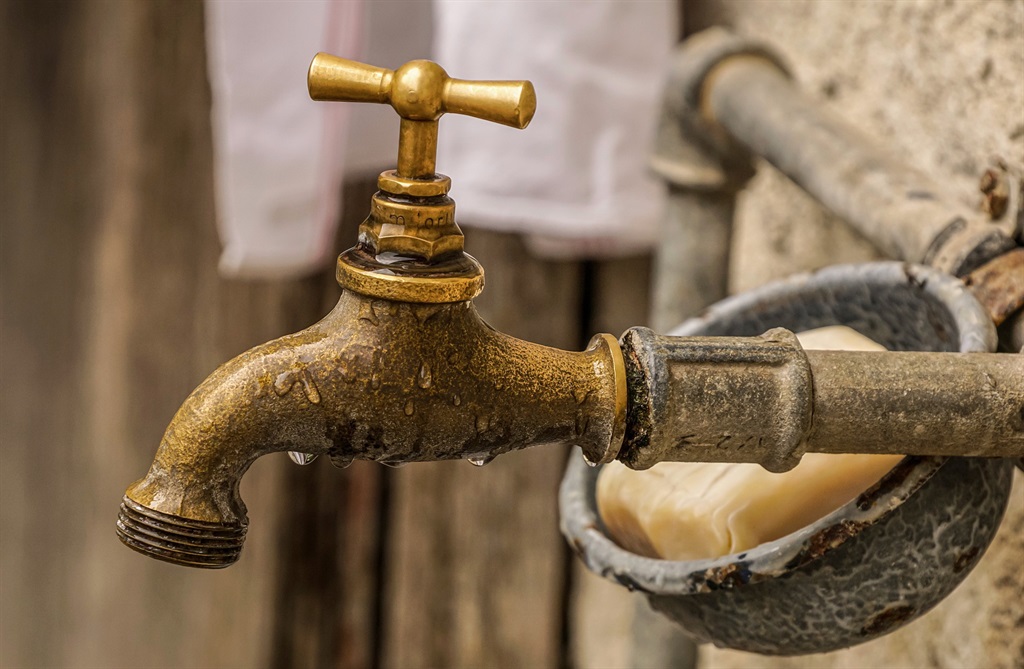


WE cannot rely on rainfall to save us now; we have to do what is within our control because as things stand now, a number of our local dam systems are going to run dry before Christmas.
This is the grim prediction made by Dr Gisela Kaiser, a professional civil engineer, seconded to the metro’s drought mitigation team, as part of its collaboration with the National Treasury’s city support programme.
Kaiser, who has more than 30 years’ experience in development and management of infrastructure projects and programmes, explained that the metro’s water comes from two major sources: two-thirds from the Nooitgedacht Low Level Water Scheme that supplies water from the Gariep Dam and about a third from the local dams.
She explained that although the Gariep Dam is more than 80% full, the local dams are the problem as they currently have a combined level of less than 12% water.
“At present, we cannot distribute all the water from the Nooitgedacht Scheme around the city, so we have a predicament. If we do not reduce our consumption immediately, we are going to run out of water and we will not be able to distribute the water which we have, across the entire city,” Kaiser said.
To make matters worse, work taking place to complete the construction of Nooitgedacht Low Level Water Scheme Phase three, is still at a standstill due to contractual disputes between the contractor and the implementing agent of the project, the Amatola Water Board.
The contractor withdrew from the project after alleged failed payments of R1.9 million.
The completion of this phase will see an additional 210ML of water supplied to the metro and was supposed to be completed by September this year. According to the Amatola Water Board, a meeting was held between Amatola Water and the contractor on Monday, October 4.
“In the meeting, the contractor conceded to withdraw the intention to terminate, dated Friday, October 1, 2021. Amatola Water left the meeting with an understanding that the contractor would not leave the site as the matter was amicably resolved,” the Amatola Water Board said in a media statement.
The statement further read that the payment of R1.9 million to the contractor was made as agreed in the meeting.
It added that the contractor was not paid within 30 days, as per the contractual agreement, due to the fact that the payments submitted by the contractor were subject to the approval of the project additional costs before paying.
“Additional funds have recently been confirmed by the Department of Water and Sanitation, which funds this project.
“Afterwards, Amatola Water expedited a governance process to ensure that funds are disbursed in a correct manner,” the statement said.
When recently asked for an update on the contractual dispute since work is still at a halt despite the statement stating that the matter with the contractor had been resolved amicably, Amatola Water Board’s stakeholder and communications manager, Nosisa Sogayise, told PE Express that the contractor will return to work soon.
“The Amatola Water Board is in agreement with the contractor and the contractor is getting ready to come back on site and also to make sure that they push the work before they close for the December holidays,” she said.
“Amatola Water is waiting for the contractor to come back on site soon as it takes a couple of logistics to establish the site as they have pulled out,” Sogayise added.
In the meantime, Kaiser mentioned that a plan had been developed for the metro to manage to not run out of water. “If we can stretch the water in the local dams to last until the end of April, we will at that point have the ability to circulate sufficient Nooitgedacht water across the entire city.
“However, for this plan to work, we have to reduce our consumption from where we currently stand, which is approximately 280ML a day, down to 230ML a day and we need to achieve this immediately,” she explained.
“We need all hands on deck. Everybody must play their part in using less water and if we do that, we can actually get through this drought without our taps running dry,” Kaiser said.
“This is our worst-case planning, so we are planning for even if there is no rainfall.
“Every little bit of rainfall will stretch the available water by a little bit, but we cannot rely on rainfall to save us now.”
Local weather office spokesperson, Garth Sampson, warned residents that November is traditionally the last month to get some good rainfall since this is not the rainy season and we get the least rain in December and January.
“In the [past] few days we [expected] water tank filling rain which is great for the garden but the little we get in the catchment will only give us another week or so of available water if there is no major rain or people don’t reduce consumption,” he said.
“Reduce consumption or queue for water to flush and the like and queue for drinking water. The choice is yours.”
Nelson Mandela Bay Municipality spokesperson, Mamela Ndamase, said that due to the ongoing drought, swimming pools in the metro will remain closed during the festive season.
“The city is prioritising drinking water for residents and not providing water for recreational purposes.”