
For several months the Nelson Mandela Bay Municipality has posted regular updates on social media regarding the crippling drought the metro has been subjected to for the past eight years.
However, Nelson Mandela Bay mayor, Retief Odendaal, has noticed that many have no idea where the metro’s water actually comes from, judging by some of the comments made by residents on these posts.
Given the fact that the drought remains one of the Bay’s biggest threats, Odendaal has taken it upon himself to give an explanation as to exactly how many and which dams supply the metro with water. This way, everyone will understand how the system works.
He emphasised that it is important to note that when it comes to the provision of bulk water, this falls under national government.
Water reticulation on the other hand, which entails getting water from the dams to residents’ taps, is the responsibility of the municipality.
“We are often confronted by people wanting to know why the city cannot build more dams or construct desalination plants. The answer to this is relatively easy: municipalities just simply can’t afford to construct this type of bulk water infrastructure as it ordinarily costs billions and can therefore only be constructed by national government,” said Odendaal.
There are currently three different sources supplying Nelson Mandela Bay with water.
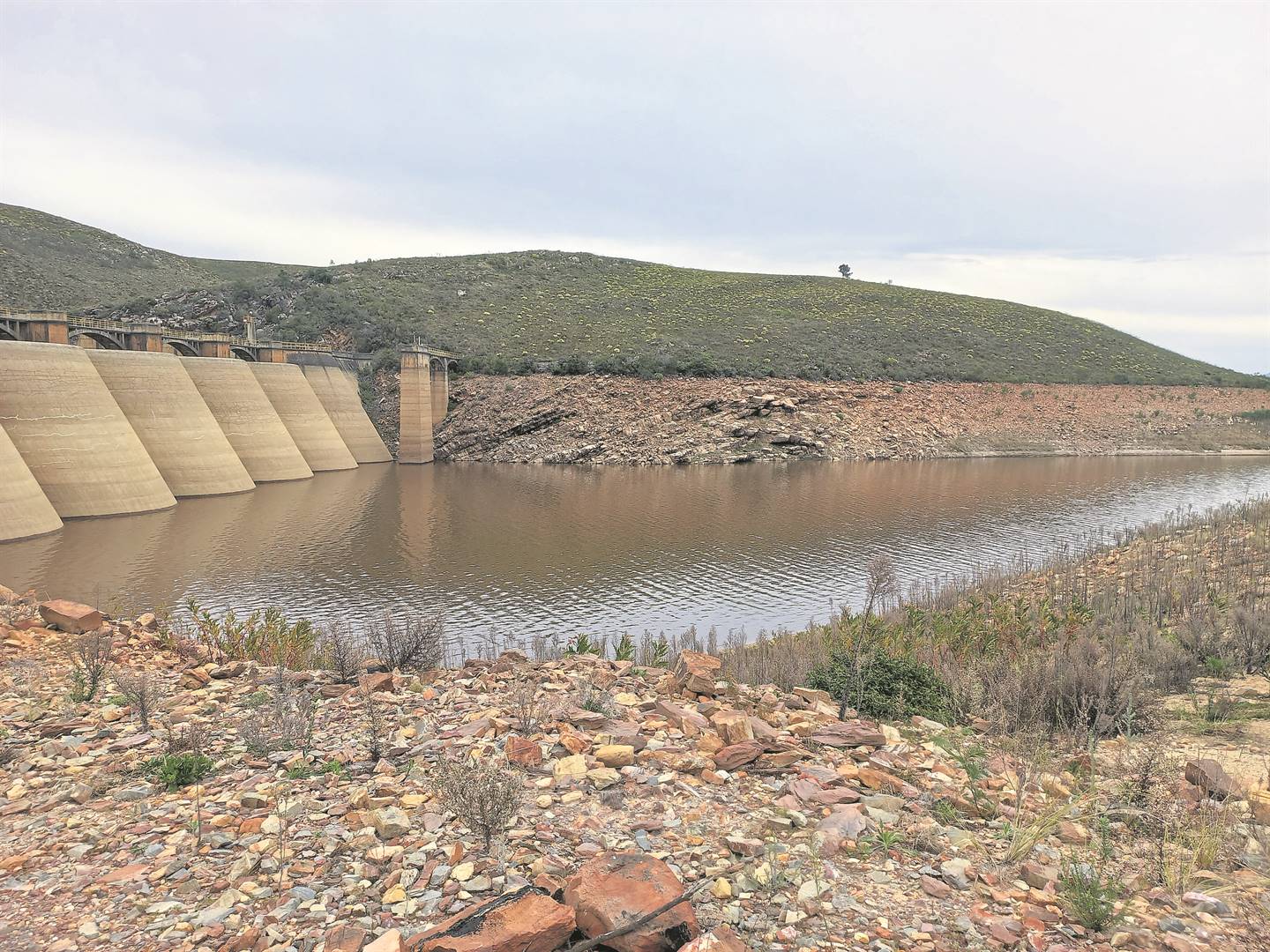
The first is the Kouga Dam, near Patensie, which is the largest storage dam in the region and was the first double curvature arch dam in the country.
Opened in 1969, the dam has a total capacity of 133 million cubic metres, and is managed by the Gamtoos Irrigation Board which controls the release of water from the dam to the metro via the Loerie Dam, a small balancing dam, which has a capacity of 3,4 million cubic metres.
“Although Kouga is the largest dam in our region, some 72% of total capacity in the dam is meant for agricultural irrigation. We currently extract approximately 40ML from this system a day,” said Odendaal.
There is also the Kromme System that consists of the Churchill, Impofu and Groendal Dams.
The Churchill Dam, also known as the Kromme Dam, was opened in 1943 and is situated near Kareedouw and has a total capacity of 33,2 million cubic metres.
The larger Impofu Dam was opened in 1983 and has a total capacity of 106,8 million cubic metres.
“Although the Diep River also feeds the Impofu Dam, this dam usually only really fills up when the Churchill Dam overflows into it. We currently extract approximately 30ML from this system a day,” he said.
The Groendal Dam that is situated in the vicinity of Kariega, came into use in 1934. It being a rather small dam with a capacity of only 12,1 million cubic metres, 8ML per day is extracted from the dam.
The second source is the Nooitgedacht Low Level Water Scheme.
Odendaal explained that in 1975, the Orange-Fish Tunnel, an 82,8 km long irrigation tunnel, was put in use after being built solely for the purpose of diverting water from the Gariep River to the Fish River Valley.
“This tunnel has been a lifeline to large parts of the Eastern Cape Midlands, the Karoo and finally also Nelson Mandela Bay. In 1993 the first phase of the Nooitgedacht Water Treatment Plant was completed and it started supplying the Bay with some 70ML of water a day.
“By 2008 further upgrades to the system increased the output of treated Gariep water to the metro to some 100ML a day,” he explained.
The second phase increased the total capacity of the system to 140ML a day by 2017, whilst phase three completed in October last year, increased total capacity to 210ML a day.
Since there are direct off-takes by a number of farmers and other users on the line, the metro’s average daily allocation is between 190-200ML from this source.
More than 65% of the Bay’s daily water consumption thus comes from this scheme.
“The third source is groundwater. This refers to the freshwater springs outside Kariega that provide 4,3ML of water a day and the Moregrove Boreholes in Parsons Hill add approximately 4ML a day,” he concluded.