
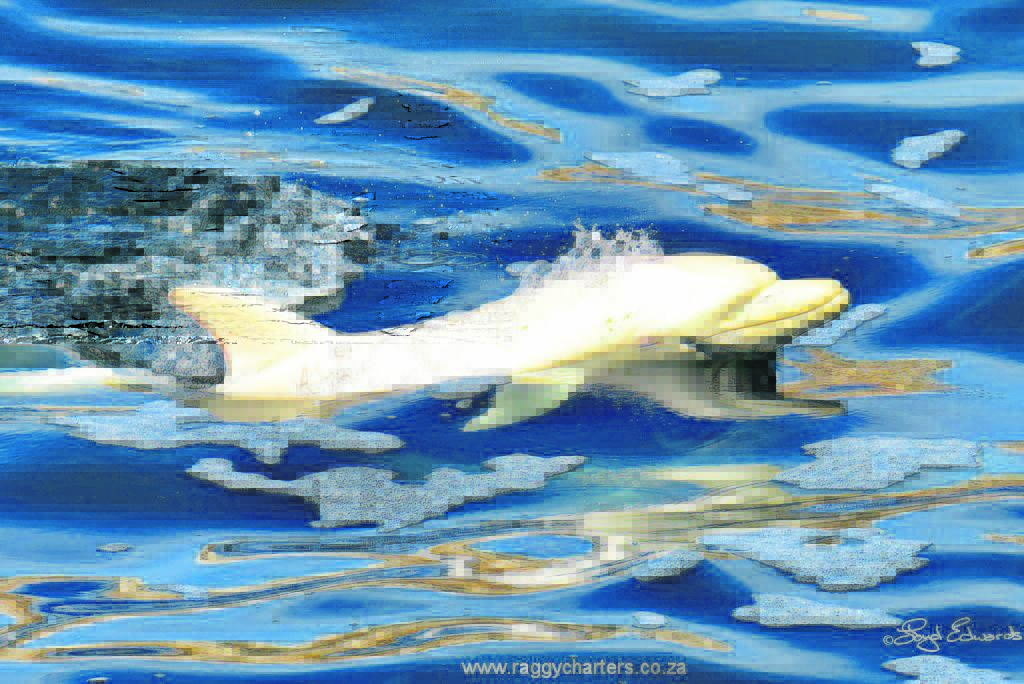
Algoa Bay recently celebrated a massive milestone, when it became the first destination in Africa where an extremely rare Albino Bottlenose Dolphin was spotted.
Raggy Charters marine conservationist, Lloyd Edwards, who first spotted the rare sight, said that in his more than three decades of doing marine cruises in the Bay, he really thought that he had seen it all.
“What a mistake that turned out to be!” he cried out in excitement.
Edwards said that it was a very special day when he was celebrating his son’s wedding. The boat was full to the brim with family and friends when they approached the spot of the sighting, Lover’s Lane, which is the favourite hangout spot for big schools of Indo-Pacific bottlenose dolphins.
“All of a sudden, I saw a white flash in the water among a pod of around 200 dolphins. When I saw it again, there it was: a beautiful metre-long albino calf of around a month old. Judging from some of its smaller cousins in the same school, it seems to be in a good physical condition.”
Edwards explained that albinism is a genetic anomaly that causes the total or partial absence of melanin in an animal or plant.


It occurs when cells that normally make the pigment melanin, responsible for skin, hair and eye colour, fail to produce it at normal levels, or at all.
“Albinism is a result of a genetic mutation in several genes, which makes total albinism extremely rare. It is a recessive trait and will only manifest itself if the mutated genes were received from both parents. The parts of the body that are white are determined by which genes are affected.
“These animals exhibit partial albinism, whereas when the entire body is white and the eyes are affected, it is called “true” albinism. The eyes look pink as the blood vessels can be seen in the back of the eye, through the transparent iris.”
According to Edwards, true albinism is so rare that only a few individuals have been observed since the 1950s, and never in Africa. Since albinos usually stand out from the rest of the school, it makes them an easy target for predators; this is why they would swim in the middle of a school.
He said that this dolphin was doing exactly that, swimming in the middle of the school. It was being protected by its mother and the rest of the adults.
“Unfortunately, they also attract human attention, which has led to them being captured for display in aquariums. An example was Angel, who was caught in the infamous Taiji Bay in Japan, where hunters brutally kill hundreds of dolphins every year. This one was spared and put in a display at the Taiji aquarium.
“Raggy Charters and the World Cetacean Alliance have been fighting for the closure of these marine circuses for many years now. It is an extremely cruel practice and should never be supported.”
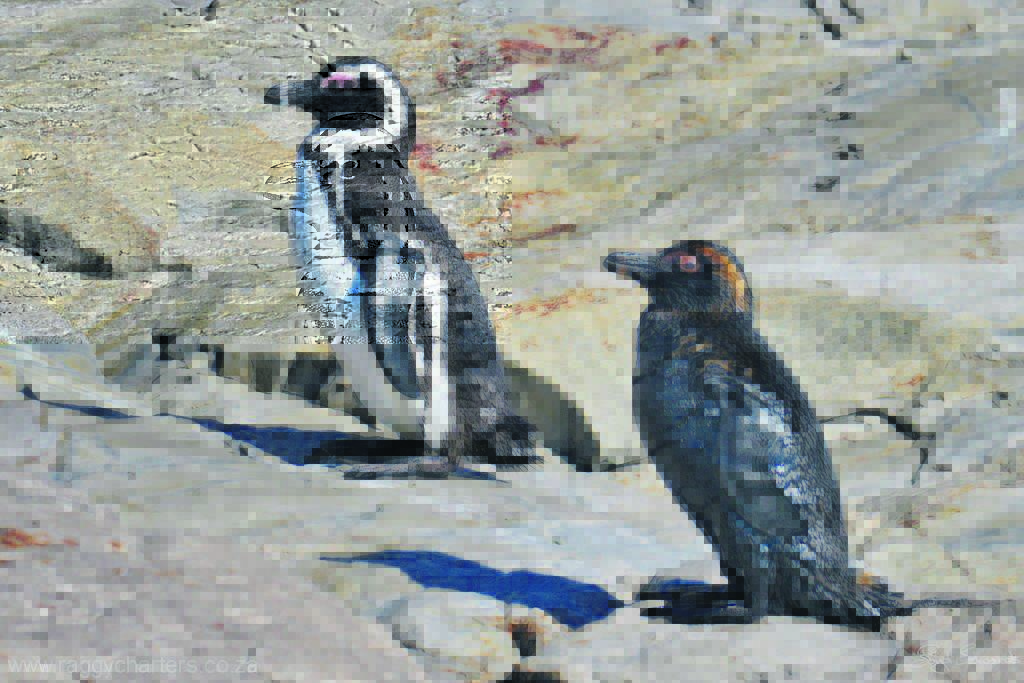
He said that Algoa Bay has delivered a few examples of partial albinism in the past. There were the leucistic penguins, a white humpback whale, a pink dolphin and a few white Southern Right calves, but never a true albino.
Raggy Charters is now running a competition to see who can come up with the best name for the albino calf.
To enter, visit the Raggy Charters Marine Eco Cruises page on Facebook, find the post about the albino dolphin and write your suggested name for the calf in the comment section.
The winner, who will be announced on April 28, will receive a free cruise with Raggy Charters to go and view the bottlenose dolphins at St Croix Island.