
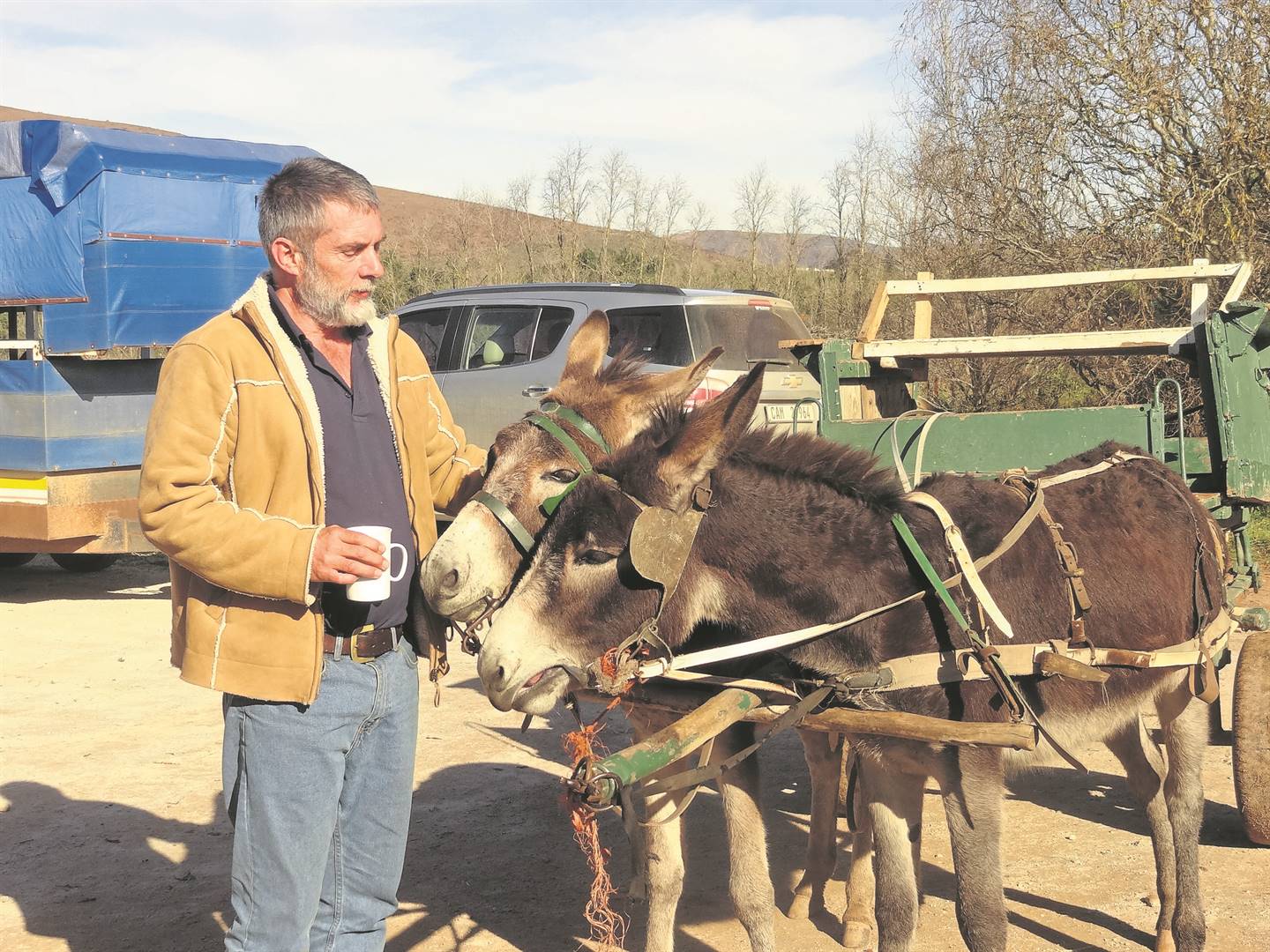
IN certain areas of Nelson Mandela Bay, people still make use of donkeys to operate carts and transport goods, or garden refuse to earn an income, but the treatment of these donkeys is often poor and their owners are unaware of better management and care practices.
These are the words of Annemarie van Zijl, Communication, Outreach and Advocacy officer at Eseltjiesrus Donkey Sanctuary near McGregor.
For this reason, the sanctuary will host a workshop in Nelson Mandela Bay to teach donkey owners and all animal lovers good handling and harness and care practices of donkeys to benefit both the animals and owners.
“Working donkeys are an “invisible species”, out of the public eye, and thus often suffer from poor working conditions.
The One Health, One Welfare concept is gathering momentum globally. This recognises the inter-dependency of health and welfare of people, animals, and the environment,” said Van Zijl.
“The workshop on One Health, One Welfare and The Hand, is open to professionals, animal welfare workers and all people concerned about animals, and will be presented in English and Afrikaans. This is an ideal opportunity to learn to look at the entire life situation of any animal and to meet with colleagues who care about animal welfare,” she added.
“The better a donkey is cared for, the better it can work and the more the owner will benefit. Our workshop is useful to all animal welfare workers, as the welfare assessment presented in the workshop can be applied to any animal species so it is also relevant to people working in small animal rescue institutions, such as dog or cat rescue.
“In addition, organisations such as the Eastern Cape Horse Care Unit (ECHCU), based in Walmer, work with donkeys and horses and will directly benefit from the workshop which also offers excellent networking opportunity for attendees to share challenges, exchange ideas and build up working relationships.”
The workshop is recognised by the SA Veterinary Council and awards Continued Professional Development (CPD) points to all registered vets and paravets attending. CPD points must be accumulated by registered professionals to ensure the continued validity of their registration.
She added that animal welfare workers and even veterinarians often do not know much about donkeys, their care and their needs.
“The workshop addresses this and also presents a simple process to assess the welfare of the animal, what interventions are needed, and also how to assess whether interventions have been effective. Many funders require this information to assess the impact of the work they are funding.”
The workshop takes place on Thursday, May 18 at 39 Church Street, between 6th and 7th Avenue in Walmer, from 10:00 to 14:30.
The workshop is free of charge as all expenses are covered by a grant from The Donkey Sanctuary based in the United Kingdom.
Bookings are essential as places are limited. Those interested in attending can book their spot by contacting Van Zijl on 023 625 1593 or info@donkeysanctuary.co.za before World Donkey Day on May 8.