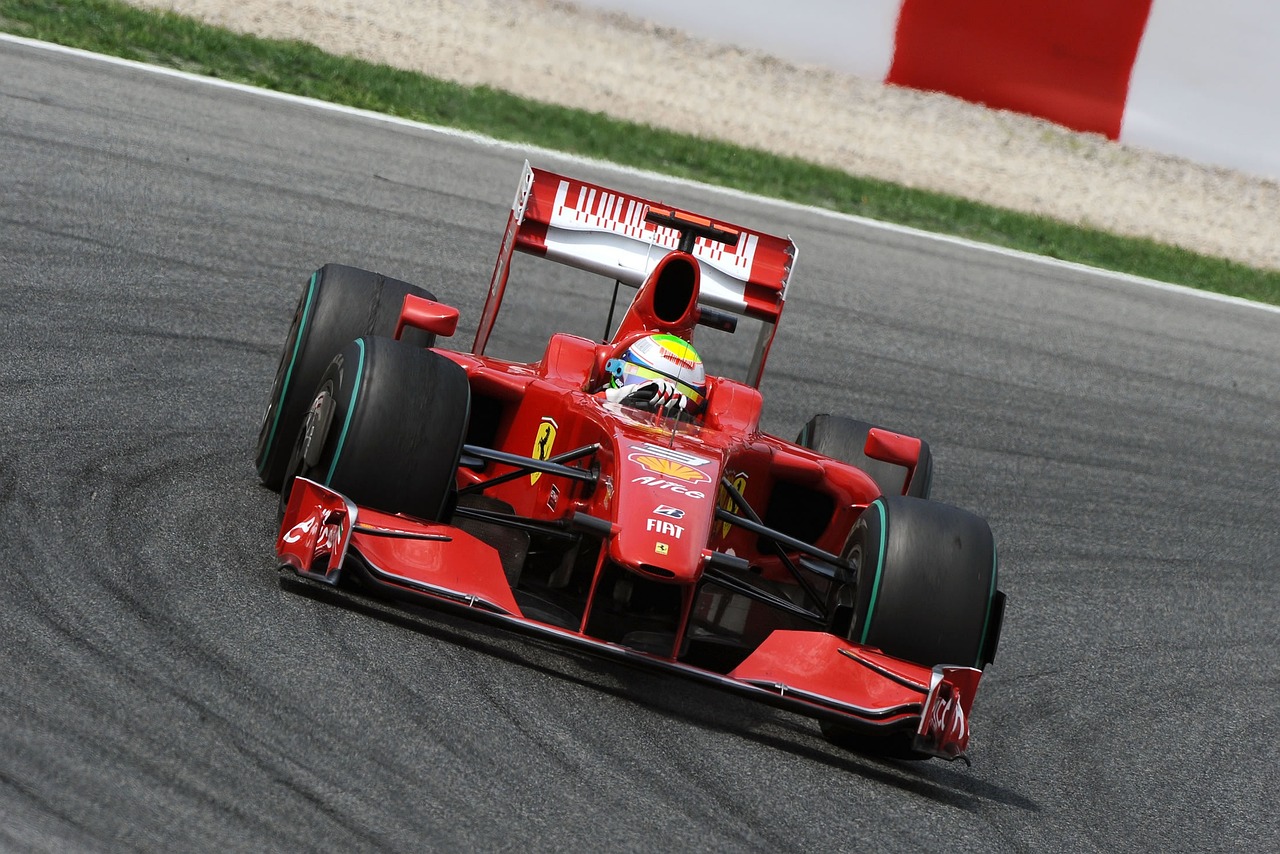


As Formula 1 returns to the Land of the Rising Sun, drivers brace themselves for one of the most revered tracks on the calendar – Suzuka. Renowned for its challenging corners and unique figure-eight layout, Suzuka is a real driver’s track, demanding precision and skill from those who dare to conquer its twists and turns.
Suzuka’s layout is as distinctive as it is demanding. In addition to the figure-eight configuration, the first sector is known for its high-speed esses – a series of fast, sweeping corners that test the driver’s reflexes and courage. This section, including the famous “S” curves, requires absolute precision to navigate at top speed without losing control.
Following the esses, drivers encounter the challenging Degner Curve, a tight and technical sequence that demands delicate balance between speed and stability. The circuit then leads into the hairpin at Turn 11, a prime overtaking opportunity where drivers often jostle for position before heading into the high-speed Spoon Curve. The final sector of Suzuka is equally daunting, featuring the iconic 130R – a flat-out corner that used to push both man and machine to the limit. But in modern F1 cars the once fearsome 130R is dismissed as nothing more than a kink, at least if it’s dry. As drivers approach the final chicane, they must negotiate the tight and technical Casio Triangle before unleashing their full power down the start-finish straight. Suzuka’s fast, flowing layout demand absolute precision with peril laying just beyond the edge of the track with ‘old-school’ gravel traps ready to punish mistakes.
In the annals of Formula 1 history, Suzuka has witnessed some of the sport’s most iconic moments. Among them, the 2005 Japanese Grand Prix stands out, with Kimi Räikkönen’s legendary comeback drive. In what is regarded as one of the best races ever, Räikkönen clawed his way from 17th on the grid to claim a sensational victory, showcasing his raw talent and unmatched speed.
The 2000 Japanese Grand Prix is another unforgettable race, where Michael Schumacher secured his third consecutive Drivers’ Championship, revitalizing Ferrari and cementing his status as one of the sport’s all-time greats. Other notable races include Ayrton Senna and Alain Prost’s infamous collision in 1989, which decided the championship in Prost’s favour. Ironically, one year later, in 1990, Senna and Prost would collide again. This time Senna would crash into the side of Prost into turn one on the first lap, taking them both of the race and leaving the Brazilian as world champion.
Shifting gears to the present, the spotlight falls on Yuki Tsunoda, currently the only Japanese driver in Formula 1. While his initial foray into the sport may not have been
meteoric, Tsunoda’s 2024 season has been marked by promising performances. Tsunoda has shown remarkable prowess, and has outshone his more seasoned teammate Daniel Ricciardo. His standout qualifying performance in Australia, where he defied expectations and secured a top-ten spot in a less-than-competitive car, speaks volumes.
As anticipation builds for the upcoming race at Suzuka, all eyes are on the battle at the front of the grid. With Red Bull and Max Verstappen seemingly automatic favourites for the win, the real question lies in whether Ferrari can maintain their momentum from a stellar victory in Australia. Amidst the excitement and adrenaline of Suzuka, the stage is set for a thrilling showdown. In the heart of Japan, where tradition meets innovation, Suzuka Circuit awaits, ready to test the limits.