
We all have rituals that give shape and rhythm to our lives. Perhaps it is the same with the people we know, those we encounter often, whose paths cross ours with quiet regularity.
Sometimes they are close friends, at other times acquaintances and occasionally, simply familiar faces we pass by frequently.
In many ways, we subtly influence one another’s hours, becoming quiet constants in the steady cadence of each other’s routines and threads in the fabric of our days.
When someone falls away, especially when it is a sudden and unexpected loss, the weave of that fabric is disrupted. The smooth rhythm of our daily rituals is broken, interrupted by and reverberating with the dissonance of death.
The passing of Dr Casper Lötter struck a chord in the local, as well as the wider, academic and research community.
Casper spent many a day in Stanley Street in Richmond Hill. He became a local, a known figure. Frequenting the cafés and restaurants while typing away on his laptop was how he spent many mornings and afternoons.
His favourite spot in the Groundfloor coffee shop was at the corner table, between the coffee bar and the window.
With a perfect view of the street and the window opened wide on warm, sunny days, Casper enjoyed the best of both worlds: the lively buzz of street life and sociability, as well as a perfect office setup.
Long ago, we christened that spot ‘Casper’s Office’. He wouldn’t have wanted it any other way.
Casper was an undoubtedly idiosyncratic character. Honest, with his own unique sense of humour; sharp-minded but humble; clever but also infinitely kind, he was wholly himself.
In his professional life, Casper held many roles: a former postdoctoral and research fellow in the School of Philosophy at NWU, a research fellow, a criminologist, a researcher, an academic scholar, a mentor to postgraduate students and an expert in the fields of philosophy, criminology and cultural studies.
But to us mere mortals who live and work outside of these academic circles and spheres, he was purely Casper. Unassuming and unpretentious. An undercover academic.
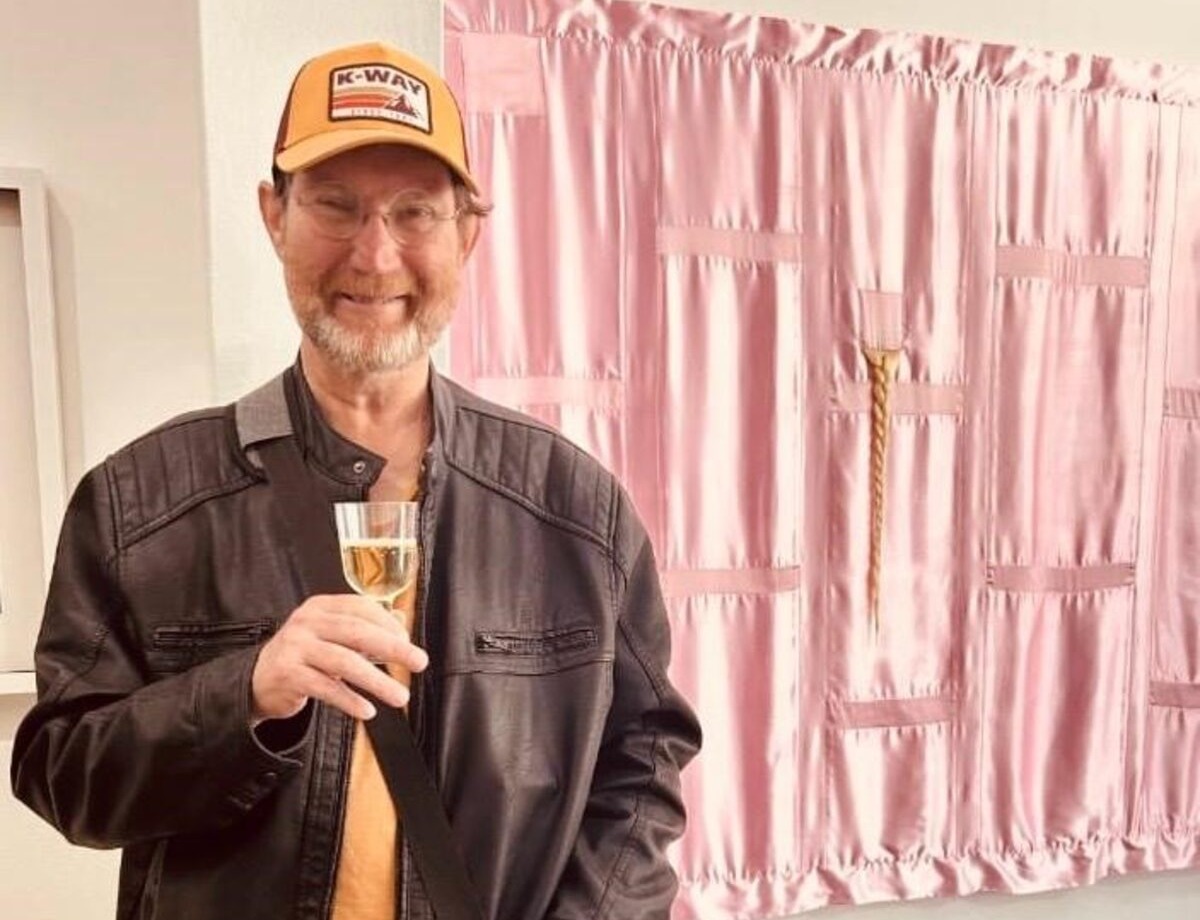
With his easy manner and his customary cap, glasses, brown leather jacket, and computer bag slung over his shoulder, Casper became an essential part of Stanley Street and simply one of us.
He loved good food, yet he could just as happily enjoy sardines from a tin and a touch of extra cream in his coffee. Intelligent conversation fascinated him, but he also valued the modest opinion of everyday people.
Generously, he shared his published research articles and articles he found interesting. Open-minded and attentive, he was a good listener who offered carefully considered opinions and thought-provoking ideas while remaining receptive to those of others.
But there was one character trait Casper possessed that stood out above all others: his strong sense of justice. He treated everyone with the same amount of respect, irrespective of social status, background or position.
Throughout his work and life, he was dedicated to promoting justice and imparting dignity to others – a true philosopher, always seeking and becoming the voice of truth.
We honour his life and the remarkable legacy he leaves behind. His voice will continue to ring clearly and resoundingly, echoing through the peaceful inroads he forged in the fields of criminology and philosophy, inspiring those who follow in his path.
It is that time of the year when some of the trees in Richmond Hill’s leaves are turning brown, while others are shedding theirs, shaking themselves free from summer. The seasons quietly turn. Things fall away. Sadly, so do people.
Sometimes Casper left notes tucked behind a framed poster above his usual station in Groundfloor, intending to continue his work the next day. When I check to see if they are still there, I find them safely tucked away.
And as the amber light of an early autumn morning catches the smooth panes of Groundfloor’s windows, it is almost as if I can still see Casper at his usual table, bent over his laptop.
He was many things. But most of all, he was an exceptional human.
ALSO READ: Remembering Gqeberha classical music giants