
THE R75 between Gqeberha and Kariega has again come under scrutiny, following three accidents in a single week, resulting in multiple fatalities.
This stretch has a notorious history, having previously been extensively covered in PE Express for its dangerous conditions. The South African National Roads Agency SOC Limited (SANRAL) has called for greater collaboration from the Nelson Mandela Bay Municipality and other stakeholders to restore the R75 to acceptable safety standards.
According to Mbulelo Peterson, SANRAL’s Regional Manager for the Southern Region, the agency has faced significant challenges since the appointment of the routine road maintenance (RRM) contractor.
“SANRAL has experienced challenges since the appointment of the routine road maintenance (RRM) contractor for national roads within the metro, who has had only intermittent site access and has been unable to perform the maintenance required to improve road safety along portions of the network, including the R75,” he said.
He further explained that the contractor was prevented from carrying out its duties due to the actions of individuals and groups claiming to be from adjacent wards, who demanded to participate in the RRM project.
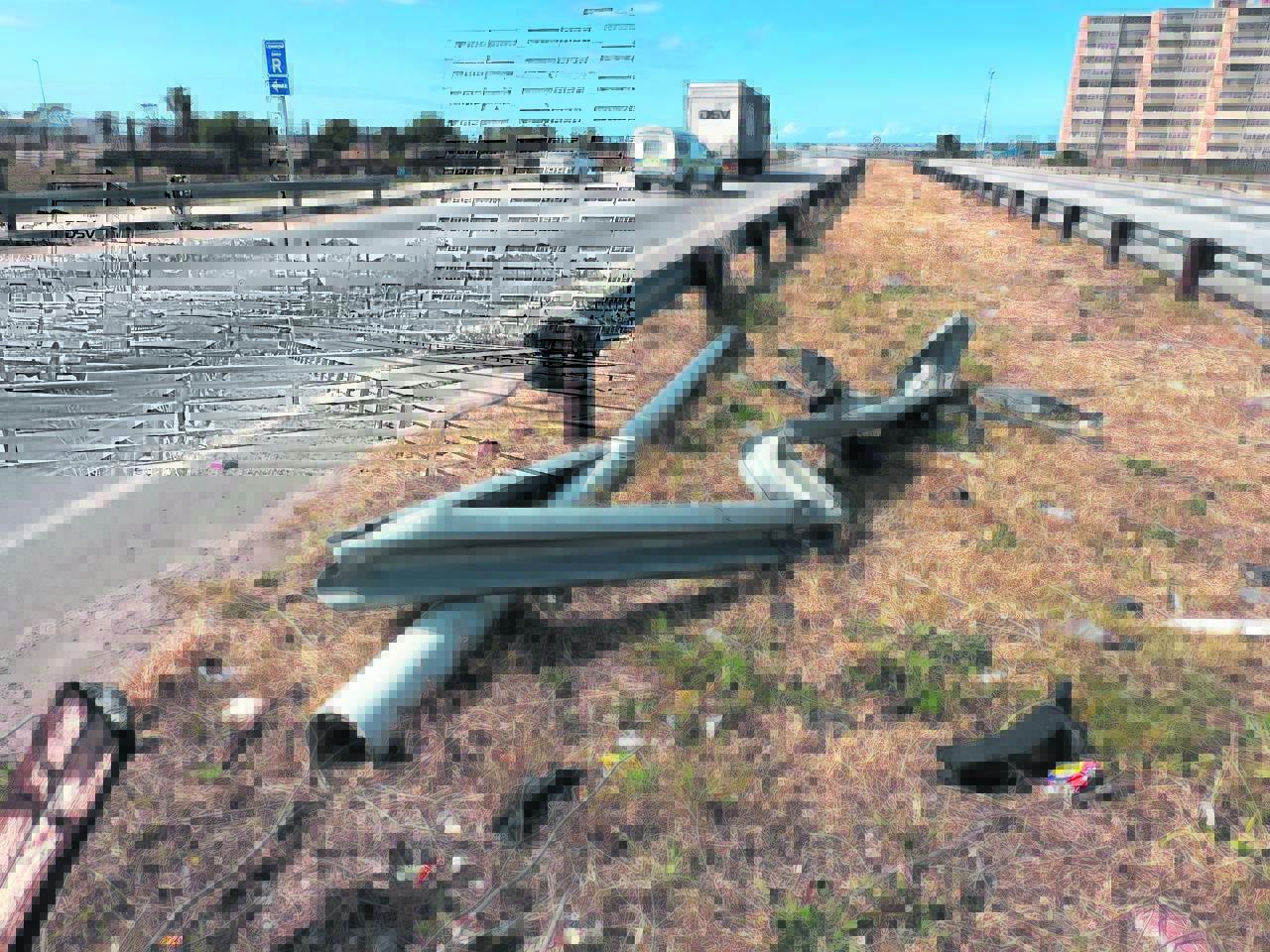
“As a result, conditions were unsafe for the contractor to carry out the necessary work on the R75 until consensus was reached. Furthermore, the RRM project has experienced incidences of vandalism and theft of the infrastructure, specifically along the R75, for which the replacement rate has become unsustainable,” he added.
SANRAL claims to have engaged with municipal stakeholders and the Project Liaison Committee (PLC) to find a resolution to these challenges.
“The Office of the Executive Mayor was also approached to intervene, including during Retief Odendaal’s tenure as the Metro’s Executive Mayor. He was unable to help to resolve the issues. While we acknowledge the concerns raised by Odendaal, we dispute that SANRAL had failed to make any attempts to resolve the challenges around the R75,” noted Peterson.
In response, Odendaal criticised SANRAL for neglecting its responsibilities.
“The South African National Roads Agency has come out guns blazing, blaming a dangerous and decaying R75 between Gqeberha and Kariega squarely on the construction mafia in Nelson Mandela Bay,” said Odendaal.
He acknowledged the presence of criminal syndicates but argued that this does not justify SANRAL’s abandonment of its duty.
“The real reasons why SANRAL has neglected its responsibilities regarding maintenance and repairs on the R75 are two-fold. Firstly, SANRAL has previously acknowledged that they encountered specific procurement problems. Secondly, they have delayed the work, no doubt in the hope that the planned Freeway Management System would have already been in place,” he said.
Odendaal emphasised that routine maintenance of the R75 is non-negotiable and criticised SANRAL for passing the buck.
“The fact remains that SANRAL has done nothing since 2022 to secure and maintain this route. Now, they are passing the buck because the public is demanding answers,” he stated.
Adding to the discourse, Unathi Binqose, spokesperson for the Eastern Cape Department of Transport, highlighted the frequency of accidents on the R75.
“There are many crashes where there are no serious injuries and/or fatalities that often go unreported, but it is fair to say that it’s had its fair share of crashes in the recent past, and its section called Uitenhage Road has been among the main areas of concern for us,” said Binqose.
He mentioned that the department is in talks with national colleagues to explore possible alterations to the road but stressed the need for increased law enforcement visibility and ongoing road safety campaigns in the interim.
“SANRAL’s appointed service provider for the maintenance of the R75 has had only intermittent site access and has been unable to perform the maintenance required to improve road safety along portions of the network due to acts of intimidation and demands for participation. Furthermore, prevailing incidents of theft of the infrastructure – such as road signs and traffic signals, as well as vandalism of the guardrails, street lights and the pavement – presented budgetary challenges due to frequent replacement of stolen or vandalised infrastructure. Prolonged delays in the appointment of SMMEs due to differing procurement policies of SANRAL and the Nelson Mandela Bay Municipality also impacted work on the R75. SANRAL adopts an open tender principle where any interested SMMEs can participate in the tendering process, whereas the municipality uses a ward selection-based approach, where participation is restricted to the affected municipal wards.
“Several engagements were required to reach common ground. At the core of the contractor being restricted from undertaking its work were demands for greater participation by local SMMEs. To this end, the RRM contractor has updated the Contract Participation Goal (CPG) Plan and communicated this to the Project Liaison Committee (PLC). Its endorsement is imminent and will enable SANRAL to proceed with second-round procurement of subcontractors to work with the contractor on the RRM project. SANRAL is engaging with the Nelson Mandela Bay Municipality, law enforcement through the local and provincial South African Police Service (SAPS), and the business community through engagement with the Nelson Mandela Bay Business Chamber, as well as the local community, to address the challenges and work towards a resolution. Engagements are ongoing, but steady progress is being made.
“The local targeted enterprises (SMMEs) are beginning to have an appreciation of SANRAL’s procurement process. The first round of appointed sub-contractors commenced with some of the critical maintenance-related work along the N2, and subsequently moved onto the R75 as of last week. Although it’s early days, the impact can be noted along the N2. It is our intention that the critical maintenance work continues, and that other routine maintenance backlogs be actioned by mid-November once the second round of SMMEs has been appointed,” said Peterson.
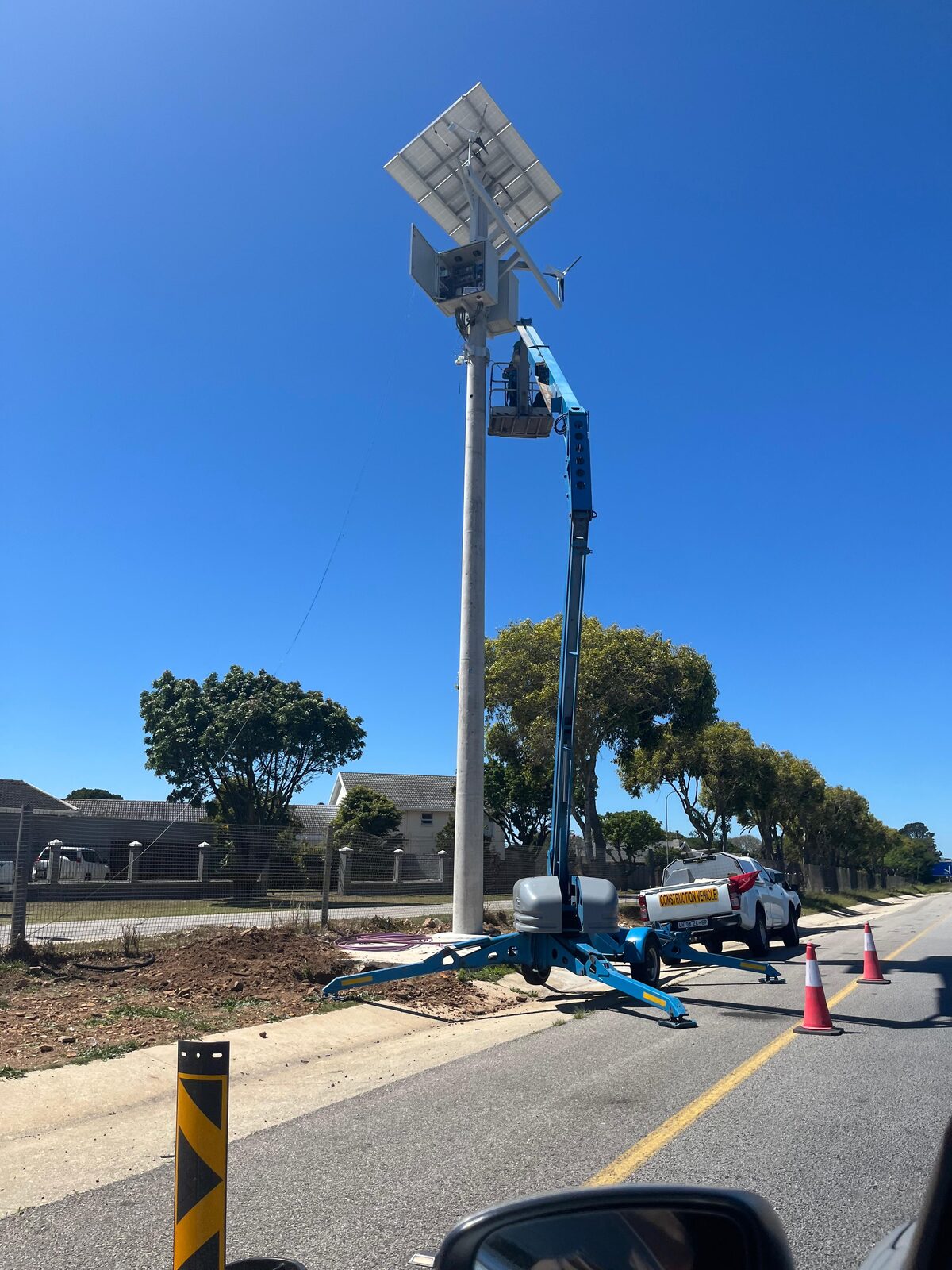
“Our Freeway Management System (FMS) is currently under construction with Zones 1 and 2 scheduled for completion by April 2025. It is the plan that the Interim Traffic Monitoring Centre (ITMC) will be operational from June 2025. In discussion with the NMBM, we are considering monitoring some of the identified traffic signals from the ITMC, which will include 24/7 CCTV surveillance, infra-red and thermal technology, tamper and proximity alarms and notifications, and the ability to work with law enforcement and private security to respond to suspicious activities. We are also considering a 0800 number where the public can report such activities, ensuring that appropriate response procedures are put in place. The NMBM will also pilot a hardened traffic signal solution. In partnership with NMBM, we are hoping that this pilot can be extended once the ITMC is operational and specific protocols can be put in place. The Freeway Management System monitors the freeways and main roads for incidents using vehicle monitoring cameras. The data is shared through a fibre network to the Traffic Management Centre (TMC) ensuring incidents are correctly and timeously responded to and the relevant information is disseminated. The initial project duration will be six years. The EC FMS project will be rolled out in the following areas: Section 1 (Nelson Mandela Bay Municipality), Section 2 (Buffalo City Metropolitan Municipality), Section 3 (King Sabata Dalindyebo Local Municipality) and the Rural Integrated Transport System (ITS). The system also greatly aids in the collection of incident data. This data can be analysed and the outcomes shared with the law enforcement and emergency services.”