
IN response to the alarming rise in school burglaries, armed robberies, and related incidents, the Member of the Executive Council of the Eastern Cape Department of Education, Fundile Gade, spearheaded a two-day provincial Schools Safety Summit.
The summit took place at the Nelson Mandela Metropolitan University (NMMU), Missionvale Campus, and was aimed at reviewing and bolstering school safety measures while mobilising civil society and state resources towards creating a secure, violence-free teaching and learning environment for both learners and educators.
The Nelson Mandela education district, recently identified as a hot spot for these crimes, was chosen to host the summit. Schools in this area have become vulnerable targets for criminals, prompting urgent action to restore safety and security.
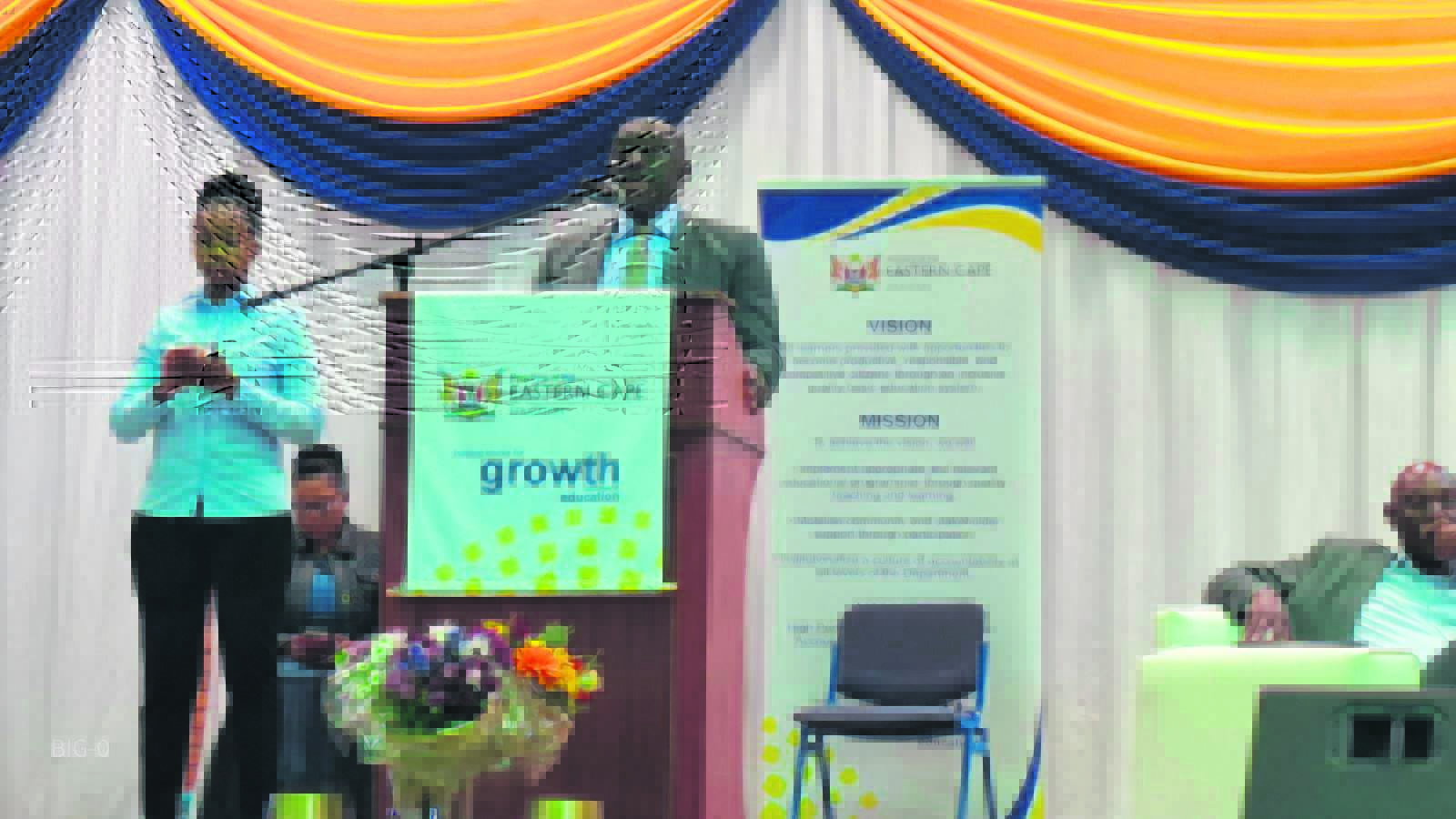
MEC Gade, addressing attendees on the first day, emphasised the importance of community involvement in supporting learners and combating crime.
“In the past, learners had the full support of not only the school, but also the community, church/religious organisations, and family. We have moved away from this, and the gaps are showing. It’s important to go back to this and give learners a full support structure again. It really does take a village to raise a child. When it comes to crime, it’s important for community members to snitch on criminals and wrongdoers because they see the things that happen and know the culprits. Contact the hotlines for whistleblowing,” said Gade.
The summit brought together a diverse group of stakeholders, including sister departments, SAPS, social partners, NPOs, learners, and teachers from the most affected schools, particularly in the Nelson Mandela Bay (NMB) area. The goal was to foster collaboration and develop comprehensive strategies to uproot crime in schools and the broader community.
On the second day, various commissions presented the challenges they observed in their communities and proposed recommendations. Key issues highlighted by the five groups included the safety of learners being compromised by inadequate infrastructure, bullying, and the targeting of certain students due to xenophobia and homophobia.
The commissions also addressed crimes committed by external criminals.
Several notable speakers contributed to the discussions:
. Khazimla Adam, National Speaker for the Children’s Parliament, spoke about the prevalence of suicide among learners and recommended increased emotional and psychological support.
. Author, Joseph Seakamela, discussed proactive approaches to violence prevention, emphasising the need for learners to be surrounded by reminders that discourage bullying.
. Professor Noluxolo Gcaza of Nelson Mandela University highlighted the importance of cyber safety, advocating for the protection of learners’ information and monitoring their access to prevent exposure to inappropriate content.
. Professor Fumane Khanare of the University of the Western Cape, addressed the need for a protective school climate, noting that sometimes teachers profile learners and use abusive and discriminatory language. She recommended collaboration among different stakeholders in learners’ lives.
The final day of the summit featured engaging panel discussions on pressing safety issues. Experts explored partnerships and joint programmes for improved safety, cybersecurity measures to protect learner privacy, the impact of social media on youth mental health, and the implementation of Multi-Tiered Systems Support (MTSS) for well-being and a positive school climate. The summit concluded with impactful resolutions aimed at enhancing school safety, providing valuable takeaways for attendees. This insightful and informative gathering equipped participants with actionable strategies and food for thought, paving the way for improved safety measures in educational institutions.
“Now, we hope that everything that was discussed here, and all the ideas that were exchanged will not be in vain. We need a vigorous implementation plan to commence as soon as January 2025,” one attendee concluded.