

With summer and the festive season around the corner, police in Nelson Mandela Bay are urging swimmers to be water-wise and vigilant, especially after two teenagers recently drowned while swimming in dams in the metro.
During the first incident, a 12-year-old boy went missing after going for a swim in a dam at NU12 in Motherwell. In another incident later the same day, the body of a 16-year-old was retrieved from a dam in Walmer.
Police spokesperson, Col. Priscilla Naidu, made an appeal to parents and guardians to ensure that their children were safe when going to the beach or swimming in dams.
She said that while police cannot provide statistics, drowning incidents had increased during October, compared to the previous month.
“Once summer approaches, there is a noticeable increase in the number of drowning cases reported in the metro and during this time, the police Search and Rescue team and the Diving Unit are kept busy,” Naidu said.
“We urge parents to constantly talk to their children and make them aware of the possible dangers when in the water. Children who cannot swim should not be left playing alone in dams, beaches, rivers and pools.
“Creating water safety awareness is very important, as many lives are lost, especially during the festive periods, through ignorance and negligence,” she added.
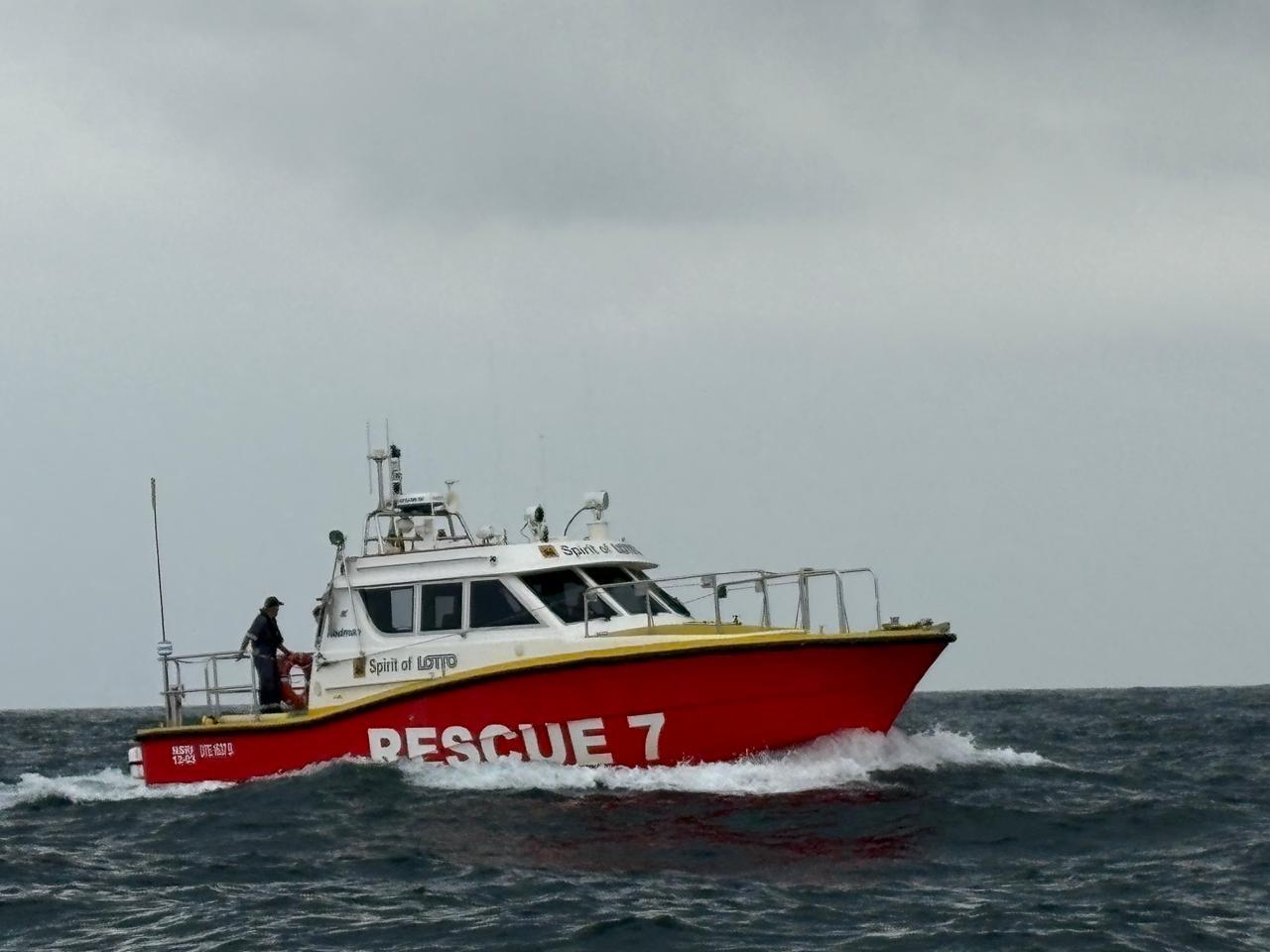
The National Sea Rescue Institute (NSRI) has also urged the public to adopt a water safety mindset around coastal and inland waters.
NSRI spokesperson, Craig Lambinon, said that the number one rule for a safe experience at the beach was to choose one that had lifeguards on duty and to swim between their flags.
“If you do that, you don’t need to worry about rip currents or suddenly getting out of your depth.
“Putting an arm in the air and waving for help will get a rapid response from the lifeguards on duty if you land in trouble,” Lambinon explained.
“Unfortunately, for various reasons, people regularly swim where there are no lifeguards on duty.
“This may be on a beach before or after the lifeguard’s duty for the day or at a beach that does not have lifeguards. This is when things can go wrong,” he added.
According to Lambinon, a typical scenario is that the NSRI receives an emergency call for a swimmer in difficulty and when they arrive at the scene, they find two or more people in danger of drowning.
“Tragically, sometimes we are not able to get there in time and someone drowns. Often the person who does not survive is the good Samaritan who went into the water to help someone who was in difficulty,” he said.
Since this happens so frequently, Sea Rescue launched the Pink Rescue Buoy project in November 2017.
The buoys are hung on strategically placed signs and serve as a reminder for people to take care when entering water and not to swim if lifeguards are not on duty at that stretch of the beach.
“If there is an incident and someone needs help, these buoys can be thrown to the person in trouble in the water, providing them with emergency flotation. There are clear graphics on the sign that explain how to use the rescue buoy and most importantly, the emergency number for the closest Sea Rescue station is printed on the sign,” Lambinon explained.
“If anyone decides, against advice, to enter the water to try to rescue someone in trouble, first call Sea Rescue and then use the pink rescue buoy to provide flotation for that good Samaritan and the casualty,” he mentioned.
Lambinon shared important water safety tips for everyone to bear in mind this summer:
Swim where, when lifeguards are on duty
“Lifeguards are on duty at selected beaches between 10:00 and 18:00 on weekends and during the week when it’s the summer school holidays.
“Listen to their advice and talk to them about safety on the beach that you are visiting.
“They are the experts on that beach. If lifeguards are not on duty, do not swim,” he emphasised.
Swim between the lifeguard flags
“Teach children that if they swim between the lifeguards’ flags, the lifeguards will be watching them and can help if there is a problem.
“Lifeguards watch swimmers very carefully between the flags – just wave an arm if you need help.”
. Don’t drink alcohol and then swim.
. Don’t swim alone. Always swim with a buddy.
Adult supervision, water barriers are vital
“Adults supervising children in or near water must be able to swim.
“This is vital if it is at a water body that does not have lifeguards on duty. It is extremely dangerous to get into the water to rescue someone, so rather throw something that floats to the person in difficulty and call for help.
“Children should not be able to get through or over barriers, such as pool fences, to water. Only use child-safe pool fences, covers or nets.”
Know how to survive rip currents
Plenty of educational material can be found on this website: www.nsri.org.za/2017/01/beware-of-rip-currents/.
Don’t attempt a rescue yourself
“Call a lifeguard or the NSRI by dialling 112 or the NSRI Emergency Operations Centre on 087 094 9774 from your cellphone for help.
“If you see someone in difficulty, call a lifeguard at once or dial the nearest Sea Rescue station from your cellphone.
“You should put this number into your phone before you go to the beach.
“After calling for help, try to throw something that floats to the person in difficulty. A ball, foam surfboard and so forth.”
All emergency numbers can be found on this website: www.nsri.org.za/emergency-numbers/.
- “Watch children using floating objects, toys or tyre tubes at the beach or on dams very carefully. Never use these if the wind can blow them away from the shallow water.”
- “Drowning is silent. Watch children when they are in or near water. Do not be distracted by your cellphone while you are looking after children in or near water. You need to focus on them and nothing else.”
- “Learn how to do CPR and have the emergency numbers saved on your phone.”