
The Nelson Mandela Bay Municipality’s Executive Mayor, Councillor Babalwa Lobishe, has been at the forefront of a series of operations aimed at curbing illegal activities and ensuring the safety of residents. These operations, conducted in collaboration with various municipal departments and law enforcement agencies, have led to significant findings and actions.
KwaZakhele Ward 21 Operation
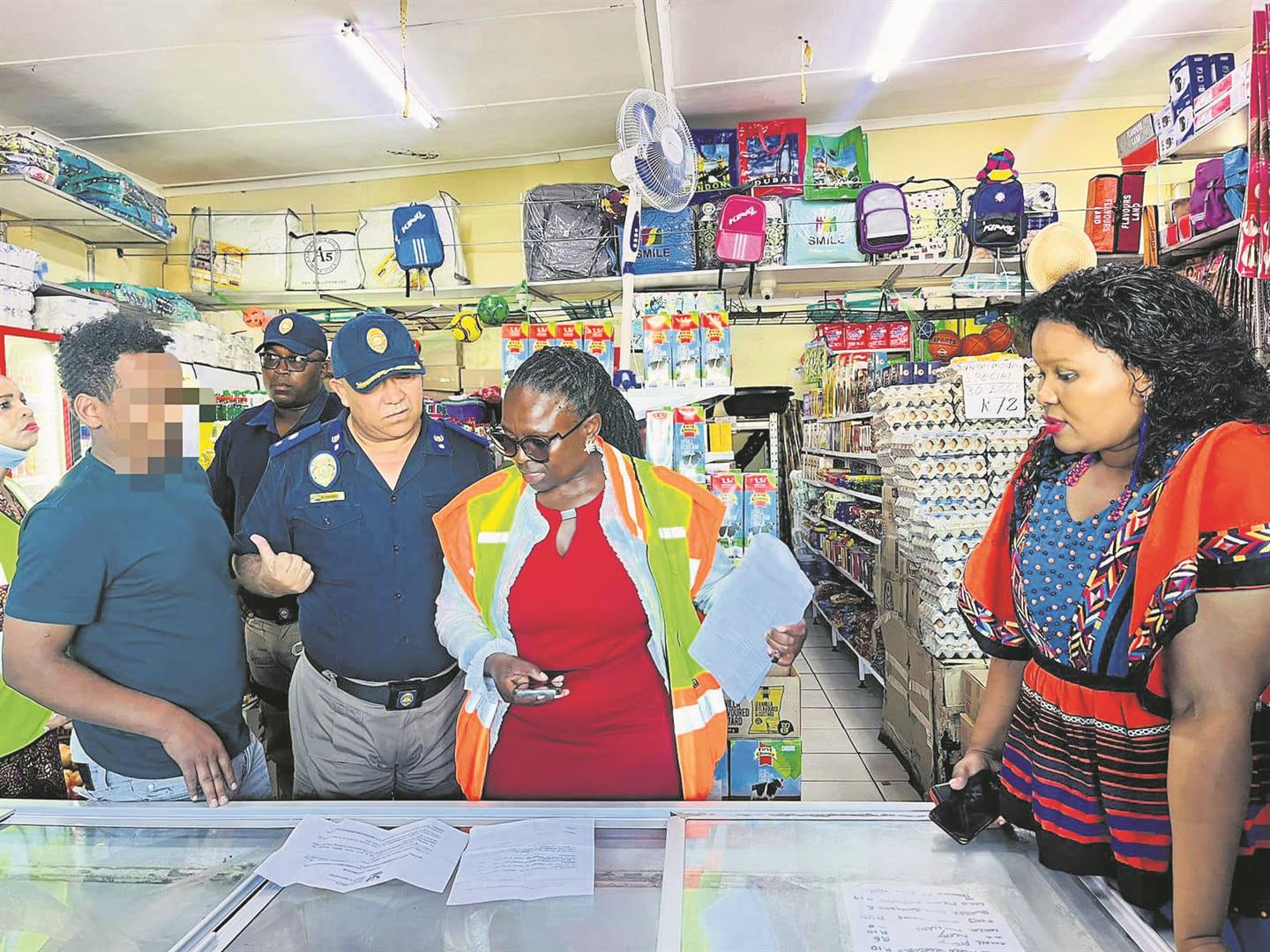
Recently, Mayor Lobishe, along with COO Chris Dyani, Member of the Mayoral Committee of Public Health, Councillor Tshonono Buyeye, and Member of the Mayoral Committee of Economic Development, Tourism, and Agriculture (EDTA) Councillor Bassie Kamana, spearheaded a joint operation in KwaZakhele Ward 21. The operation involved the Safety and Security Directorate, Public Health, EDTA, Electricity & Energy, Metro Police, Budget & Treasury, the South African Police Services (SAPS), and Immigration Services.
During this extensive operation, four spaza shops were shut down due to various unlawful practices. Authorities uncovered counterfeit goods, including rice in plastic bags, coffee, cooking oil, and creams. Additionally, illegal electricity connections and instances of illegal dumping were identified within the shops. Two undocumented immigrants were detained for residing or working in South Africa without legal documentation.
Mayor Lobishe emphasised the importance of enforcing compliance with by-laws and ensuring the safety of citizens by addressing hazardous food substances and other risks. “We urge all spaza shop owners to comply with these regulations by providing safe, quality products and maintaining lawful operations,” she said. The Mayor also called on residents to report non-compliant spaza shops to the relevant authorities or law enforcement, highlighting the collective responsibility in creating a safer, healthier, and more compliant community.
New Brighton Crackdown
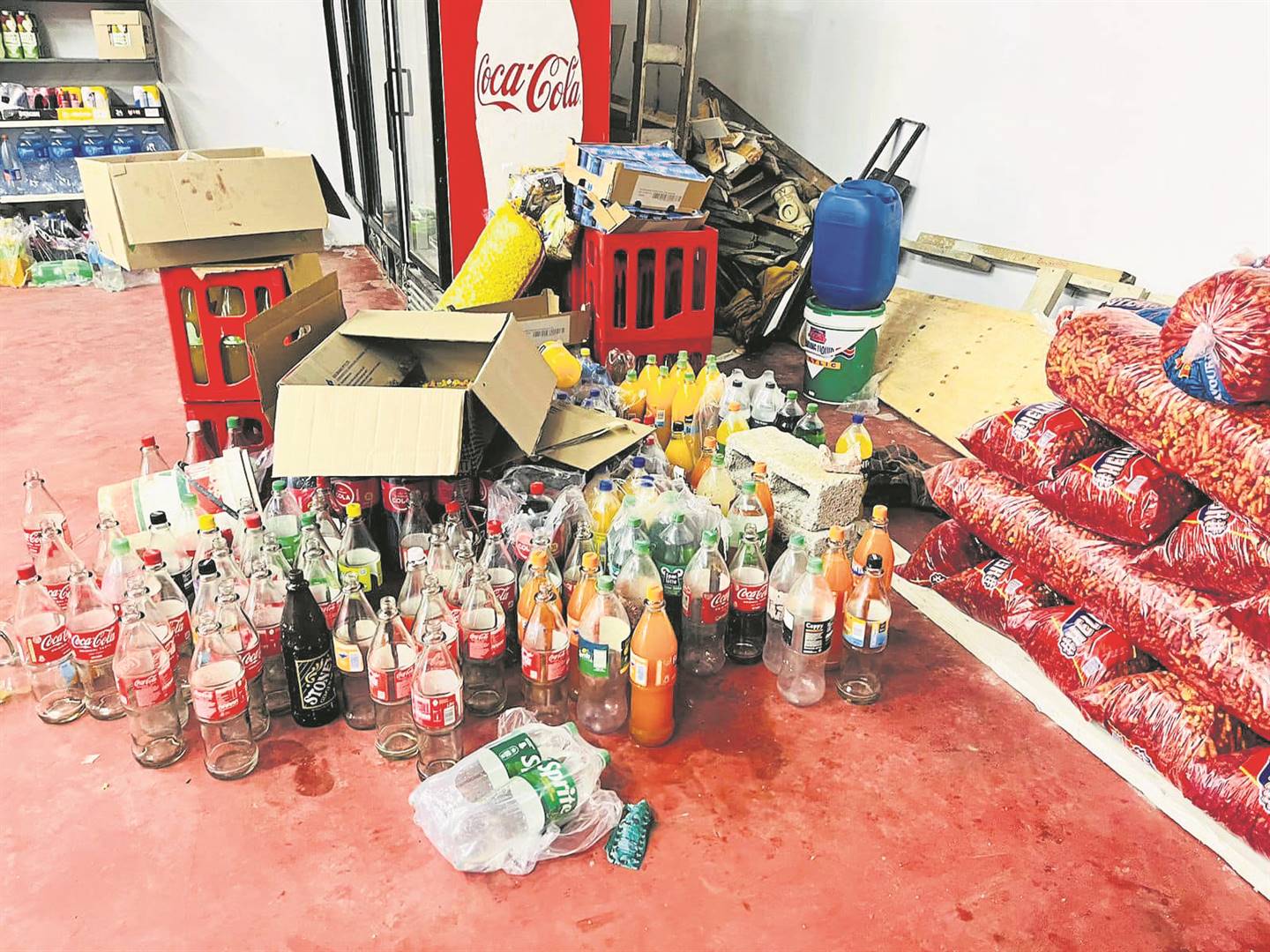
In another operation, Mayor Lobishe, COO Christopher Dyani, and MMC for Public Health, Councillor Tshonono Buyeye, along with Metro Police and SAPS, led a multi-stakeholder team in a crackdown on illegally operated spaza shops in New Brighton. This initiative was prompted by the discovery that some spaza shops, previously closed down due to serious by-law transgressions, had since reopened.
The raids resulted in the arrest of more undocumented immigrants and the confiscation of expired food, illegal fireworks, and unauthorised medication. Authorities also disconnected illegal electricity connections and discovered illegal waste disposal on site. These actions underscore the municipality’s commitment to maintaining public health and safety standards.
Kariega Incident: A Wake-Up Call
Adding to the urgency of these crackdowns, a recent incident in Kariega has highlighted the potential dangers posed by non-compliant spaza shops and unofficial sellers. Twenty-nine primary school children from Nokwezi Primary School in KwaNobuhle were rushed to a clinic after falling ill from eating chips allegedly sold by a street vendor. The children suffered symptoms of itchy skin and stomach cramps shortly after consuming the snack.
Education department spokesperson, Malibongwe Mtima, confirmed the incident, saying the children were stabilised at the clinic.
“We are aware and we’re able to manage the situation and it’s back to normalcy. 29 kids were rushed to a clinic after complaining of itchy skin after consuming chips bought from a vendor selling in the school. The food was taken by health and environment officials for testing. The learners were later released after being observed for few hours at the clinic. The matter is being investigated. We issued a memo as stated in this statement urging parents, SGBs and schools to be on the lookout. Also you will get from the statement that since we’ve spoken to municipalities (departments dealing with vendors and food security) and the department of health is on board assisting us to curb this,” Mtima explained. Authorities have since seized the woman’s food for inspection, and an investigation is underway.
In the memorandum issued at the end of October, the Eastern Cape Department of Education cautioned schools about recent food poisoning incidents and related deaths in the province. The Department was concerned and mandated the implementation of food safety guidelines from the National School Nutrition Programme Revised Guidelines (2018).
MEC Fundile Gade urged the school community to report suspected food contamination through official channels. Gade clarified that no evidence links these incidents to the National School Nutrition Programme, despite some media reports. The memorandum emphasised the importance of engaging National School Nutrition Monitors and collaborating with the Department of Health and Local Government Officials to investigate and prevent future incidents. Schools were instructed to ensure vendors meet accreditation standards for food preparation and serving.
The Department called on School Governing Bodies, Senior Management Teams, and the community to monitor learners and report any suspected food poisoning. Principals, Education Development Officers, and School Governing Bodies were also asked to communicate concerns to local vendors. The Department extended condolences to affected families and urged vigilance to ensure learner safety.
Lobishe stressed that the Nelson Mandela Bay Municipality is taking decisive action to address illegalities in spaza shops. “These operations are not only about enforcing compliance but also about safeguarding the health and well-being of the community. Residents are encouraged to support these efforts by reporting any non-compliant spaza shops and ensuring that they purchase food from reputable sources. Together, these actions will contribute to a safer, healthier, and more compliant Nelson Mandela Bay.”
She concluded by promising to work hard to ensure that council urgently passes a by-law that equips the municipality with teeth to effectively deal with illegally operating spaza shops in the Metro. She also urged the spaza shops owners to comply and operate within the prescribed regulations and laws as they play an important role in the township retail economic sector.