
The Nelson Mandela Bay Metro recently commenced with the second phase of its water pressure management measures in an effort to curb the ongoing drought.
This entailed the installation of water flow restrictor discs for all metro consumers that use between 10-15kl per month.
Flow restrictor discs are small discs that are installed on the consumer side of the water meter. These discs have a hole through the disc that restricts excessive flow and reduces the pressure to the property.
The device does not shut off the water supply to the property and consumers will thus still have continuous water supply even with the flow restrictor installed.

This follows phase one, whereby these discs were installed at the premises of the top 100 water users in the metro.
Nelson Mandela Bay mayor, Nqaba Bhanga, said that due to the severity of the drought, rapidly dwindling water resources and continued high water usage in the Nelson Mandela Bay Metro, difficult decisions need to be taken.
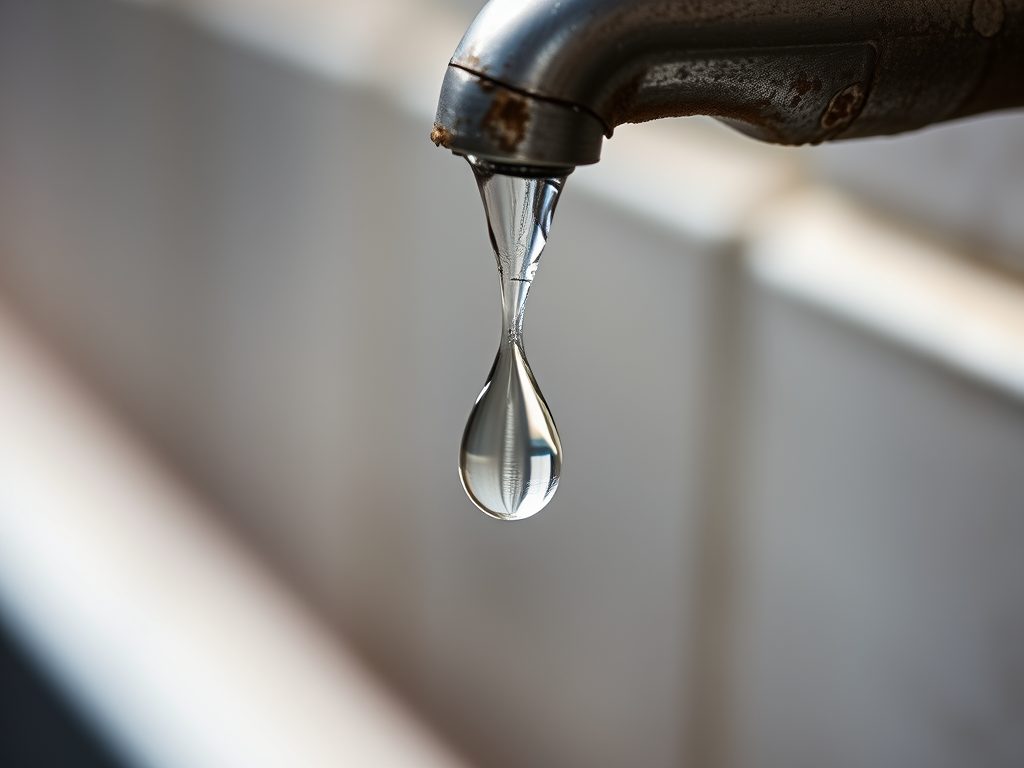
“A shared concerted effort is required to ensure that the very real eventuality of taps running dry in our communities does not become a reality.
“The metro has had various benchmarking sessions with the City of Cape Town regarding their Day Zero efforts.
“One of the most effective tools used in the City of Cape Town and which resulted in a water usage reduction of 40% was the introduction of water pressure management devices,” he said.
“There will be a mass roll-out of these discs, free of charge, as part of measures to urgently reduce water consumption and ensure that our communities do not run out of water.”
Bhanga added that there are other measures for consumers where water use remains more than 15kl per month despite having a restrictor disc already installed and despite notices to reduce water use.
These properties will receive flow limiting devices, which are special devices that can control the volume of water that passes through the water meter on a daily basis.
“The device monitors the volume used per day and will shut off the water supply to the property once the preset volume of 500l per day has been reached.
“Thus, in a typical month of 30 days, the property will be limited to a maximum of 15kl/month. Should the limit of 500l per day be reached and the device shuts off the supply, the water supply will be reinstated at 04h00 the following morning,” he explained.
He added that the metro is currently investigating further interventions that will address the consumption of water at complexes and sectional title schemes.
“As there are multiple consumers on one (or more) municipal connection in this instance, the metro will roll out a different approach to deal with these schemes. The metro has already sent notices to managing agents and body corporates in an attempt to fast track communication with these stakeholders. The metro will make flow restrictor discs available free of charge to these schemes to install at their premises.
“A differentiated and combined effort to these types of properties is required as the metro, unlike with freehold properties, does not have access to individual meters on private property inside these premises,” Bhanga said.
“In terms of the metro’s water by-laws, these schemes are already required to have installed individual meters per unit.
“The installation of these discs will thus be a simple process.”
Exemption requests for exceptional circumstances, with detailed reasons why usage above 15kl per month for a property should be granted, can be sent to the executive director: infrastructure and engineering.
For those schemes, in exceptional circumstances, that cannot comply with the request to install flow restrictor discs, other avenues of water saving can be investigated and any such application must also be submitted to the executive director with supporting evidence of a reduction in water usage and reasons why these discs cannot be installed.
- The executive director for infrastructure and engineering, Joseph Tsatsire, can be contacted at jtsatsire@mandelametro.gov.za.