

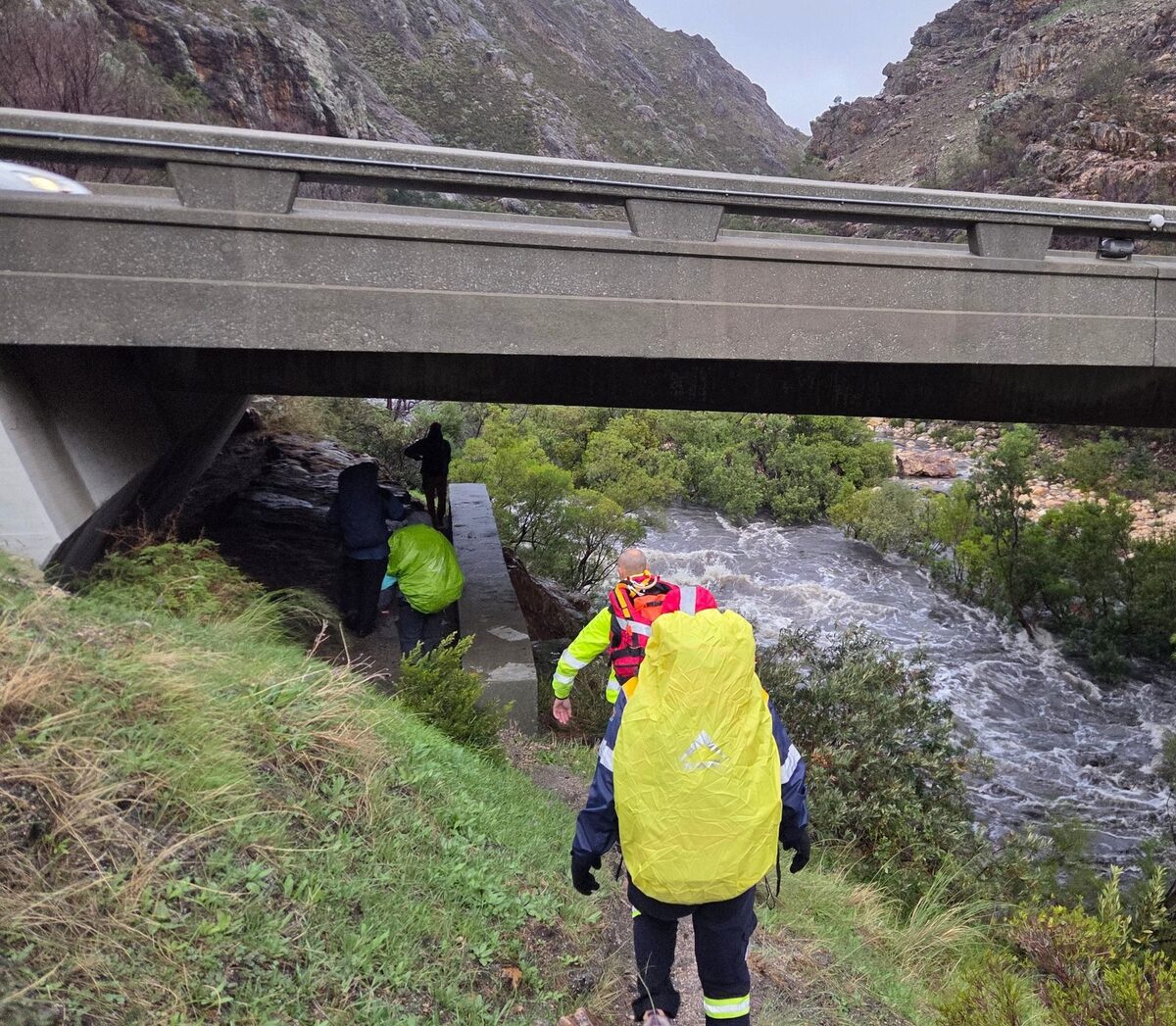
A Stellenbosch University student was rescued after a dramatic 24-hour operation along the Elandspad River in Du Toitskloof, where he was left stranded following flash flooding.
According to Wilderness Search and Rescue (WSAR), the incident unfolded on Sunday (19 April) when a group of four young hikers attempted to return after turning back due to worsening weather conditions. By the time they reached a river crossing, heavy runoff had caused water levels to surge, transforming the river into a fast-moving and dangerous stream.
Three members of the group managed to cross before conditions became too hazardous. Realizing the risk, they did not attempt to return for their friend, instead seeking higher ground to get cellphone reception and calling for help.
The fourth hiker remained stranded on the opposite bank for nearly 24 hours, cold, wet and exposed to the elements.
Rescue teams, including WSAR, CapeNature and SAPS Search and Rescue, were dispatched to the scene. On arrival, rescuers were met with extreme conditions. The river had risen to such an extent that sections of the trail were completely submerged, forcing teams to navigate exposed terrain and scramble over a buttress to avoid the powerful current.
Rescuers assessed various options but, due to the force of the water and fading light, made the decision to delay crossing attempts and wait for conditions to improve. A small team, including an EMS medic from Western Cape Government Health and Wellness, remained on site overnight, maintaining visual contact with the stranded hiker.
In the early hours of Monday (20 April) morning, water levels began to subside, allowing rescuers to throw a line across the river. Essential supplies, including warm clothing, hot drinks and a two-way radio, were sent across to the hiker.
“That early morning breakthrough, getting vital supplies and communication across the river, was a turning point,” said WSAR spokesperson David Nel.
“It stabilised a rapidly evolving situation and gave the patient renewed reassurance that help was not only close, but actively closing in.”
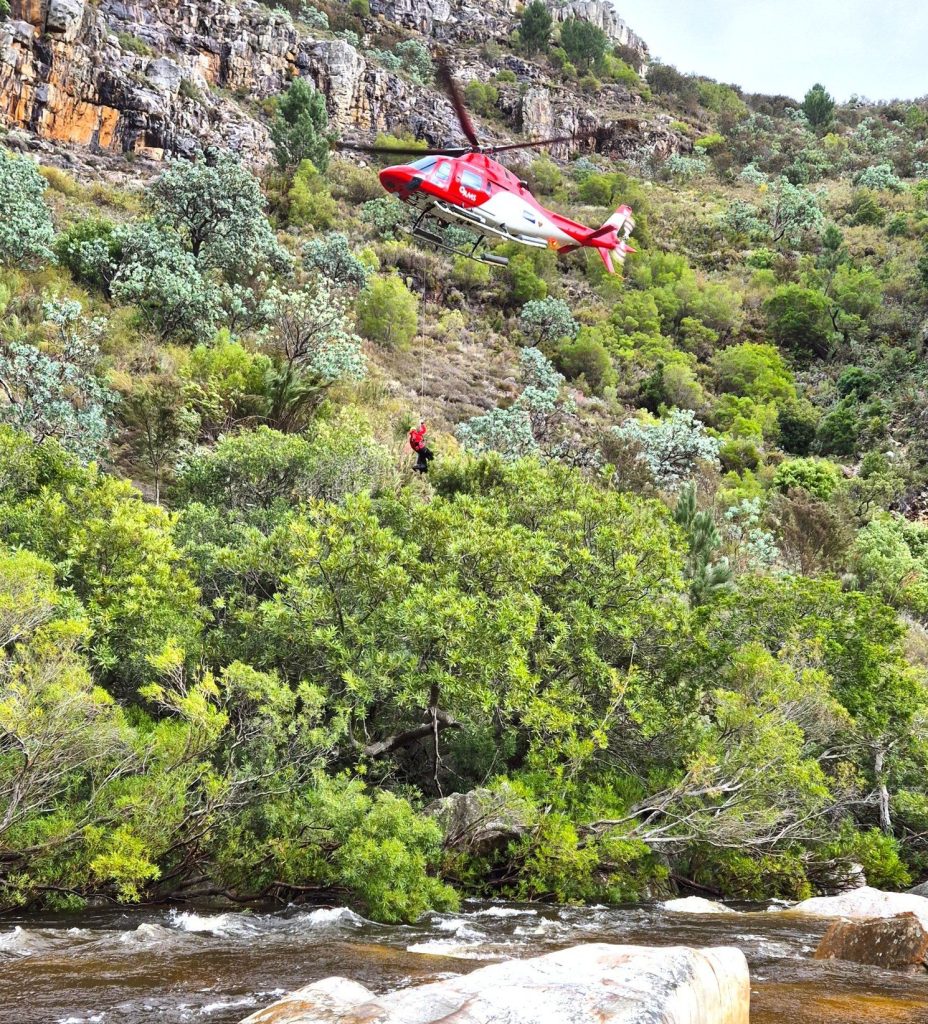
With improving conditions, a rescue helicopter from the Western Cape Government Health and Wellness EMS / Air Mercy Service was deployed. A rescuer was lowered to assist the hiker into a harness before he was safely airlifted to a nearby landing zone at Du Kloof Lodge.
He was then transported by ambulance to hospital for further assessment. The operation concluded at around 12:00 on Monday.
“We cannot stress this enough, rivers are dynamic systems. What looks manageable in the morning can become life-threatening within minutes after rainfall,” Nel warned.
“Always check the weather forecast before heading out, avoid activities near rivers during and after rainfall, and never attempt to cross swollen or fast-flowing water.”
WSAR thanked the various partner agencies involved in the operation, as well as Du Kloof Lodge for providing support to rescue crews during the mission.
Witrivier claimed four young lives 131 years ago
The Bain’s Kloof tragedy of 23 May 1895 highlights the dangers of rapidly changing river conditions.
At the Witrivier in Bain’s Kloof near Wellington, what appeared to be a manageable stream turned into a raging torrent after heavy rain, leaving a group stranded.
Read more: Witriver: A dark day in Wellington’s history
During efforts to rescue them, four young people – Lettie de Jager (18), Christiaan Krynauw, and brothers Lourens and Francois van Dyk – were swept away in the icy, fast-flowing water and lost their lives.
A monument in the kloof today stands in their memory and serves as a reminder of the risks posed by swollen rivers.


You must be logged in to post a comment.