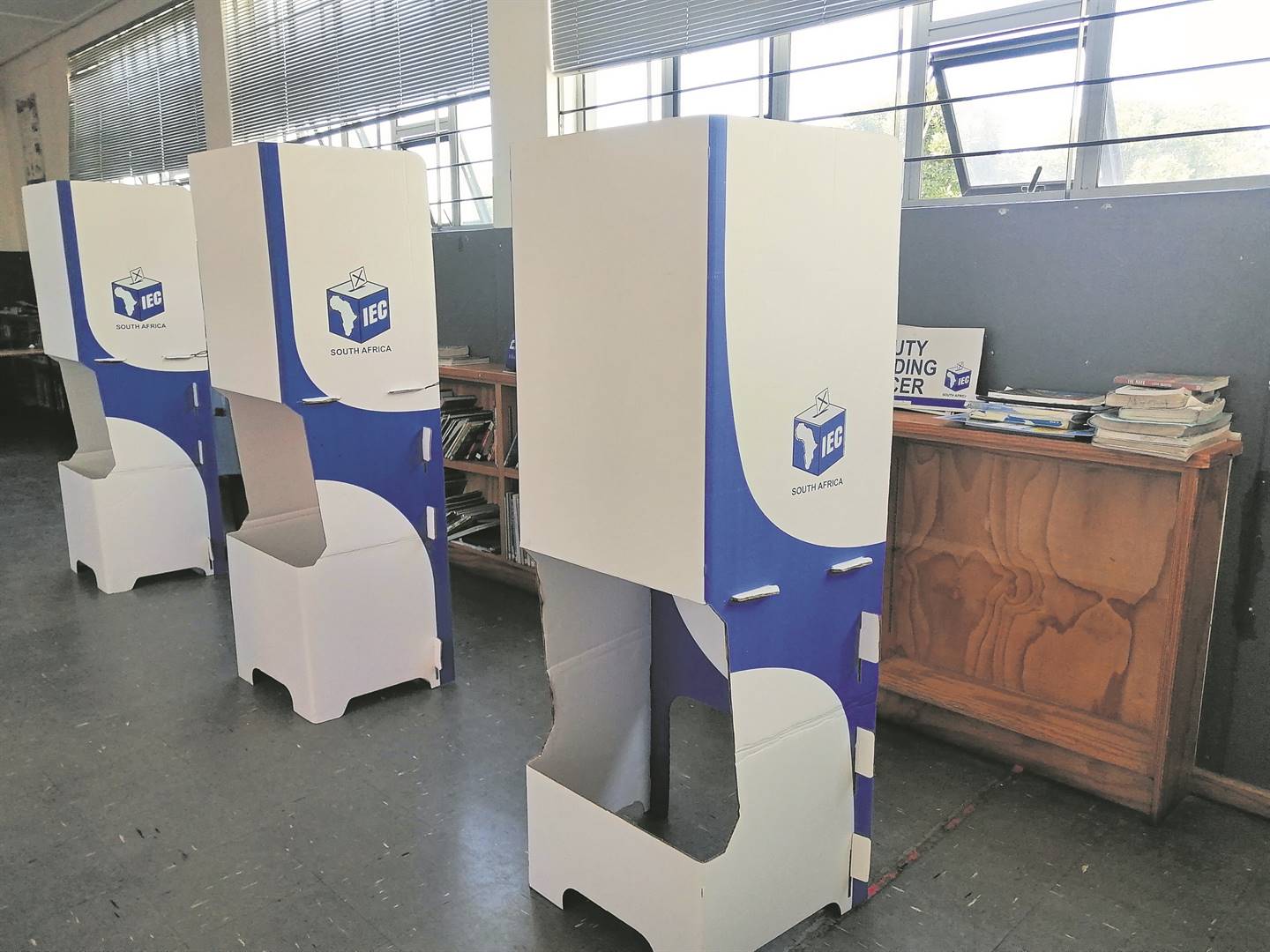
South Africans have two days to register to vote or update their details as the Electoral Commission prepares to open all 23 706 voting stations across the country on Saturday and Sunday.
The voter registration weekend on 20 and 21 June takes place during Youth Month, with the commission making a particular appeal to young people aged 18 to 19 years, of whom more than 70% remain unregistered.
Registration stations will operate from 08:00 to 17:00 on both days, serviced by 48 212 trained staff members deployed across 22 718 permanent stations, 960 temporary stations and 28 mobile stations for remote communities.
The voters’ roll currently stands at 28 million registered voters, an increase from the 27.7 million recorded during the 2024 general elections. This growth comes despite ongoing monthly reductions of approximately 34 000 due to mortality, with the online registration platform proving crucial in maintaining the roll’s growth.
KwaZulu-Natal has the highest number of registration stations at 5 021, followed by the Eastern Cape with 4 984, Limpopo with 3 317, Gauteng with 2 832, Mpumalanga with 1 846, North West with 1 730, Western Cape with 1 623, Free State with 1 614 and Northern Cape with 739.
The increase from 23 151 stations used during the 2021 local government elections stems from the five-yearly review of wards by the Municipal Demarcation Board and expanded accessibility efforts.
Correct ward placement crucial
For local government elections, voters can only cast their ballots in the voting district where they are registered. There is no statutory mechanism to vote outside of one’s registered voting district, a framework that has been in place since the establishment of democratic local government in 2000.
The commission has urged all voters to update their details, particularly their addresses, to ensure correct placement on ward segments of the voters’ roll.
Following municipal boundary redetermination, 303 953 voters were affected by changes. The commission visited these voters in a targeted campaign, successfully adding 51 475 new voters and updating the details of 252 478 voters, representing 83% of affected records.
Technology and materials ready
A stock of 39 641 Voter Management Devices has been deployed across all provinces. The devices have undergone maintenance and external reviews, including code assessment, functional testing and load testing. Both the registration portal and registration app have been found ready for normal load volumes.
Where bandwidth connectivity is unavailable, devices will store registration data locally for later upload when network connection is restored.
All essential materials, including stationery packs, directional signage and document storage boxes, have been delivered to all provinces.
Youth and employment focus
Of the 48 212 appointed staff members, 37 994 are women and 10 218 are men. Some 22 599 staff members are under the age of 35, whilst 19 806 are between 36 and 50 years old, and 5 807 are aged 51 years and older.
Significantly, 34 404 of the appointed staff members are unemployed qualified persons, highlighting the contribution electoral events make towards temporary employment and skills development.
Recruitment criteria were developed in consultation with the National Political Liaison Committee, with names of appointed staff shared with Local Political Liaison Committees to allow for objections.
The commission’s Tertiary Institutions Campaign had reached 269 552 students by 31 March, of whom 158 446, or 59%, were newly registered voters. Another campaign will soon roll out at tertiary institutions nationwide.
Extensive public awareness campaign
Following the national launch of the 2026 local government elections communications campaign on 27 May, the commission has mounted outdoor advertising and media campaigns across national and regional platforms.
In partnership with the South African Broadcasting Corporation, youth-focused television programmes and voter education storylines have been integrated into popular shows and radio dramas.
Dedicated 30-minute interview slots are being broadcast on 159 community radio stations nationwide from 8 to 30 June 2026. Beats for My Peeps, a youth docu-reality show that premiered on 3 June, airs every Wednesday at 18h00.
The commission has conducted 34 356 civic and democracy education events, reaching more than 6.6 million people nationwide. Some 834 Municipal Outreach Officers, including 52 from the disability sector, have been recruited to strengthen community engagement.
Earlier this month, the commission trained over 70 members of Blind SA on the use of the Universal Ballot Template to enable independent voting with dignity. Additional workshops with disability groups are planned.
The Electoral Commission’s Contact Centre has managed 51 400 citizen interactions to date, providing assistance via voice, email, live chat and social media in all official languages.
ALSO READ: South Africans urged to register online ahead of voter registration weekend
Home Affairs support
The Department of Home Affairs will operate during the registration weekend to provide identity document services, ensuring eligible citizens have the necessary documentation to register.
Citizens must present a South African identity document, Smart ID card, green barcoded ID book or valid Temporary Identity Certificate when registering or updating details. Proof of address is not required, but a place of ordinary residence must be provided.
The commission has encouraged voters to use the online voter registration portal at registertovote.elections.org.za and to locate their voting station via maps.elections.org.za.
Candidate nominations next
With election deposits now determined and published following public consultation, the commission is preparing to make the Online Candidate Nomination System available to registered political parties and prospective independent candidates.
Training sessions for registered political parties and prospective independent candidates will commence shortly to prepare them for the submission of candidate nominations and supporters’ lists.
ALSO READ: Home Affairs offices open nationwide for voter registration weekend