

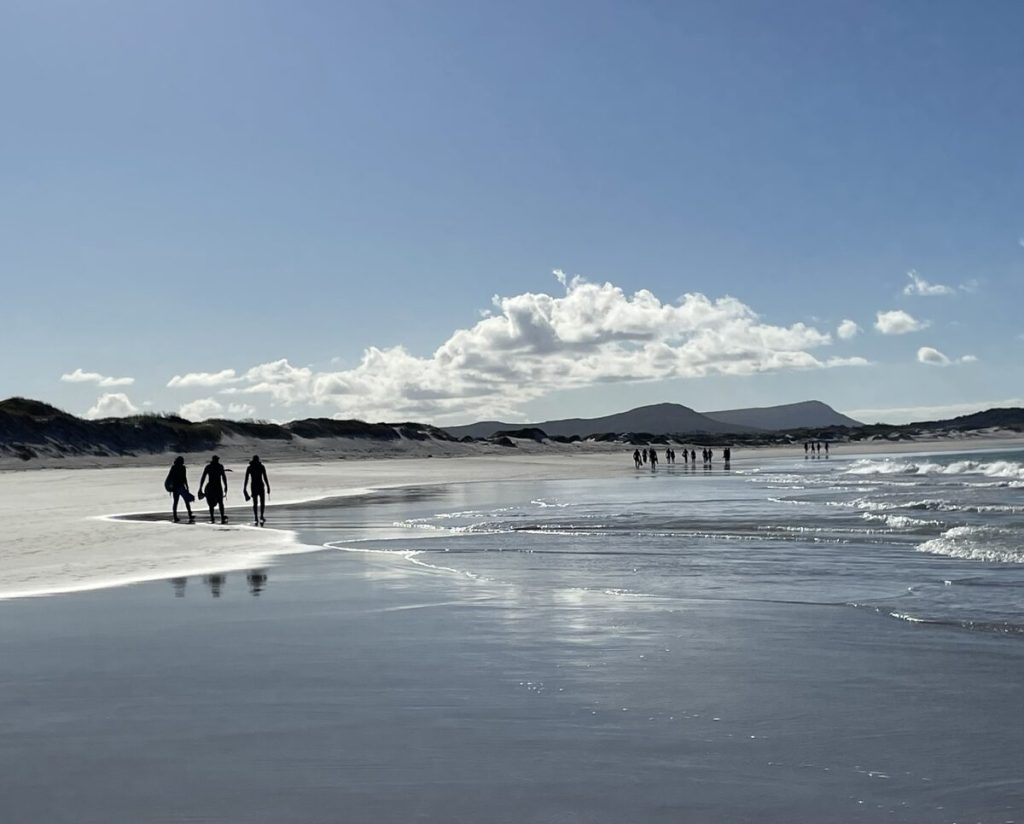
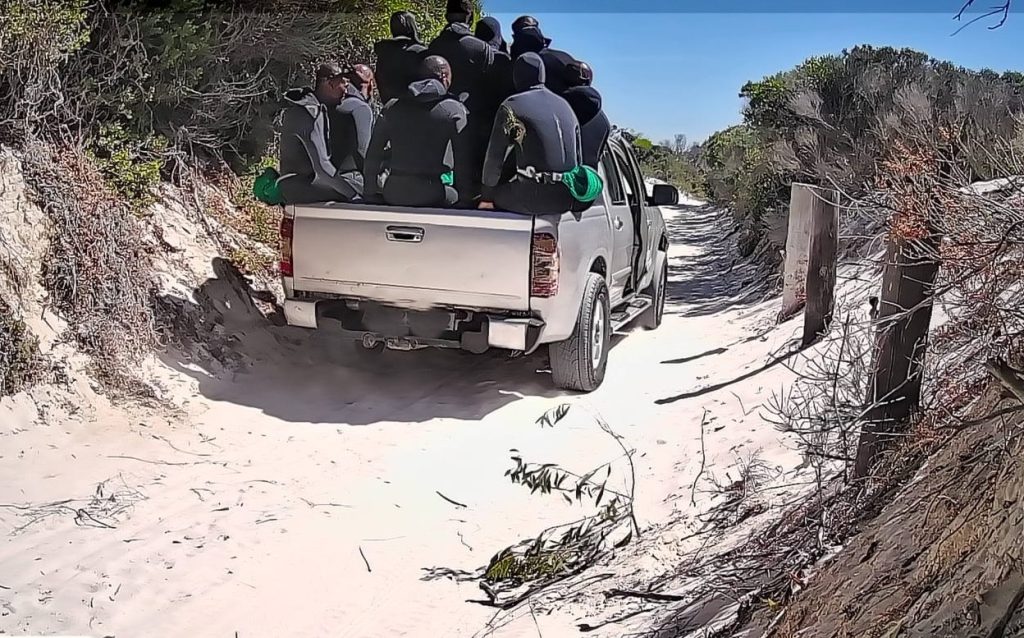
A silver double-cab bakkie explodes onto a pristine beach at Pearly Beach at high speed, throwing up sprays of sand. Ten to twelve men in full-body wetsuits and scuba diving gear are crammed into the load-bed, each carrying large flathead screwdrivers and dive-knives. The vehicle accelerates down the beach, scattering sunbathers and children building sandcastles, before skidding to a halt where the kelp beds are richest.
The divers pour off the back and vanish into the surf in seconds. The bakkie’s driver guns the engine and tears back up the beach at the same reckless speed. Minutes later, the vehicle returns with another load of divers. And again, and again, and then for the pickup.
They load up and leave. No siren sounds. No law enforcement officers appear. They drive away having illegally harvested tens of thousands of rands worth of abalone, knowing no one is coming for them.
This scene, described by eyewitnesses, has become routine along the Overstrand coastline from Pringle Bay and Kleinmond through Hermanus to Pearly Beach, Gansbaai and Cape Agulhas. Organised gangs of up to 100 divers at a time conduct systematic raids on marine protected areas in broad daylight, stripping critically endangered abalone from reefs, whilst knowing that the long arm of the law will never catch them.
The Department of Forestry, Fisheries and the Environment has now acknowledged that understaffing and resource constraints severely hamper efforts to combat organised abalone poaching along South Africa’s southern coast, where the species faces near-extinction.
In response to questions from NovaNews, the department revealed that just 26 fishery control officers patrol the Overstrand coastline, a ratio of one officer per 17km compared to the international norm of one per five kilometres.
A species on the brink
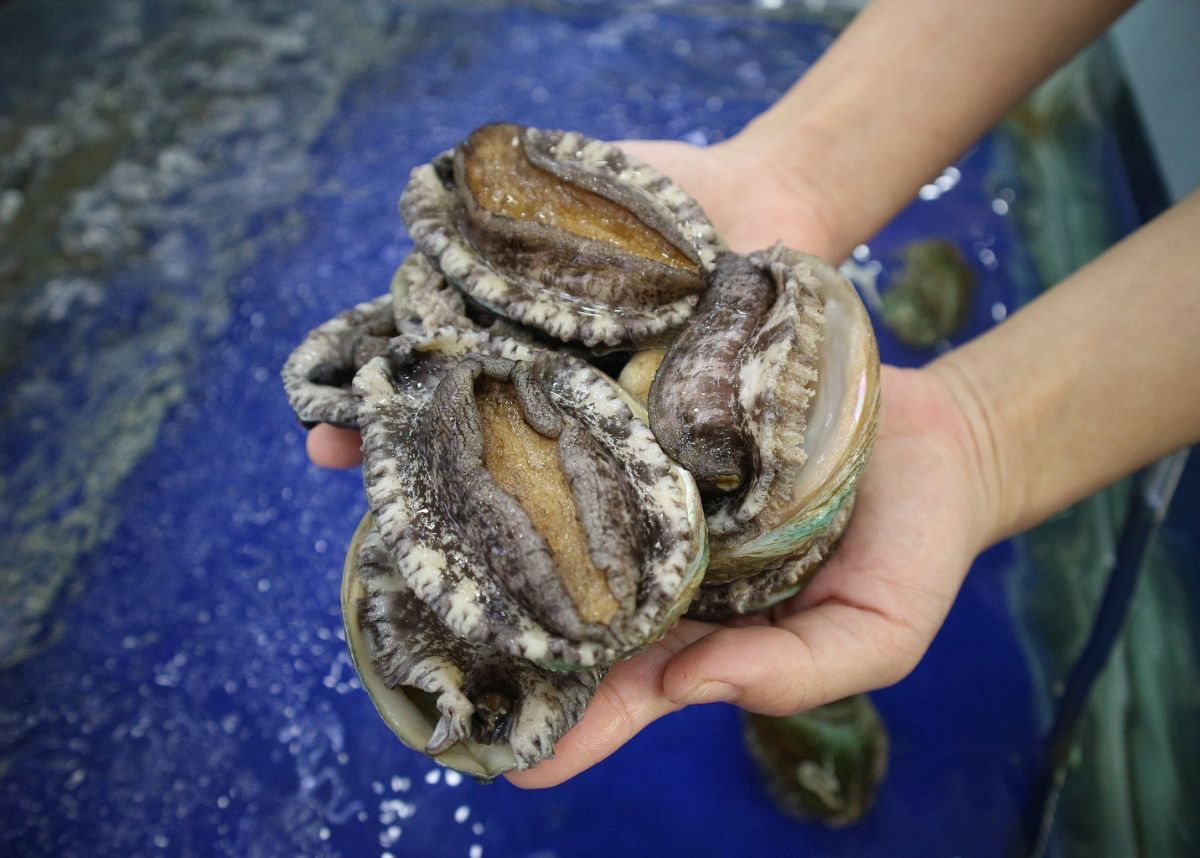
South African abalone, known locally as perlemoen, has been classified as endangered by the International Union for Conservation of Nature. Populations have collapsed by an estimated 96% since the 1960s. Commercial harvesting has been suspended since 2008, with only very limited quotas still allocated.
The Overstrand coastline is one of South Africa’s most ecologically precious marine environments. Marine protected areas, including sections within Cape Agulhas National Park, were established precisely to allow abalone and other species to recover from decades of over-exploitation.
Yet these protected zones have become poaching hotspots. Every abalone removed by a poacher cannot reproduce or contribute to population recovery. The screwdrivers being plunged into the rocks are dismantling what remains of a critically depleted population in one of its last refuges.
Enforcement statistics reveal challenges
Department statistics for the Overberg region over the past five financial years show approximately 100 case dockets registered, 48 prosecutions, but only two convictions related to abalone poaching.
Between 2021 and 2026, enforcement operations seized 89 538 abalone units weighing 25 752 kg. A total of 165 arrests were made across the Southern and Western Cape region during this period.
But the low conviction rate highlights difficulties in the justice system. Of the 48 cases prosecuted in the Overberg, most remain pending at court. Two cases were withdrawn, with two suspects paying admission of guilt fines of R500 each.
Director of Communication and Advocacy Zolile Nqayi confirmed that the department has “gathered and continues to gather specific information and intelligence” regarding illegal operations, but cannot share details to avoid compromising ongoing investigations.
Enforcement within the Overberg is addressed by fishery control officers based at five monitoring, control and surveillance stations at Gordon’s Bay, Kleinmond, Hermanus, Gansbaai and Arniston. Officers conduct daily coastal patrols, sea patrols, inspections, investigations and enforcement operations.
The department acknowledged that fishery control officers often work shifts, resulting in excessive overtime due to the nature of their duties. “Understaffing, lack of resources and funding remain a challenge,” the response stated.
Joint operations with partner agencies have increased substantially, from three in 2021-2022 to 150 in 2025-2026. These operations involve the South African National Defence Force, the South African Police Service, Cape Nature and SANParks.
Enforcement priorities disputed
Licensed recreational fishermen have raised concerns that enforcement resources focus disproportionately on inspecting compliant licence holders whilst large-scale poaching operations proceed without interference.
On mornings following poaching raids, licensed recreational fishing vessels returning to Gansbaai harbour after a day at sea are boarded by marine law enforcement officers before they have finished docking. Officers count their catch thoroughly. Licences are scrutinised. Measurements are taken. These are citizens who paid for licences, observed regulations and reported catches honestly.
When the crayfish season opens, marine enforcement officers are conspicuously present at harbours and beach access points, inspecting recreational fishermen’s catches. A recreational fisher with one too many crayfish, or one fractionally below the legal size, faces immediate consequences: confiscation, fines and possible criminal charges.
The department rejected the suggestion that resources are misallocated. “It is not true that monitoring, control and surveillance resources and other enforcement resources are overwhelmingly deployed against compliant, licensed recreational fishermen as opposed to illegal operations,” Nqayi said.
Inspections and operations within key fisheries sectors are predetermined through annual performance plans. Through these processes, the department has uncovered large-scale and organised commercial-scale illegal harvesting operations, addressed through criminal and administrative actions.
Organised crime connections
Abalone poaching in South Africa connects to organised crime syndicates with international links. The illegal trade is worth billions of rands annually on the black market, with South African perlemoen commanding high prices in East Asian markets where it is used in traditional medicine and as a luxury food.
The South African coastal abalone population, already reduced by 96%, continues its slide towards extinction.
The settlement of Buffeljags near Bredasdorp is known locally as a location associated with storage and distribution of illegally harvested abalone. The department confirmed it deploys regular operations involving surveillance of illegal movement of marine resources. “Should such surveillance activities indicate the illegal storage of illegally harvested resources stored in or around Buffeljags, the necessary action will follow,” Nqayi stated.
The department stated that it coordinates with the Directorate for Priority Crime Investigation (the Hawks) and the South African Revenue Service’s Customs and Excise division to address the organised crime dimension. Quarterly Phakisa operations are conducted to intercept and return illegally exported consignments.
A significant corruption case concluded in August 2023 when nine fishery control officers were convicted alongside 12 criminal syndicate network leaders operating mainly in the Overberg area.
The officers, based at the Gansbaai compliance office, were arrested in March 2018. Charges included contraventions of the Marine Living Resources Act, corruption, money laundering, racketeering and theft of abalone. The investigation revealed they facilitated illegal harvesting and aided smuggling syndicates in return for payment.
Sentences ranged from house arrest with conditions to between two and seven years’ direct imprisonment.
“This case and its successful conclusion served not only as a success but also as a deterrent towards corruption, theft and crimes in terms of the Prevention of Organised Crime Act. This case also portrays the department’s commitment to a zero tolerance to corruption and crime,” Nqayi said.
Coordination and resources
Nqayi said that as the lead agency, the department implements the Enhanced Coordinated Enforcement Programme under Operation Phakisa’s Marine Protection Services and Governance initiative. This programme aims to achieve an integrated and coordinated approach amongst enforcement organisations within the marine environment.
“The department also engages with local municipalities, police, Cape Nature, SANParks and traffic authorities to deploy operations and coordinate land-based interdiction. These deployments have resulted in multiple arrests and criminal cases.
“Joint operational plans are implemented regularly within the four coastal provinces in high-risk areas including the Overstrand. Operations are intelligence-driven and aimed at ensuring sustainable utilisation of marine living resources.”
He said that the total budget allocated for marine law enforcement along the southern Cape coast for the current financial year is approximately R5,4 million, but stated this is not specifically allocated between recreational and commercial sectors.
Future plans
Furthermore, Nqayi said that 19 honorary marine conservation officers have been appointed under the Expanded Public Works Programme as force multipliers, with more appointments expected at hotspot stations.
ALSO READ: Two men jailed for illegal abalone trading
Asked whether current enforcement levels are adequate given the ecological emergency, the department acknowledged the seriousness of the situation.
“The department is in the process of engaging with all relevant role-players towards continued and augmented support. The department is also of the view that this requires a continued multi-agency enforcement approach as organised crime is spreading beyond fisheries law enforcement functions,” Nqayi said.
ALSO READ: R1.2m worth of abalone seized in Table View, four arrested
The department acknowledged that “the onslaught on easily accessible, high value inshore marine resources has become a major challenge for not only the department, but for the country”.
More intensive operations and actions are planned not only for the Overberg region but other affected areas.
Regarding an independent audit of marine law enforcement operations in the Overstrand, the department stated the minister would consider a review of any arm of its enforcement operations within government policy and regulation prescripts.
Meanwhile, the bakkies loaded with poachers continue to arrive along Overstrand beaches. The divers continue to strip the reefs. And the abalone population, already reduced by 96%, continues its slide towards extinction.
Any marine misdemeanours can be reported at: envirocrime@dffe.gov.za
ALSO READ: Two arrested for abalone poaching in premier marine reserve



You must be logged in to post a comment.