

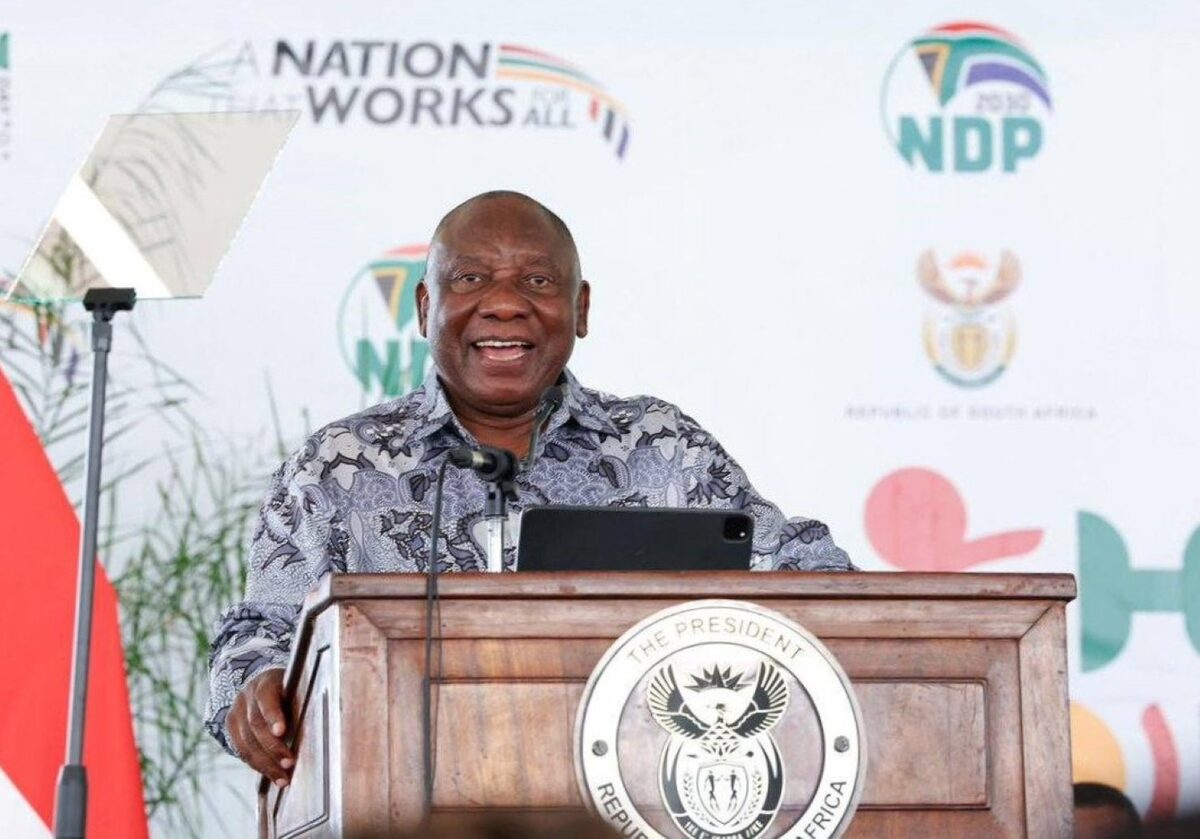
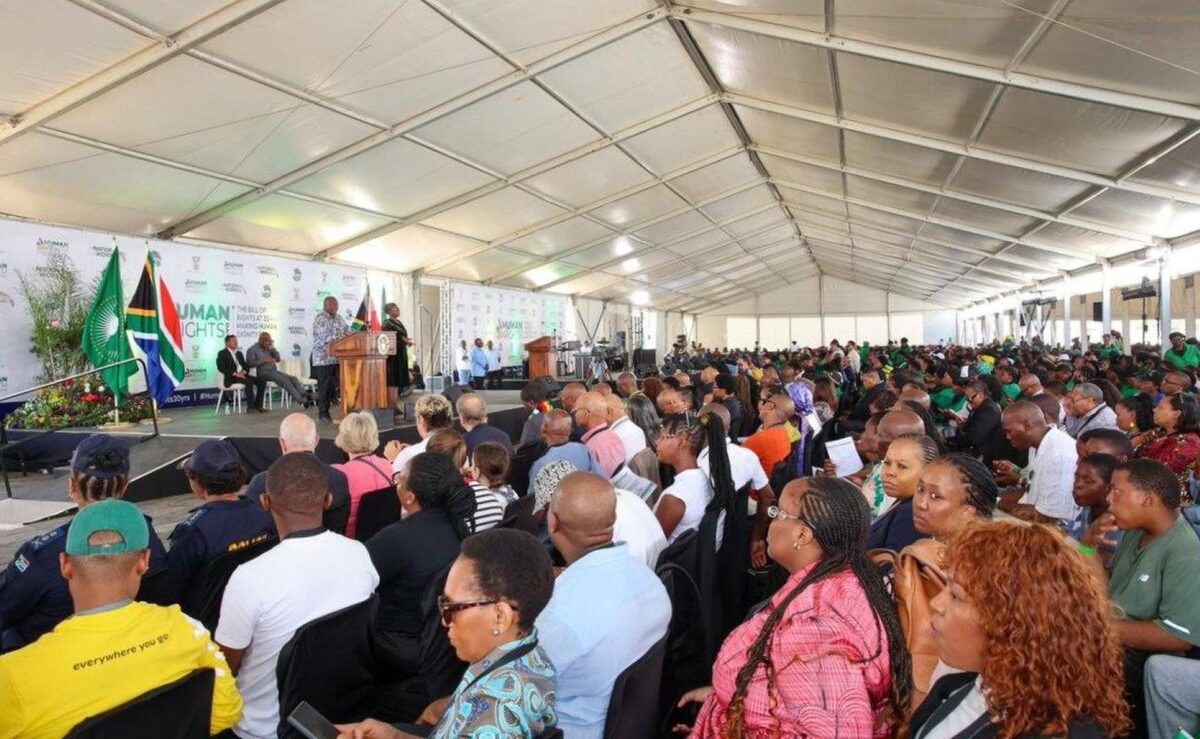
Speaking from the AR Abass Stadium in Kimberley on Human Rights Day, President Cyril Ramaphosa characterised the nation’s democratic journey as a continuous pursuit of dignity that remains “unfinished business”.
The event held historical significance, marking 30 years since the South African Constitution was signed into law by former President Nelson Mandela.
Addressing a crowd that included the Minister of Sport, Arts and Culture, Gayton McKenzie, Northern Cape Premier Dr Zamani Saul, and Chief Justice Mandisa Maya, Ramaphosa used the occasion to reflect on the profound transformation of South African society whilst acknowledging the deep-seated challenges that still plague the Republic.
Ramaphosa began by reminding the nation of the symbolic weight of 21 March, the anniversary of the 1960 Sharpeville Massacre. He noted that Mandela’s decision to sign the Constitution in Sharpeville was a deliberate act to ensure that a site of “brutality” and “tears” would become the foundation from which a new South Africa would rise.
“Signing the Constitution into law was the most significant act of our democratic era,” Ramaphosa stated, describing the document as a “covenant for dignity and a moral compass” that does not change direction for individuals or political parties.
He emphasised that the document was “homegrown,” the result of an extensive 18-month public participation process that gathered the hopes and fears of millions across townships, farms, and suburbs.
Three decades of material progress
A significant portion of the President’s address was dedicated to the material gains achieved over the last three decades.
He cited statistics to illustrate the scale of the state’s intervention in restoring human dignity: over nine million learners are now fed through the National School Nutrition Programme; more than 29 million people receive social assistance through old age, disability, and child support grants; 80% of the population now has access to clean water; and last year alone, over 800 000 students from low-income households received free higher education at universities and colleges.
Northern Cape’s cultural and economic renaissance
Ramaphosa drew specific attention to the Northern Cape, highlighting the restoration of the Nama language in schools in Kuboes and Riemvasmaak. He noted that this indigenous language, once suppressed by apartheid and colonial authorities, is now being taught to children, signifying a deep cultural restitution.
ALSO READ: From rugby glory to ruin: Stadium’s R10 million revival questioned by opposition
He also pointed to the province’s economic shifts, noting that black South Africans now own and operate farms and mines in the region. He specifically lauded the Northern Cape’s role in the “clean energy revolution,” where black-owned businesses hold majority stakes in massive energy projects.
Persistent gaps between promise, reality
Despite these gains, the President’s tone turned sombre as he addressed the persistent “gap between constitutional promise and lived reality”.
He acknowledged that far too many South Africans remain trapped in poverty, unemployment, and a lack of basic services.
Ramaphosa defended remedial policies, countering critics who suggest that the era of redress should end.
“There are some who say that there is no longer a need for affirmative action and employment equity targets, for land reform and restitution,” he said. “Yet we say that restitution is not merely about compensation or redress. It is central to building a just society that upholds human dignity.”
He attributed the slow pace of progress in some sectors to “corruption, administrative weaknesses, and resource constraints,” which have hampered the translation of constitutional rights into tangible improvements.
Government of National Unity priorities
Looking towards the future, Ramaphosa outlined the priorities of the Government of National Unity (GNU), which include driving inclusive growth, creating jobs, and building an ethical, developmental state. He stressed that growth and redress are not mutually exclusive but must be pursued with “equal determination”.
He also announced the upcoming National Dialogue. Over the next year, the President invited all South Africans, in schools, universities, and community organisations, to participate in shaping the country’s future. This dialogue is intended to form a new “social compact,” a collective promise to achieve dignity for all citizens.
Challenge to public servants
In a direct appeal to those in the public sector, Ramaphosa challenged civil servants to examine their motives, asking if they truly seek to serve the people or if they view public office as a “means to self-enrichment”. He called for a loyal civil service that treats all citizens with the dignity mandated by the Constitution.
Ramaphosa reminded the audience that whilst the journey towards true equality is not yet over, the Constitution remains the nation’s “true north,” guiding it away from a divided past towards a shared future.
“Let us continue along our journey towards a South Africa of true equality where the dignity of all is not an aspiration, but a reality,” Ramaphosa said.
Visit to Re Tlameleng School
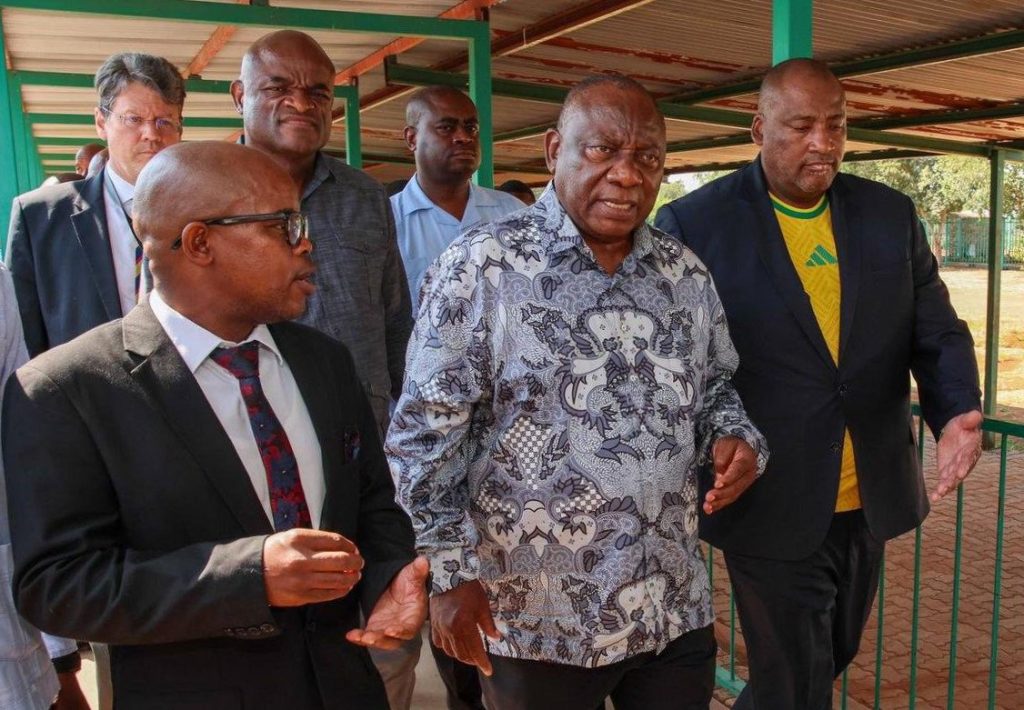
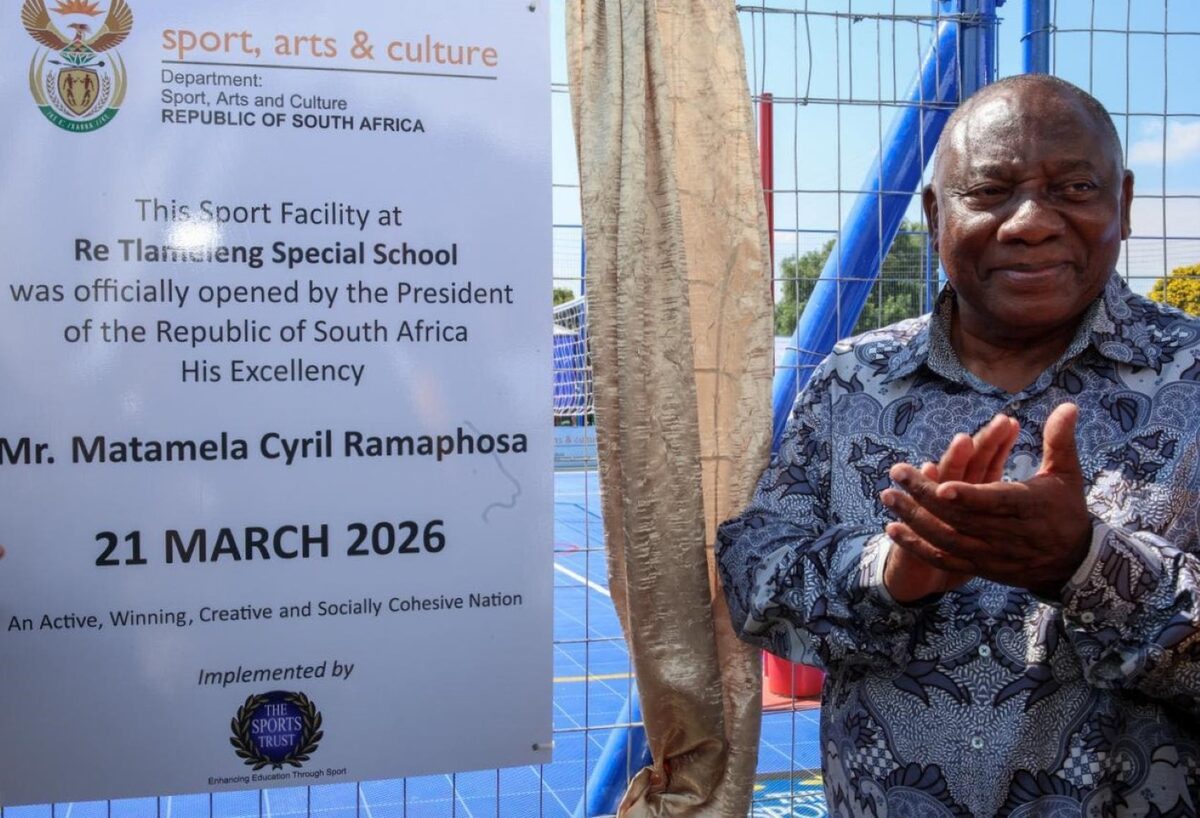
Before the main event, Saul, Ramaphosa and McKenzie attended the official handover of the multipurpose sport court at the Re Tlameleng Special School in Kimberley, which was opened by the President.
The school achieved a matric pass rate of 100% and continues to serve and support learners with special needs to achieve greater academic success.The National Library of South Africa has donated 100 books in English and Setswana to Re Tlameleng, as well as seven pre-used laptops to support some of the school’s computer laboratories. Additional Xhosa books have been requested.
Ramaphosa also handed over sporting kits to the school, as well as to five neighbouring schools within the Sol Plaatje Local Municipality: St Boniface High School, Boitshoko Primary School, West End Primary School, Montshiwa Primary School, and Venus Primary School.




You must be logged in to post a comment.