

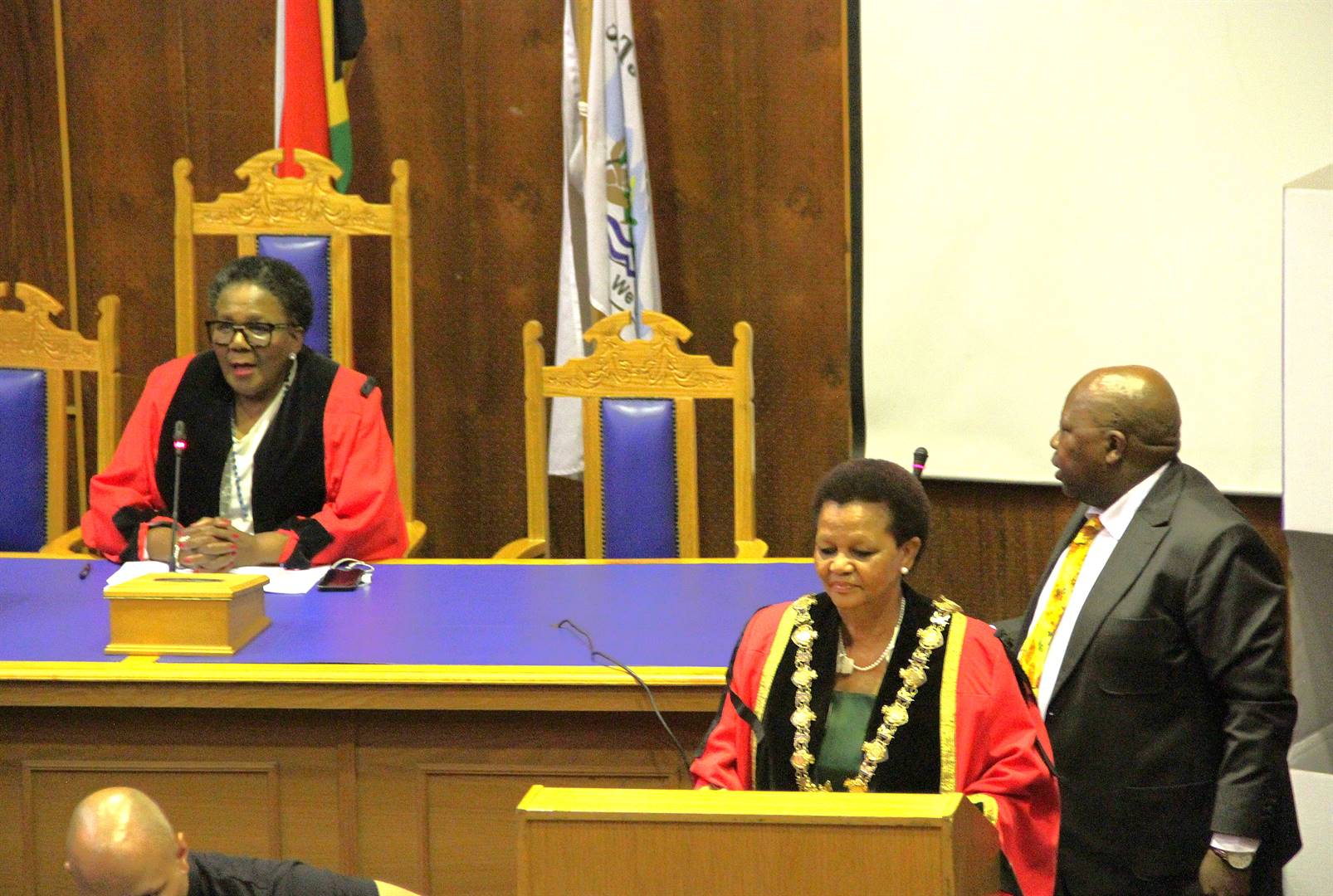
The Northern Cape ANC leadership has been plunged into disarray as the premier and provincial secretary have issued flatly contradictory statements regarding a leaked WhatsApp message, while the Sol Plaatje Local Municipality launches what critics call a “frivolous” appeal against a landmark court ruling.
This crisis follows Friday 16 January’s judgment by the Kimberley High Court which declared the suspension of municipal manager Thapelo Matlala null and void after the municipality conceded that legal procedures had not been followed. Executive mayor Martha Bartlett and speaker Dipuo Peters were ordered to pay legal costs from their own pockets.
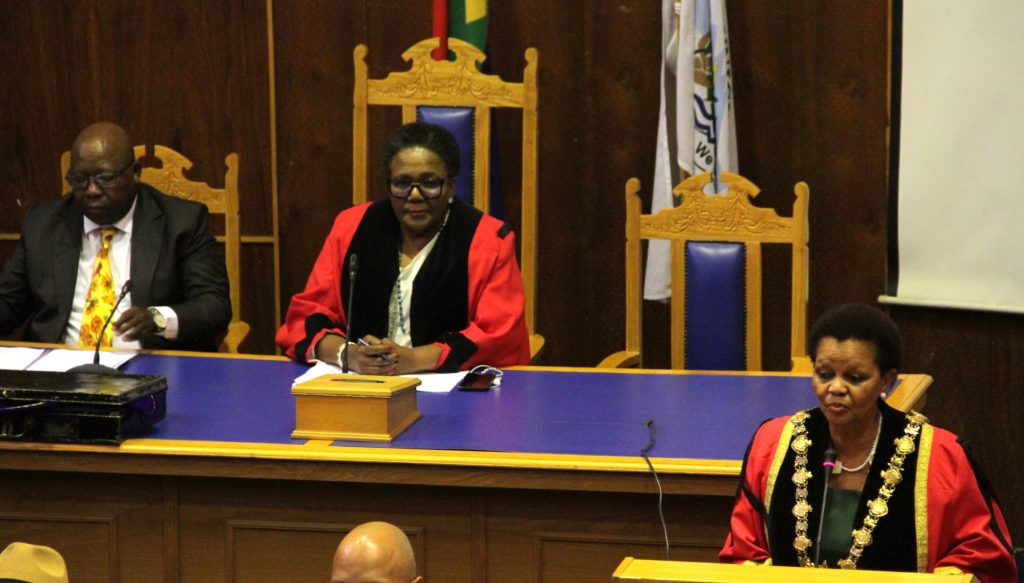
Matlala was supported in court by, among others, EFF Councillor Pontsho Mocwana, who earlier claimed the turmoil in the municipal council was caused by the ruling party’s desire to “abuse the National Treasury mechanism Budget Facility for Infrastructure (BFI) of R2.5 billion to refurbish Kimberley’s water infrastructure as the municipal elections loom.”
WhatsApp message sparks political row
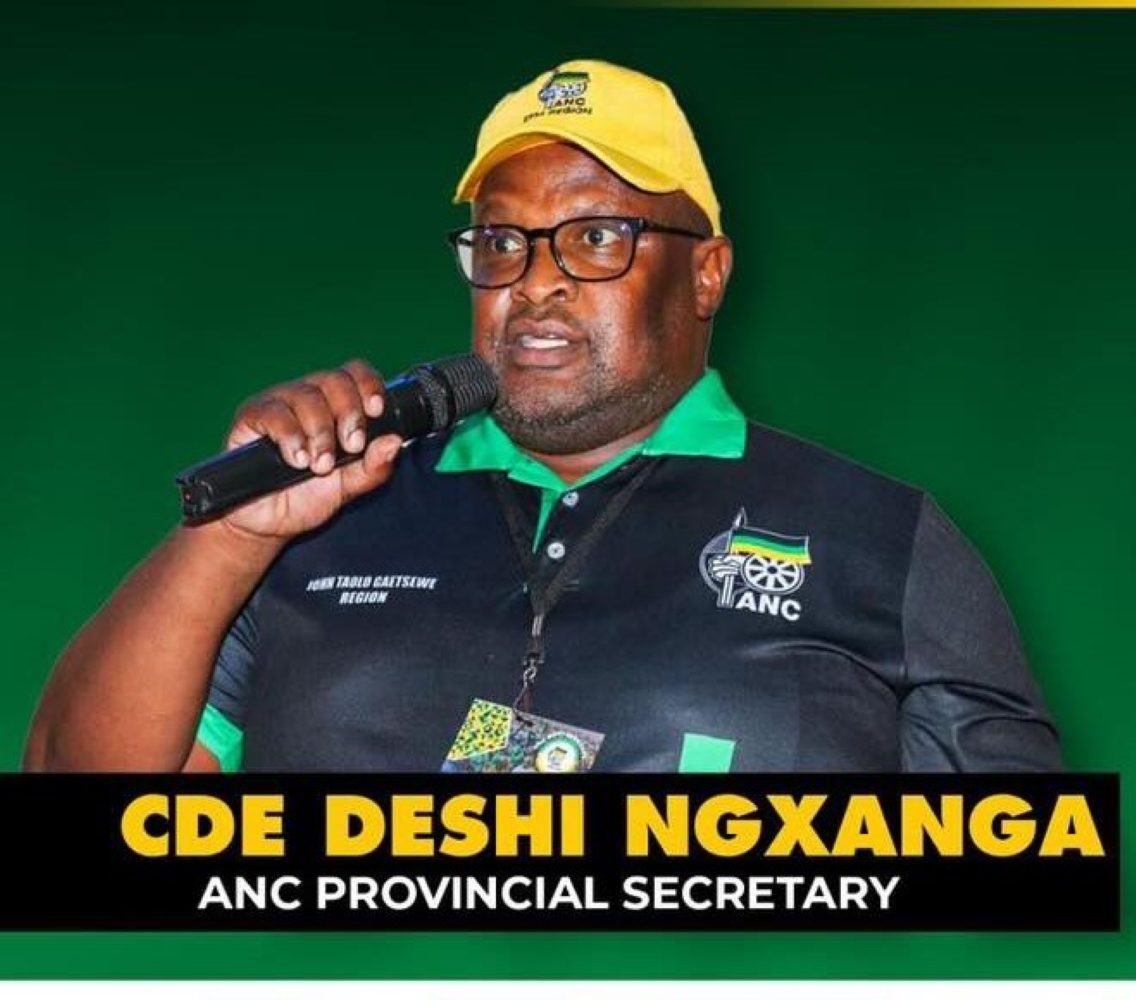
In another startling development, ANC provincial secretary Deshi Ngxanga and provincial chairperson (and premier) Dr Zamani Saul have provided conflicting accounts of a leaked WhatsApp message published on Facebook.
In the message, Saul allegedly instructed the ANC Provincial Executive Committee (PEC) to appeal the judgment to keep the “status quo intact”, meaning that Matlala cannot return to work while an appeal process is pending.
Ngxanga confirmed the legitimacy of the communication, stating he had shared the message to brief members and that Saul “only suggested the municipality should consider an appeal”. He further threatened disciplinary action against whoever leaked the “confidential information”.
However, in a separate statement, Saul’s office labelled the screenshot a “fake conversation” and a “selective presentation” maliciously designed to distort the collective process. Saul went so far as to suggest the message “was not written by himself and could possibly be written by Artificial Intelligence”.
Municipality files appeal despite legal warnings
Meanwhile, Bartlett and Peters have officially filed a Notice of Application for Leave to Appeal the court ruling of 16 January. The application argues the court’s decision to impose personal costs warrants review by a higher court to prevent the “unwarranted penalisation of officials for lawful governance decisions”.
ALSO READ: Municipal manager triumphs in court over Sol Plaatje speaker, mayor and council
They contend there are “reasonable prospects that another court will come to a different conclusion” regarding the order declaring the Council Resolution of 8 January null and void. The appeal focuses on “important and recurring questions of law” regarding the proper interpretation and application of Regulation 6 of the Local Government: Disciplinary Regulations for Senior Managers, 2011.
The applicants argue the “proper administration of local government” and the interests of justice strongly favour granting leave to appeal to a higher court.
Matlala’s legal team, Matome Mashao Incorporated, has reacted with fury, describing the appeal as a “callous determination to act outside the law and with impunity”. In a letter to the municipality’s attorneys, Mashao warned the appeal was “misguided” and “ill-advised”, adding that any further attempt to keep Matlala from his office would be met with the “mighty sword of our law”.
Expert analysis: Symptoms of systemic ANC problems
Political analyst Professor André Duvenhage described the chaos as a symptom of a “much larger systemic problem” within the ANC. He noted the party was increasingly using a “Stalingrad-type strategy”, manipulating legal and administrative processes to play for time and maintain control over institutional resources.
“The ANC as an organisation is starting to tear apart at the seams nationally,” Duvenhage said, pointing to the party’s financial bankruptcy as a driver for its “desperate need to control municipal tenders and budgets.”
His analysis characterises the ANC as an organisation that is currently “bankrupt” and unable to function effectively without direct support from the state. This financial desperation is a primary driver behind the party’s actions in administrative and legal disputes.
ALSO READ: Matlala returns to Sol Plaatje Municipality, dismisses corruption charges as ‘trumped up’
Duvenhage argues the party’s survival is tied to its ability to secure “financial injections”, which are frequently derived from the “misuse of large-scale government tenders”. This creates a specific strategic need to maintain control over administrative structures.
He highlights that the party fights desperately to maintain influence in areas with massive budgets, such as in KwaZulu-Natal, specifically so they have the resources to conduct an “election campaign”.
This reliance has led to a form of “institutional corruption” where the line between the party and the state is blurred, with municipal or provincial resources (such as vehicles or state-funded events) being diverted for political purposes.
According to his analysis, the ANC’s loss of administrative power in regions like the Western Cape is often irreversible.
Duvenhage notes that the party’s traditional international support base (referencing countries like Russia and Iran) is shifting or isolated, making their dependence on domestic state-linked funding even more critical.
“In this context, the disputes in places like the Sol Plaatje Municipality are seen not as isolated procedural errors, but as symptoms of a systemic struggle to retain access to the public purse to fund the party’s upcoming election efforts.”
ALSO READ: Sol Plaatje municipal manager suspended amid financial misconduct allegations
Calls for national intervention
Pakes Dikgetsi, acting chairperson of Cope, called on the minister of Cooperative Governance and Traditional Affairs to urgently intervene at the municipality under sections 139 and 154 of the Constitution.
“Such national intervention is essential to enforce compliance with court orders, investigate irregular appointments, and restore professional and accountable governance,” he said.
“Political interference and unlawful conduct have paralysed administrative functions. This instability is further exacerbated by the irregular appointment of an acting municipal manager with a reported criminal record, raising serious questions regarding the integrity of senior appointments and the provincial government’s failure to provide effective oversight.
“As a result of this political chaos, residents are facing a total collapse of basic service delivery, characterised by unreliable water supply, raw sewage spillages, and deteriorating infrastructure. We maintain that no individual or political structure is above the law.”

You must be logged in to post a comment.