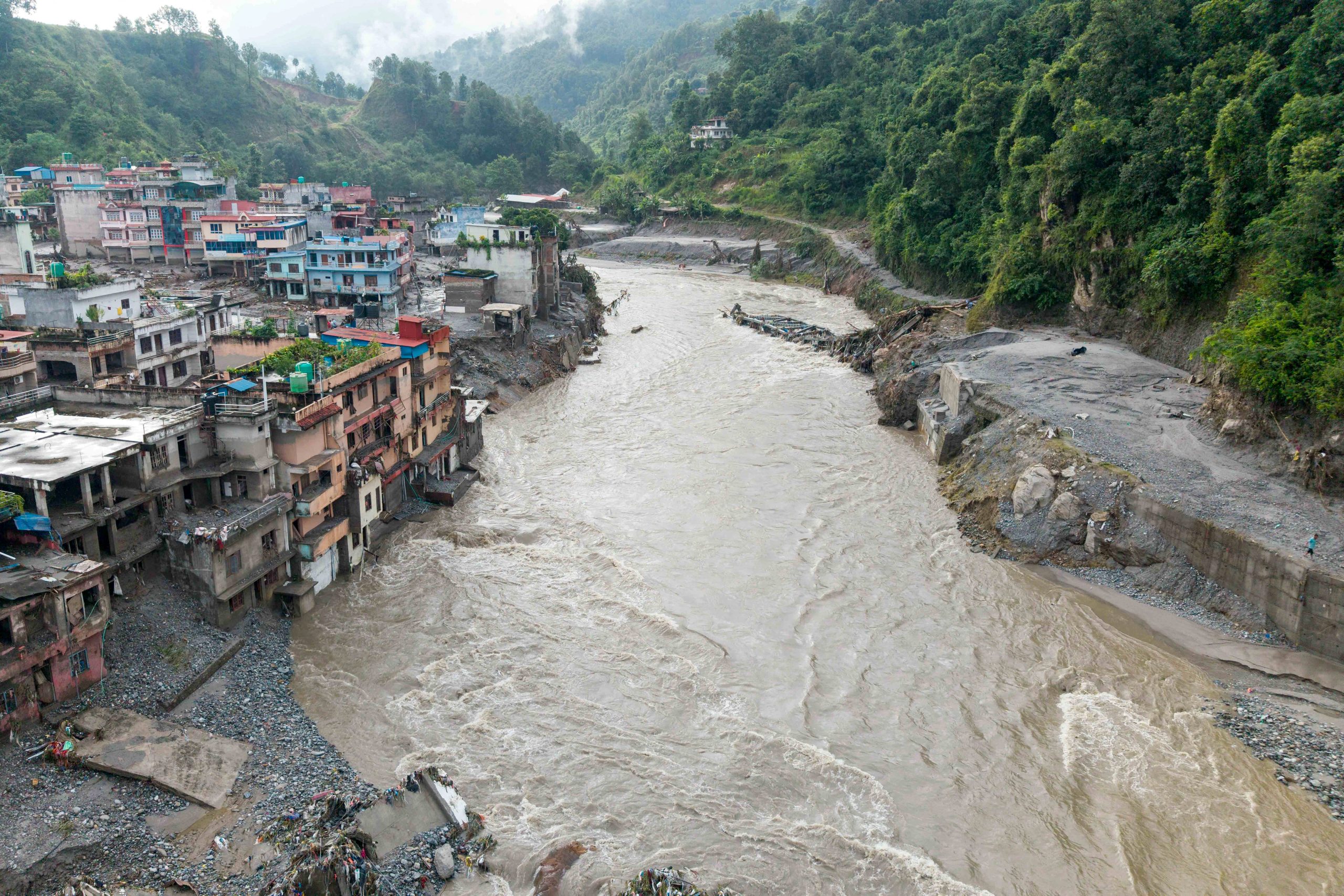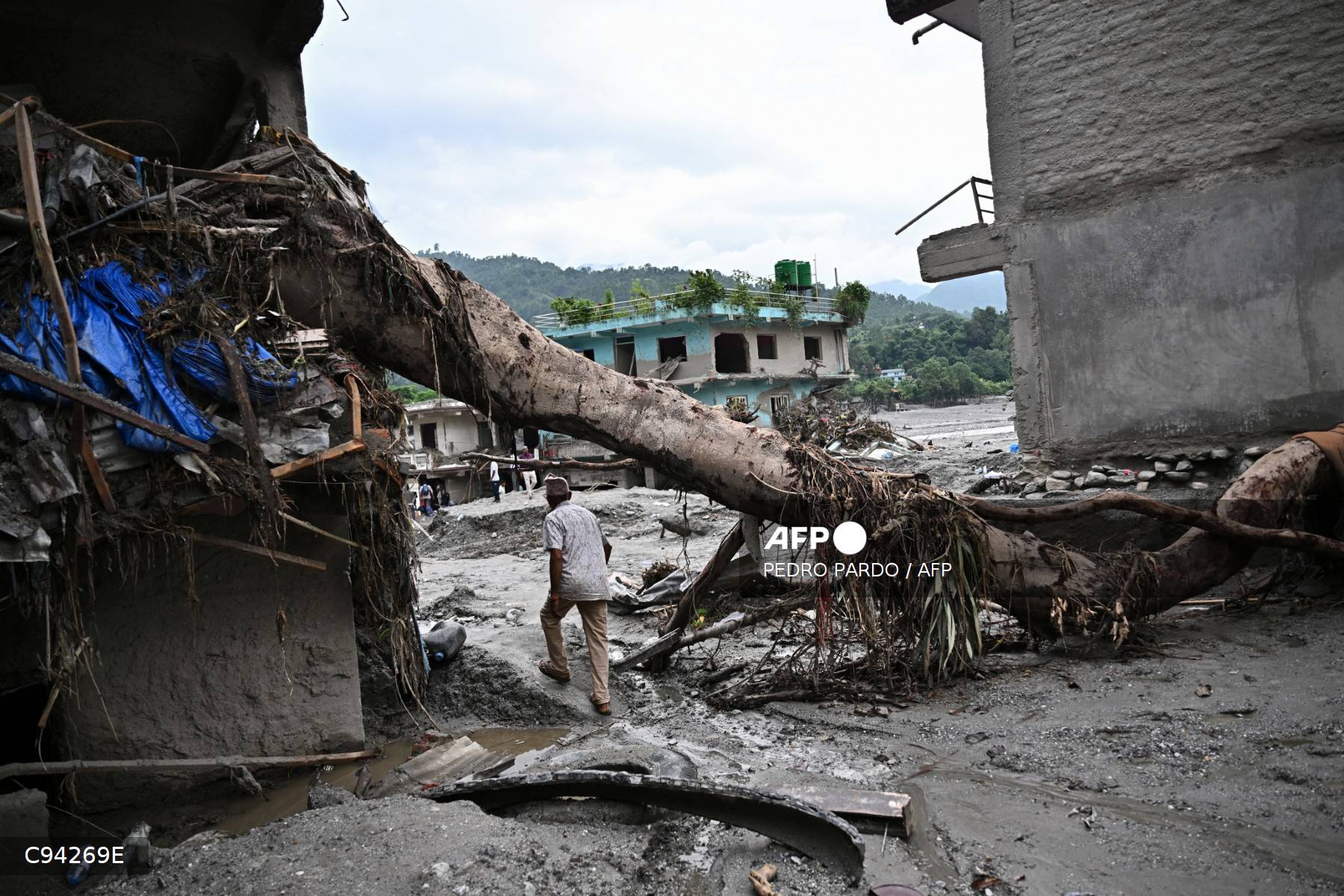
KATHMANDU, Nepal – A month after a glacial collapse devastated Nepal’s border region, the country is counting its losses. Scientists link the disaster to climate change.
On August 26, a mass of ice and rock broke from Langtang Lirung’s north face at 08:37 am. The collapse began at about 5,200 metres. The section stretched more than a kilometre wide and 700 metres deep.
The debris plunged onto a glacier below before surging downhill, briefly damming the Lhende River. Consequently, water and mud burst downstream.
Geologist Sudan Bikash Maharjan, from the International Centre for Integrated Mountain Development, said the debris travelled about 20 kilometres. It dropped 1 700 metres at Rasuwagadhi in only seven minutes.
“The elevation difference is high, within a very short length,” he told AFP. “So it just rushed down like a bullet train.”
Heavy toll
Nepal’s disaster authority says rescuers have recovered 1 451 bodies from the rubble and mud. Furthermore, more than 5 700 people remain missing.
In addition, the missing include hundreds of hydropower workers the disaster swept away. The floodwaters also overwhelmed tourists and pilgrims, whose fate remains unknown.
Identifying victims through DNA has proved a major challenge. Since morgues are overflowing, authorities have buried many bodies in mass graves after recording their DNA. However, officials have identified only about 100 bodies so far.
Meanwhile, on the Chinese side, state media have reported 43 deaths and 519 people missing. Images showed the debris obliterating a border post.
Rescue efforts
Hundreds of rescuers, many arriving by helicopter, have spent weeks digging through mud and debris. Three workers two Nepalis and a Chinese man survived in tunnels until rescuers freed them alive.
One survivor, 30-year-old Sanjay Sah, told AFP he survived 10 days in darkness by drinking muddy water and praying.
“I survived thanks to my deep faith and trust,” he said.
Aid and economic impact
The disaster has affected more than 80 000 people. As a result, thousands who lost everything are living in emergency shelters. The United Nations (UN) has launched an appeal for nearly $50 million in emergency aid.
Many communities near the epicentre remain inaccessible. Therefore, the UN and the Nepali government are delivering supplies by helicopter and cargo drone. Several countries have pledged financial support, but the total falls far short of what Nepal needs.
Nepal estimates the reconstruction bill at $4.78 billion. The country needs $57 million for short-term recovery over the next six months. In addition, the floods have cut the country’s electricity generation capacity by 10 percent. The energy sector accounts for half of all infrastructure damage.
Nepal’s economy was already under pressure before the disaster. Indeed, the World Bank estimates 82 percent of the workforce holds informal employment. GDP per capita stood at $1 447 in 2024.
Climate change link
From the first hours after the disaster, experts pointed to climate change as a contributing factor. Specifically, scientists from the World Weather Attribution group described it as a “compound crisis.” They attributed it to long-term warming, glacier retreat, permafrost thaw and geological instability.
“There is no doubt that climate change is one of the drivers,” said Friederike Otto, a professor of climate science at Imperial College London.
Therefore, Nepal’s leaders say the country needs long-term international support to adapt to a changing mountain environment. Prime Minister Balendra Shah has urged the world to recognise the dangers of climate change and act quickly.
ALSO READ: Scientists confirm climate change drove deadly Himalayan flood disaster