

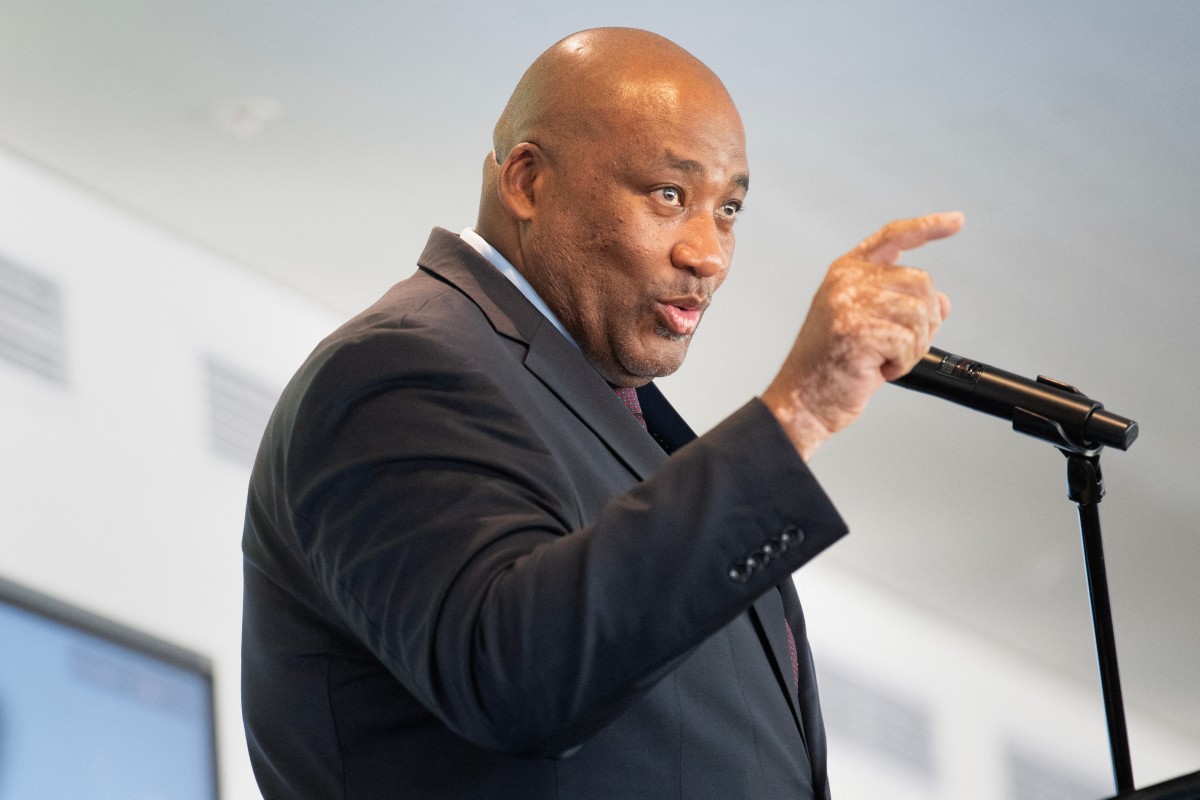
“Lazy federation bosses who don’t understand their job, and with no ideas on how to further their sport, think this is open season to run to the media to scream the name Gayton McKenzie, hoping it will get them attention, and perhaps even money.”
These are the words of Sport, Arts and Culture Minister Gayton McKenzie, who has issued a stern clarification on how government funding of sporting events operates in South Africa.
In a statement released yesterday, McKenzie said he had lost patience with the “uninformed narrative” being spread by federation leaders and opportunistic politicians who portray his department as denying funding to athletes and sporting events.
The department provides financial support to more than 60 national federations, but McKenzie emphasised that the allocation is fixed by Parliament and administered according to the Public Finance Management Act.
He said the funding is primarily meant to cover basic administrative costs, not the full expenses of international travel or event hosting.
“If they wish to raise more money, they need to think commercially, and operate commercially. If they do not wish to raise funds to grow their sport, they should accept that they are offering primarily a recreational activity, or even just a hobby interest, to their participants,” McKenzie said.
The minister stressed that the core responsibility for financial sustainability rests with federation boards, who are expected to draft sound business plans and attract corporate sponsors.
Basketball South Africa was cited as an example of governance failure. Despite the sport’s growing popularity, its federation was unable to establish a viable league or attract meaningful sponsorship. The department has since revoked its recognition status and is working with the International Basketball Federation and the South African Sports Confederation and Olympic Committee to rebuild the code’s governance.
In contrast, Wrestling South Africa received increased allocation for demonstrating good performance. The department also funded 34 athletes to participate at the Commonwealth Chess Championship in Sri Lanka and 54 athletes at the Africa Youth Chess Championships in Uganda this year, at a cost of more than R4 million.
McKenzie pointed out that major federations such as rugby, cricket and soccer fund their own international participation.
“To represent one’s country in a sport is a great honour and a privilege, and it is one federations must continue to realise for as many of our future stars as we can – but it is not a right, and to treat it as a right would be irresponsible and unrealistic,” he said.
- McKenzie is due to answer questions in parliament today regarding his department’s massive R31 million expenditure on the FIFA World Cup 2026 delegation. The DA has requested that the department provide detailed responses after what the party described as a lack of transparency on the matter.
ALSO READ: Hockey funding reignites fury over R31m World Cup bill


