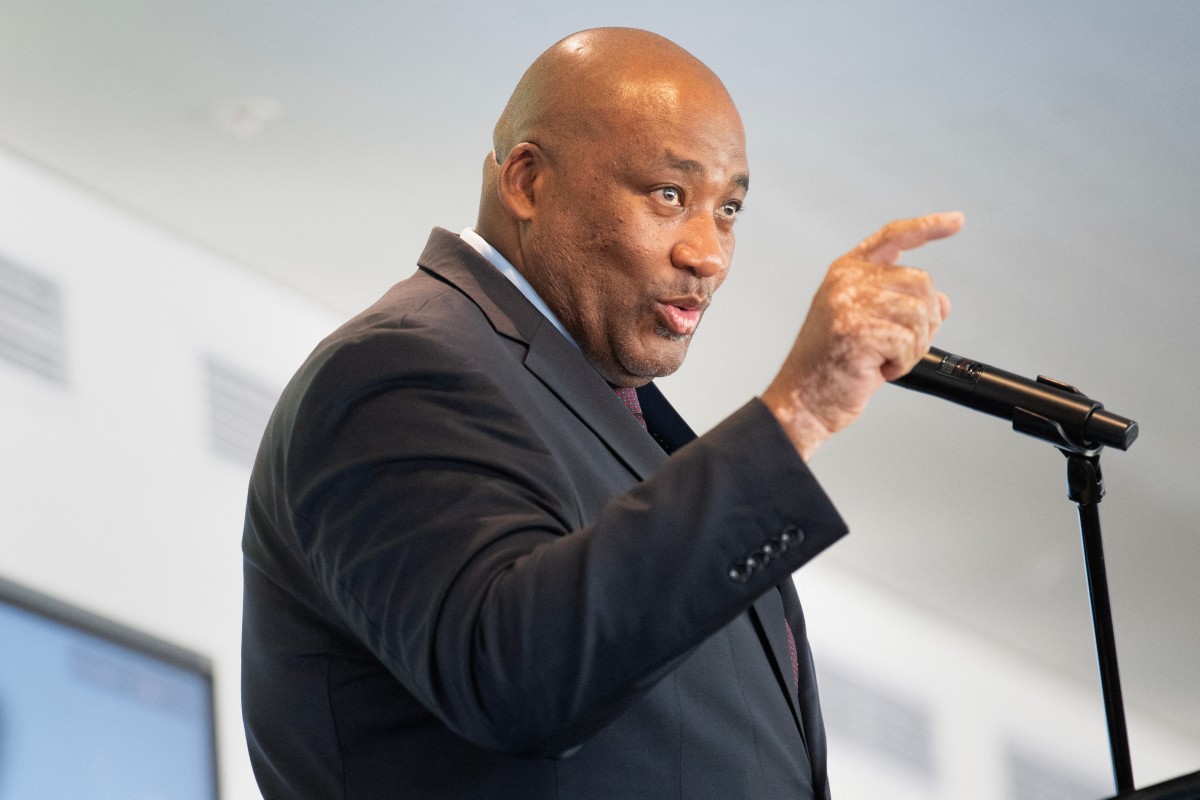
Sports Minister Gayton McKenzie’s announcement of R3 million in government funding for South Africa’s hockey teams has backfired spectacularly, reigniting rather than extinguishing public fury over the department’s reported R31 million expenditure on the FIFA World Cup campaign. What was presumably intended as a positive news story has instead become another flashpoint in a controversy that refuses to die.
On Thursday 23 July, McKenzie announced that he had approved “departmental financial assistance of R3 million” to ensure both men’s and women’s national hockey teams would be fully funded for the FIH Hockey World Cup in Belgium and the Netherlands from 14 to 30 August. The minister likely expected praise for backing athletes who have long relied on sponsorships and crowdfunding to represent South Africa internationally.
Instead, the announcement unleashed a torrent of criticism that laid bare the depth of public anger over what many perceive as grossly misaligned spending priorities within the Department of Sports, Arts and Culture.
Comparisons prove devastating
The mathematics proved devastating for McKenzie’s attempted good news announcement. South Africans online immediately drew pointed comparisons between the R3 million allocated to two entire national teams and the R31 million reportedly spent on South Africa’s delegation to the FIFA World Cup in the United States.
The implication was brutal and unavoidable, the government apparently found R31 million to send officials to watch football in America, but needed weeks of public pressure before scraping together R3 million to send actual South African athletes to compete at a World Cup in their own sport.
Several users questioned whether the hockey teams would have received any support whatsoever had the R31 million controversy not surfaced and forced the department’s hand. The timing certainly appears suspicious, hockey teams desperately seeking funding for months suddenly receive government backing only after a public outcry over wasteful World Cup spending.
Demands for transparency intensify
Beyond the hockey announcement itself, many South Africans seized the moment to renew demands for a full breakdown of how the R31 million was spent during the FIFA World Cup trip. What did that money buy? Who travelled? What were the accommodation costs? How much went on flights, meals, transport and other expenses?
AfriForum has now submitted a Promotion of Access to Information Act (PAIA) request seeking invoices, audit reports and other financial records linked to the spending. The civil rights organisation says the documents will help establish precisely how the R31 million was allocated and whether it represented legitimate expenditure or wasteful excess.
Calls for systemic reform
According to Briefly.co.za others used the hockey funding controversy to call for similar support for athletes in other sporting codes who regularly depend on sponsorships and crowdfunding to compete internationally.
If government can find R31 million for a FIFA World Cup delegation, why is R3 million for two national hockey teams treated as some kind of generous gift requiring ministerial approval and public announcements?
Hockey teams funded, debate intensifies
The announcement has at least ensured South Africa’s men’s and women’s hockey teams will travel to the FIH Hockey World Cup with government backing rather than relying entirely on private fundraising. That represents a victory for the athletes who have worked tirelessly to reach this level whilst navigating a funding landscape that treats them as afterthoughts.