

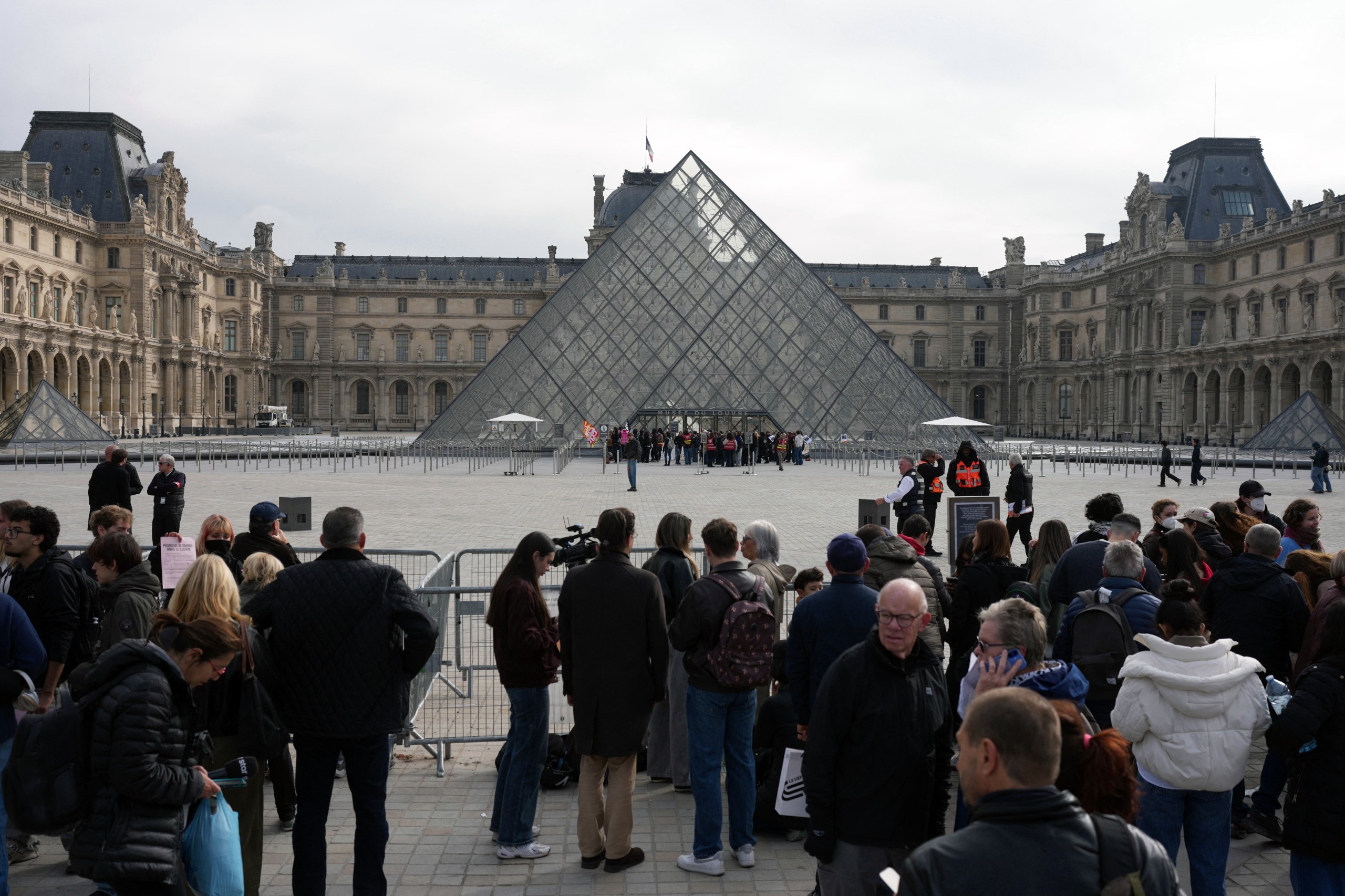
Protesters blocked the entrance to the Louvre in Paris on Monday as French authorities tried to contain public anger over the cost of living. Mass demonstrations across the country during the weekend turned into some of the worst street violence France has seen in recent years.
President Emmanuel Macron ordered a security review after the country’s interior minister admitted that police “had lost control” during the weekend’s unrest.
The Yellow Vests movement, which organised the weekend’s rallies, called for a new round of protests on Saturday. The group has staged demonstrations for four weeks, initially led by high school students demanding better conditions at their schools.
Italy, Spain and Portugal watched developments closely as anger over rising prices triggered protests in these countries too. Small clashes broke out in Milan during the weekend, while protesters occupied squares in Spanish cities over housing costs.
Half a million take to streets
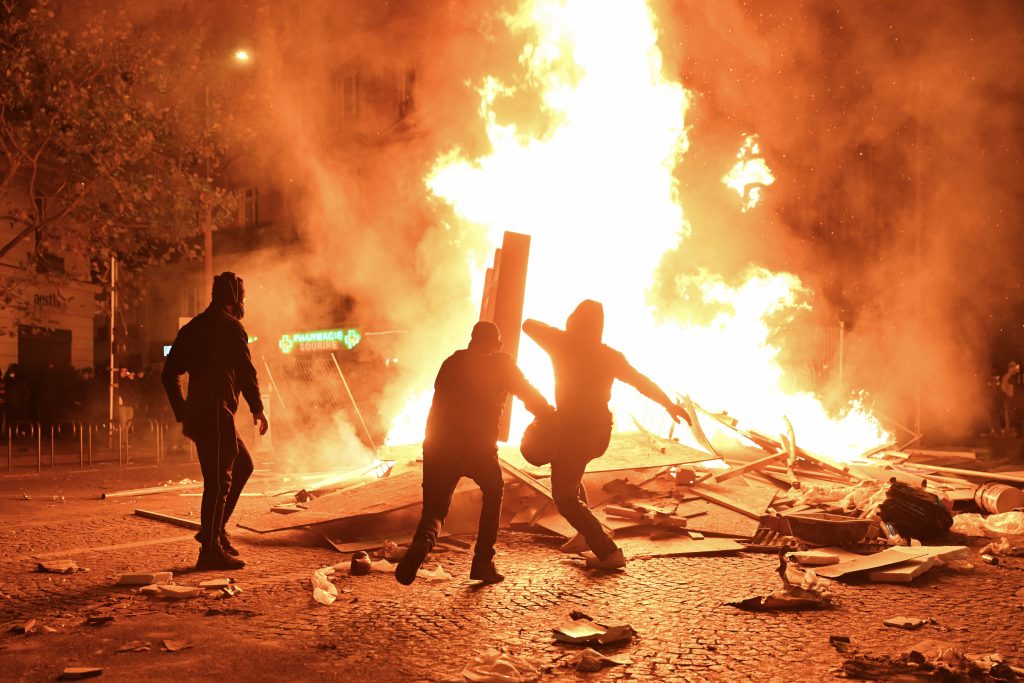
About 500 000 people turned out across France to protest the rising cost of living. What started as peaceful demonstrations turned violent in some places. Masked groups on the sidelines of the protests attacked police, broke into town halls and other public buildings, and set many of them on fire. They looted shops and set fire to cars, bicycles and scooters on the streets.
Authorities arrested more than 2 500 people and nearly 1 000 members of the security forces suffered injuries. Protesters were also hurt, with one demonstrator’s hand blown off by a police crowd-control grenade.
Interior minister offers to resign
Interior Minister Laurent Nunez offered to resign on Monday after the violence.
“On Saturday, in some major cities, you couldn’t look shopkeepers in the eye after hundreds of shops had been looted and tell them we hadn’t lost control,” Nunez said.
Macron refused Nunez’s resignation, but acknowledged security and intelligence failures in the government response. About 60 000 law enforcement personnel had been deployed across the country on Saturday.
Nationwide, authorities took more than 2 330 people into police custody over the weekend. Seven out of 10 were adults, Justice Minister Gerald Darmanin said on Monday.
More than 2 000 shops were damaged during the weekend’s violence across France. The chamber of commerce president Alain Di Crescenzo said damage would run into “hundreds of millions of euros”.
Macron addressed the nation on Sunday evening and criticized the “unbridled” violence. He said local authorities would be able to ban certain rallies in coming days “if necessary”. But he stopped short of announcing drastic measures such as a state of emergency or curfew.
City authorities in Marseille said on Monday that public gatherings would be banned from noon to 20:00.
Louvre entrance blocked
The public anger showed no signs of easing on Monday. Demonstrators blocked the entrance to Paris’s Louvre Museum, the most visited museum in the world.
“We are proud to announce that we are blocking the world’s largest museum,” read a leaflet posted outside the museum. Management and unions said the protest was led by students from Ecole du Louvre.
Rising prices fuel anger
Rising prices have triggered anger in France. Diesel prices have jumped nearly 40% and petrol by 25% since March. Food prices have risen by 25% since 2021.
The unrest has flared just months before a key presidential election. Centrist Macron cannot stand again, and Marine Le Pen, the far-right presidential candidate for the National Rally party, leads in the polls.
Ministers blamed “ultra-left” groups for the violence. Le Pen claimed that the party of her far-left rival for the presidency, Jean-Luc Melenchon, had “legitimised the violence”.
The left accused Macron of ignoring protesters’ demands, while the right called on him to take a firmer line.
Unrest spreads across Europe
Costs of living have risen across Europe, triggering smaller demonstrations in other countries.
During the weekend, clashes broke out on the sidelines of a cost-of-living demonstration in Milan. Mayor Giuseppe Sala said: “I’m very worried because it’s a new phenomenon, which also originates from an international scenario and therefore feeds itself.”
In Spain, hundreds of tents have occupied Madrid’s central Puerta del Sol square since September. An eviction of an 87-year-old woman from her lifelong flat sparked nationwide protests in a country with soaring housing costs.
Dozens of tents have also sprung up in Portugal’s main cities of Lisbon and Porto. Protesters demand action over rising costs of housing.
ALSO READ: French protesters clash with police during nationwide cost-of-living demonstrations



You must be logged in to post a comment.