In the second installment of Nova News’ Legends of the World Cup series, we celebrate Lev Yashin, the only goalkeeper to ever win the Ballon d’Or and the man who transformed what it meant to guard the goal.
Also read: Legends of the World Cup: Andrés Iniesta, the illusionist who made history
Long before Manuel Neuer was dubbed a “sweeper-keeper” and decades before Ederson started pinging 60-yard passes, there was a towering figure dressed entirely in black who turned goalkeeping from a passive art into an aggressive science. Lev Yashin didn’t just stop shots, he commanded defences, launched counter-attacks, and quite literally rewrote the job description for every goalkeeper who followed.
The Soviet legend remains the only shot-stopper in history to claim the Ballon d’Or, an achievement that speaks volumes about his dominance in an era when goalkeepers were expected to be seen and not heard. But Yashin? He was impossible to ignore.
The man in black
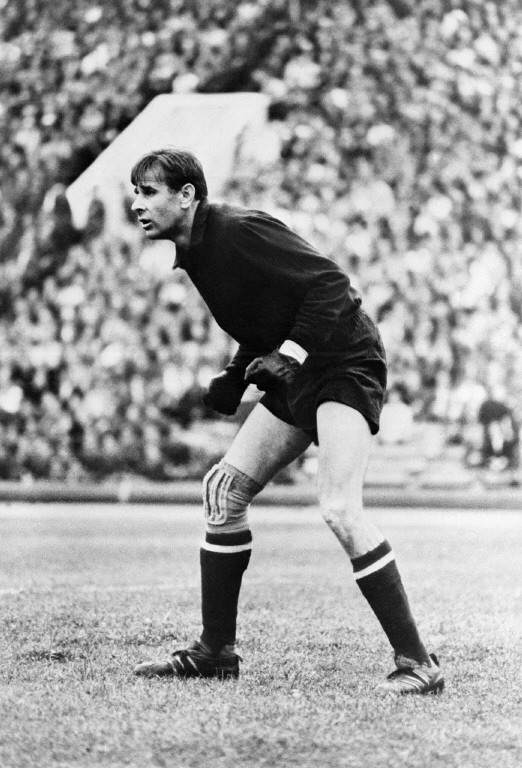
Yashin’s appearance was as distinctive as his revolutionary style. Clad head-to-toe in black, he cut an imposing figure between the sticks. That all-black ensemble earned him the nickname “Black Spider,” a moniker that perfectly captured how his seemingly eight-armed reach could snatch shots from seemingly impossible angles.
To his adoring fans, however, he was the “Black Panther”, a fearless predator who prowled his penalty area with unmatched authority. Often donning a cloth cap of burnt-brick colour, Yashin’s aesthetic was as iconic as his performances.
Standing tall with an imposing physical presence, the Soviet goalkeeper combined athleticism, agility, and exceptional reflexes to produce saves that defied belief. His positional sense was immaculate, his bravery unquestioned, and his ability to pull off acrobatic stops became the stuff of legend.
A revolutionary between the posts
What truly separated Yashin from his peers wasn’t just his shot-stopping ability, though stopping 151 penalty kicks during his career and keeping over 270 clean sheets suggests he was rather handy at that too. It was how he fundamentally changed what goalkeepers were expected to do.
In an era when most shot-stoppers stood rooted to their line, waiting for action to come to them, Yachine was a whirlwind of activity. He barked orders at defenders with such ferocity that even his wife complained about his constant yelling on the pitch. He charged off his line to intercept crosses, rushed out to meet onrushing attackers, and essentially acted as an additional defender, revolutionary concepts that are now fundamental to modern goalkeeping.
He pioneered punching balls out in difficult situations rather than attempting risky catches. He developed the quick distribution to launch counter-attacks. He commanded and organised his defensive line with an authority that would become standard practice decades later.
When pressed about his secret, Yachine delivered a response dripping with Soviet-era deadpan humour, “The trick is to have a smoke to calm your nerves, then toss back a strong drink to tone your muscles.” Try putting that in a modern sports science manual.
World cup pedigree
Yashin was called up to the Soviet national team in 1954 and would go on to earn 74 caps, establishing himself as the backbone of one of international football’s most formidable sides.
His trophy cabinet gleamed with major honours: gold at the 1956 Summer Olympics and triumph in the inaugural European championship, the 1960 European Nations’ Cup. But it was on the World Cup stage where Yachine truly showcased his brilliance to a global audience.
He appeared at three World Cups, 1958, 1962, and 1966, with the latter tournament representing his finest hour on football’s grandest stage. The Soviet Union reached the semi-finals at England ’66, eventually finishing fourth, and Yashin’s performances throughout the tournament cemented his status as the world’s premier goalkeeper.
Though he never lifted the World Cup trophy, his impact on the tournament’s history was recognised when FIFA included him in their World Cup Dream Team in 2002, the only goalkeeper from his era to receive such an honour.
The Ballon d’Or and beyond
1963 stands as the most remarkable year in Yachine’s glittering career. He became the first goalkeeper to receive the Ballon d’Or, European football’s most prestigious individual award. More significantly, he remains the only goalkeeper ever to claim the honour.
For his outstanding service to the Soviet people and his country, Yachine was awarded the Order of Lenin in 1967, the highest civilian honour in the USSR. It was recognition that transcended sport, acknowledging his status as a national icon.
An enduring legacy
Yachine’s influence extends far beyond his playing days. In 1994, FIFA established the Lev YashinAward for the best goalkeeper at each World Cup finals, a fitting tribute to the man who redefined the position.
FIFA polls named him the sole goalkeeper in the World Team of the 20th Century. World Soccer magazine included him in their 100 Greatest Players of the 20th Century. In 2020, he was named in the Ballon d’Or Dream Team, a greatest all-time XI selected from all Ballon d’Or winners in history.
Many commentators, pundits, and former players consider Yashin the greatest goalkeeper in football history. His selection in virtually every all-time World XI – including the FIFA World Cup All-Time Team and the FIFA Dream Team, reflects the consensus that he stands alone atop the goalkeeping pantheon.
Lev Yashin didn’t just play the game. He changed it forever.