

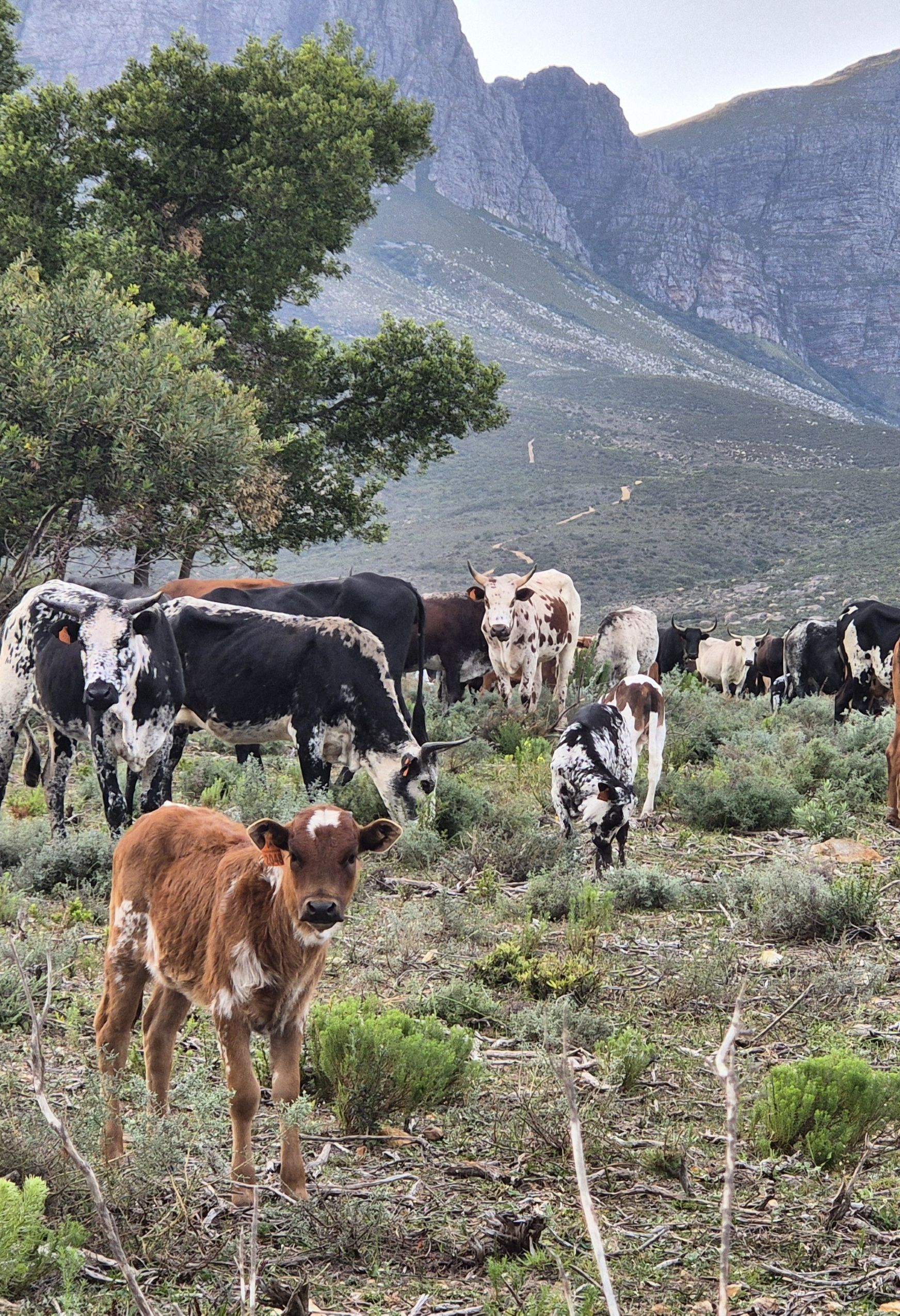
SOMERSET WEST – A historic Somerset West wine estate is celebrating a baby boom, with 137 Nguni calves born this season and another eight still due. The arrivals have swelled Vergelegen Wine Estate’s Nguni herd to over 450 animals, making it one of the largest privately owned Nguni studs in the Western Cape.
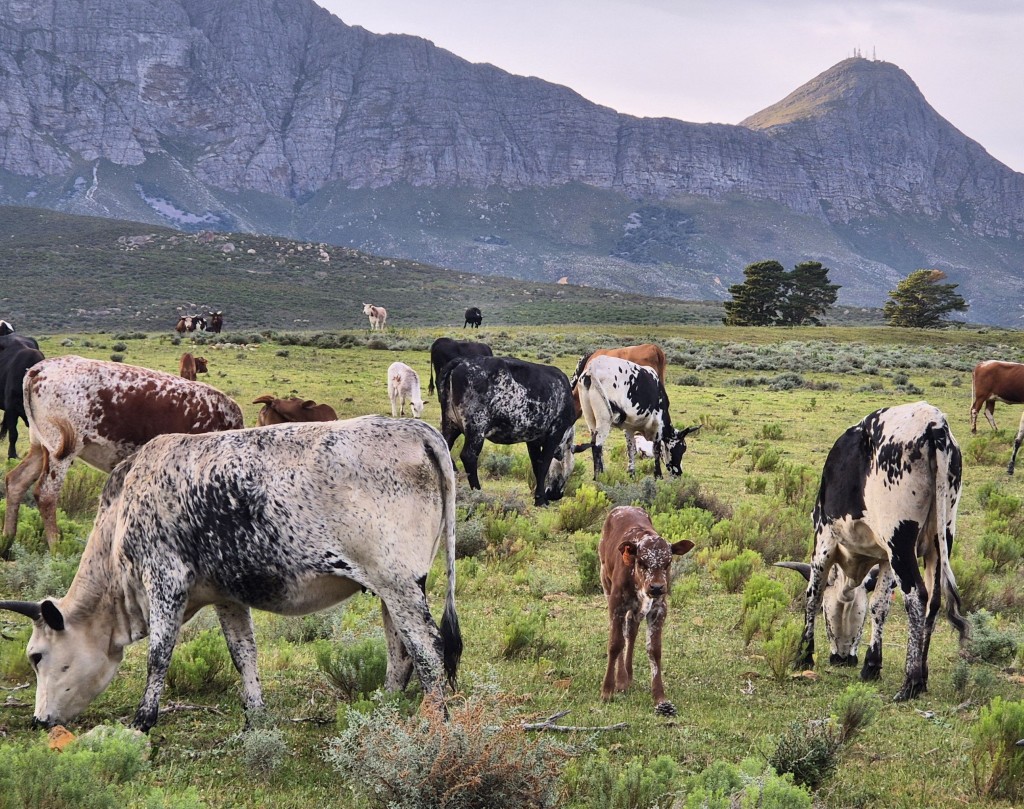
Among the new arrivals are both pure Nguni youngsters and Nguni-Angus crosses, with the latter already showing the impressive size difference that comes from their Angus heritage. Vergelegen introduced Angus cattle in 2024 as part of a cross-breeding strategy that pairs the Nguni cow’s legendary hardiness with the growth and muscle of the Aberdeen Angus, one of the world’s premier beef breeds.
Research conducted at the Vaalharts Research Station in the Northern Cape, published by the South African Society for Animal Science, has shown that Nguni-Angus crossbred calves can weigh up to 32 kg more at weaning than pure Nguni calves, with cow efficiency improving by as much as 22%. The crossbreeding approach is increasingly recognised as a way to boost beef output while preserving the unique genetic qualities of indigenous African breeds. A separate study published in the South African Journal of Animal Science found that a terminal sire system using Angus bulls on Nguni cows was the most efficient crossbreeding option, improving productivity by an average of 8%.
Ancient lineage
The Nguni is one of Southern Africa’s oldest cattle breeds, descended from animals brought south by pastoralist tribes ancestral to the Nguni people – the Zulu, Xhosa, Ndebele and Swazi – during their migration down the continent more than a thousand years ago. According to a case study by the Food and Agriculture Organization of the United Nations (FAO), the breed was introduced to South Africa by Iron Age nomads around 600 AD and remained relatively unaltered for the next millennium, ideally suited to communal farming systems.
DNA studies cited by the FAO have traced the breed’s origins to African taurine cattle with a slight Zebu admixture, likely introduced through bulls brought from the Arabian peninsula. The Nguni Cattle Breeders’ Society notes that the breed survived for more than 24 centuries in some of the most disease-ridden cattle areas of Southern Africa, developing a natural tolerance to tick-borne diseases, parasites and harsh climatic conditions. The breed is uniquely adapted to the African environment, thriving where exotic European breeds struggle.
The cattle are medium-sized, with bulls weighing between 500 and 600 kg and cows between 300 and 400 kg, according to the Nguni Cattle Breeders’ Society. They are both grazers and browsers, meaning they feed on grass and shrubs alike, and require little maintenance. They calve easily, are highly fertile, and are known for their longevity and docile temperament.
But it is perhaps their striking appearance that captures the most attention. Nguni cattle are renowned for their multicoloured hides, which can present a dazzling variety of patterns – from spotted and speckled to brindled and dappled, in shades of black, white, brown, red and gold. Their horns come in a range of shapes, and they carry distinctive low cervico-thoracic humps, in front of the front legs, unlike the high humps of pure Zebu cattle.
The variety of coat patterns is so extensive that early South African herdsmen catalogued every combination, inspiring the Nguni Cattle Register – a compilation of terms to describe each animal’s colouring in full. In Zulu culture, different hide patterns carry specific names and cultural significance, reflecting the deep bond between the Nguni people and their cattle.
Hardy survivors
Despite their qualities, the Nguni was nearly decimated in the middle of the last century. The FAO case study records that colonial farmers viewed the breed as inferior to larger European exotics, and government policy encouraged replacement with imported breeds. The gene pool was further diluted in communal areas through uncontrolled crossbreeding, particularly with the Brahman.
It was only in the latter decades of the 20th century that the realisation took hold that this hardy breed was uniquely adapted to the South African environment. The Nguni Cattle Breeders’ Society was formed, and the breed underwent formal evaluation and development in the commercial sector. Today the Nguni is valued not only for beef production but also for its role in conservation, sustainable farming and the preservation of indigenous African livestock genetics.
Vergelegen’s vision
Vergelegen’s environmental manager, Eben Olderwagen, says the estate introduced Nguni cattle in 2001, purchasing original stock from the Eastern Cape and a local stud in the Malmesbury district. The Vergelegen Nguni Stud was registered nine years later, in August 2010. By the following month, the herd comprised three stud bulls, 35 calves and 132 heifers.
The breeding focus at Vergelegen is on colour and temperament, ensuring the herd maintains the vivid hide patterns and docile nature for which the Nguni is celebrated.
Stockman Sivuyile Mthiya manages the herd with careful, hands-on attention, and each calving season brings a sense of pride and renewal for staff and visitors alike. Visitors often spot the Nguni herd as they drive into the 326-year-old estate, and the animals are a highlight of the popular guided Fauna and Flora Eco Tour, conducted in a game-drive vehicle.
For now, the youngest members of the herd are finding their feet on the rolling pastures of one of South Africa’s most historic farms – a living link between an ancient African breed and a new generation.



You must be logged in to post a comment.