
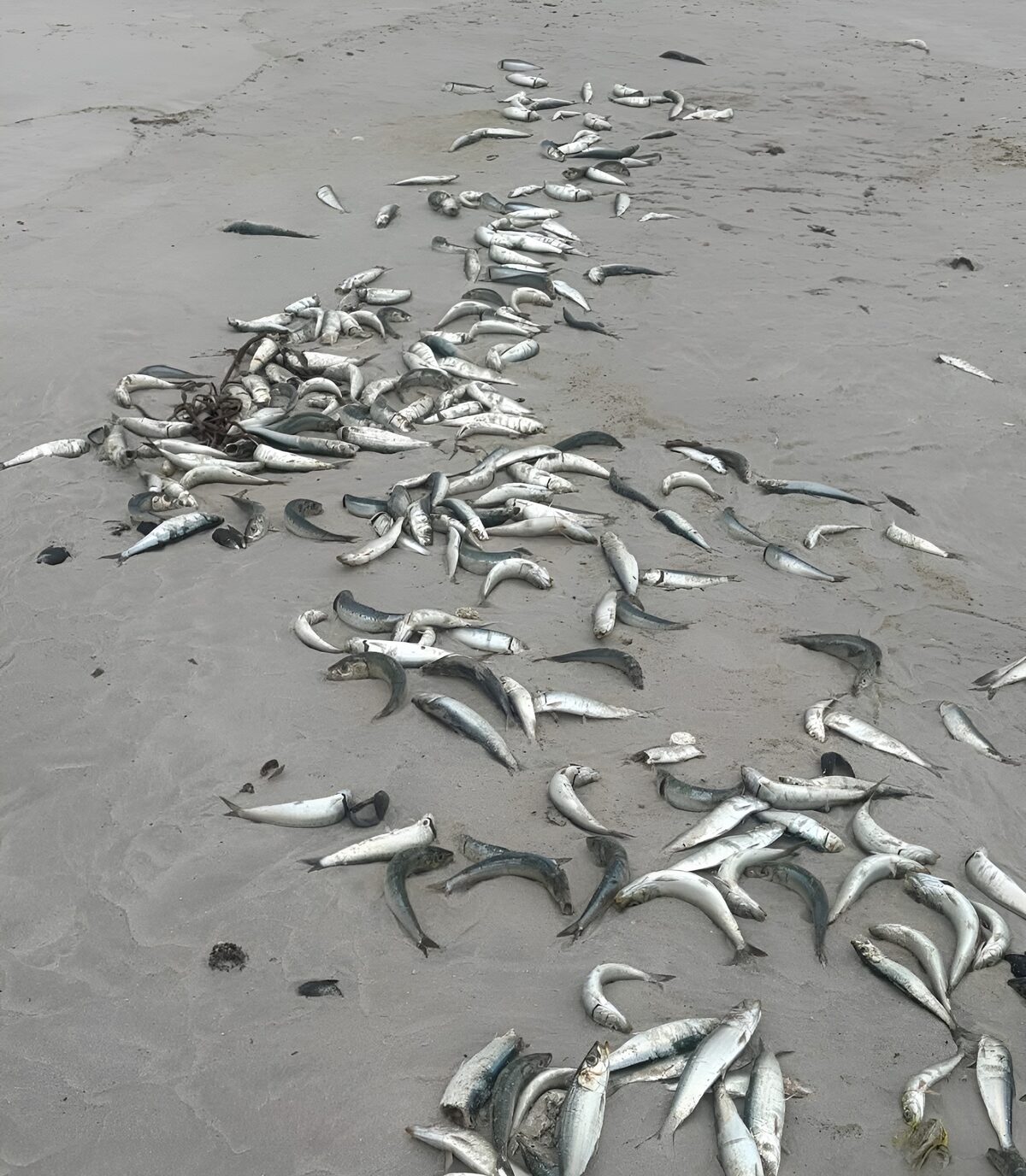
South Africa’s sardine die-off is placing pressure on two groups dependent on the same dwindling resource. A struggling fishing industry and critically endangered African penguins.
While, scientists work to establish how much of the sardine population remains. In the meantime, the Department of Forestry, Fisheries and the Environment (DFFE) has temporarily limited sardine catches to 25% of permit holders’ outstanding 2026 total allowable catch until 2 October.
This precautionary measure follows the confirmation of pilchard herpesvirus (PHV) in affected sardines from both the Western Cape and Gqeberha. The department considers PHV the most likely primary cause of the mortalities, although environmental conditions may have contributed.
The central uncertainty is how many sardines have actually died. However, the DFFE says there is no reliable way to determine how many fish that washed ashore represent the wider population. This is particularly true because an unknown number of dead sardines may have sunk to the seabed.
A hydroacoustic survey planned for October and November is expected to provide the first post-event estimate of sardine biomass and distribution.
For Algoa Bay, the uncertainty has particular consequences for African penguins. The penguins rely heavily on sardines and are already facing a dramatic population decline.
Nelson Mandela Bay had more than 7 000 African penguin breeding pairs about a decade ago. That number has fallen to about 700, according.
ALSO READ: Task team launched after herpesvirus found in dead sardines
ALSO READ: DFFE launches new investigation as sardine die-offs spread to Eastern Cape
Conservationists’ concerns
Conservationists are concerned that reduced sardine availability could leave the birds in poor condition as they enter their annual moult period.
Ronelle Friend of Algoa Bay Conservation said the timing was concerning. This is because penguins need to build up sufficient reserves before moulting.
But the potential consequences extend beyond wildlife.
Mike Copeland, chairperson of the South African Pelagic Fishing Industry Association (Sapfia), said the industry supports the DFFE’s approach. He also stressed the need to balance fishing, natural predation and the wider ecosystem.
Copeland also called for the hydroacoustic surveys to be conducted timeously. He said the results would help determine what resources remain and how the situation could affect total allowable catches for 2027. The fishing industry is already under significant pressure.
Earlier reports stated that Copeland described 2026 as the industry’s worst year in more than four decades. Catches were at less than half their usual levels at this point in the year.
He said around 16 000 tonnes of sardines remained available to be caught for the rest of the year. He estimated that completely halting small-pelagic fishing would result in more than R400 million in direct revenue losses.
The figures illustrate the competing pressures surrounding the remaining sardine stock.
Conservationists have called for fishing to be stopped until scientists establish the size of the surviving population.
WWF South Africa‘s Craig Smith said a complete closure would allow the remaining sardines to recover from the outbreak. He said this would give scientists a clearer picture of the stock.
The DFFE, however, has said the available evidence does not currently justify a complete closure. The department’s scientific working group recommended a temporary catch limitation while more information is gathered. Rather than shutting the fishery entirely, they opted for this approach.
Moreover, the coming biomass survey could therefore be critical. Its findings will help determine not only the extent of the sardine losses, but also how much pressure the remaining stock can withstand from commercial fishing and natural predators.