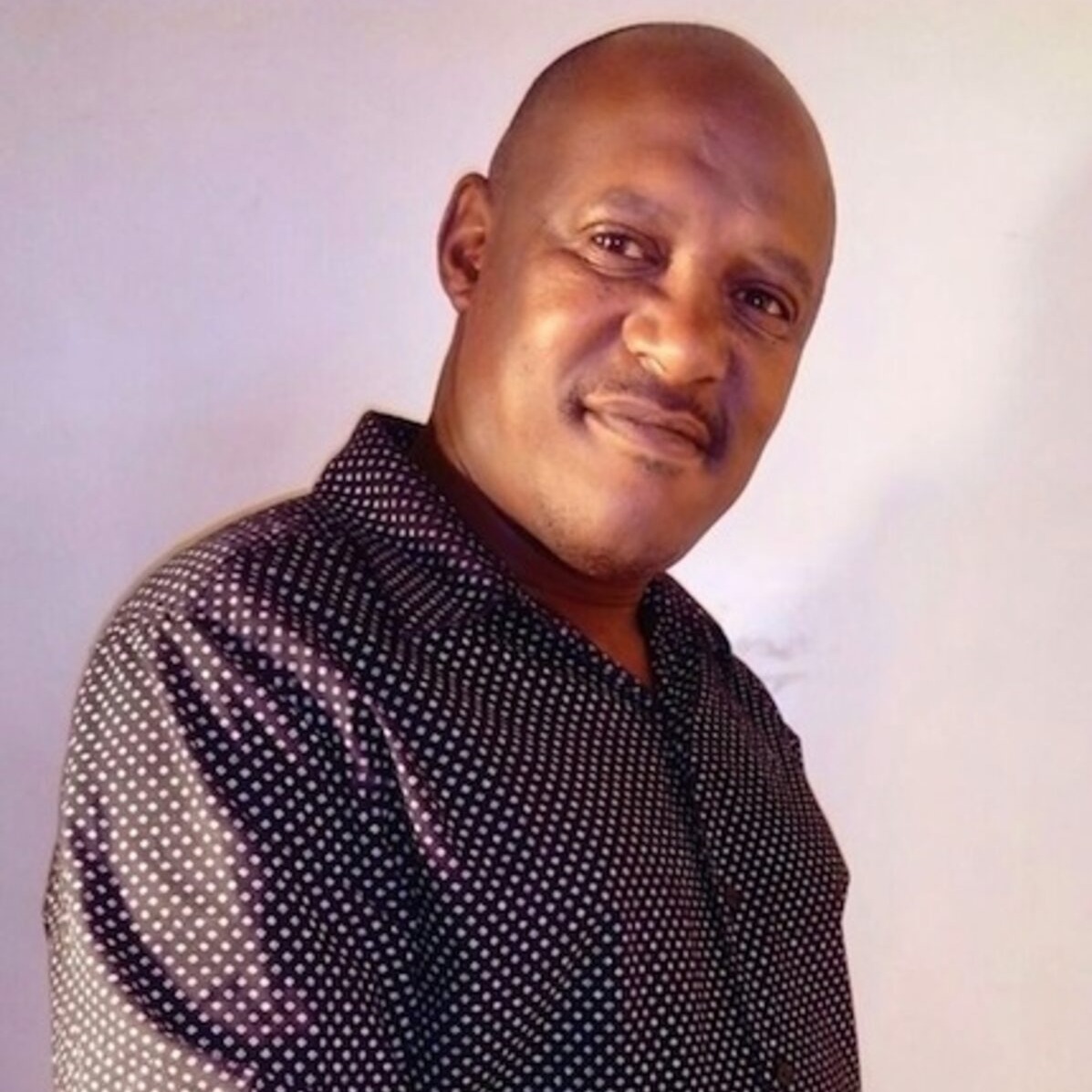
KARIEGA – For more than three decades, Cecil D. Stevens has used gospel music not just as a form of expression, but as a vehicle for purpose, mentorship and community transformation.
Now based in Kariega after living in the Western Cape, Stevens’ journey traces back to the streets where he first encountered music through his father, who played guitar and sang alongside friends. Those early, informal performances shaped his understanding of music as something lived and shared. Encouragement from teachers at school and consistent involvement in church further nurtured a talent that would grow into a lifelong calling.
His foundation in gospel music was cemented at the Reformed Pentecostal Congregation, where he became a regular singer.
From there, his career expanded into formal groups, including the a cappella ensemble Golden Voices in the late 1980s and later the Uitenhage Community Choir, where he served both as a tenor and Public Relations Officer, touring nationally.
By 1996, while studying theology at the University of the Western Cape, Stevens formed the group Simple Truth, marking his transition into songwriting and deeper artistic expression. Over the years, he has collaborated with various artists and contributed to recordings, steadily building a body of work grounded in faith.
But for Stevens, music has never been confined to performance. It is a tool for ministry and social impact.
“Gospel is a vehicle that is used to translate the word of God,” he said. “Christianity is a service, and not a status.”
That philosophy underpins his decision to return to Kariega; a move he describes as both strategic and deeply personal.
“Returning to Kariega is a blessing in disguise because it sets me up with my old musical colleagues and gives me an edge. I am close to the ground, and able to revitalise my career,” Stevens explained. “My time studying in Stellenbosch enriched me spiritually and mentally.”
Yet, his return has also exposed the stark realities facing the community. Stevens speaks candidly about the deterioration of local infrastructure and the social challenges affecting young people.
“It was a great disappointment to see our civic centre [Allanridge Civic Centre] in the state that it is. All our memories, gone. There’s nothing left,” he said. “There are social ills that need to be addressed seriously.”
It is this context that has shaped his latest initiative; a community-driven arts project aimed at youth development. The programme focuses on equipping young people with practical and creative skills, from performance and songwriting to sound engineering and artist management.
“The project will create employment for many youth and people with skills,” Stevens said. “It’s an opportunity to occupy matriculants with talent and assist in addressing social ills.”
Importantly, the initiative is designed to be inclusive, particularly for young people who may not meet the formal requirements for tertiary arts programmes.
“There are talented youths who cannot access institutions owing to qualifications. This is a space for them,” he explained.
At its core, Stevens’ work is driven by a belief that music carries spiritual weight and responsibility.
“The spirit in the music determines the authenticity of our Christianity,” he added. “My passion for music is driven by my vision to preach the word of God.”
Alongside his artistic journey, Stevens has also faced personal challenges, including struggles with mental health, which he openly acknowledges. He frames these experiences not as limitations, but as part of his resilience.
“I believe I am differently able,” he said. “I thank God that He has saved me out of that dilemma.”