

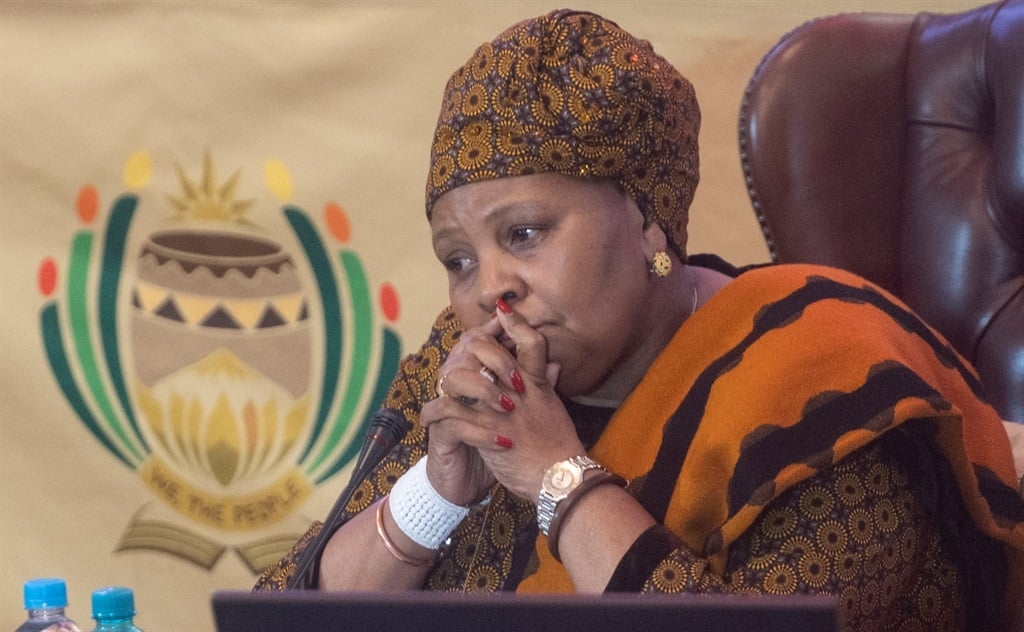
The corruption trial of former National Assembly speaker Nosiviwe Mapisa-Nqakula has been postponed to 20 August after the defence team requested time to prepare a discharge application.
The Gauteng Division of the High Court in Pretoria granted the postponement on Thursday to allow Mapisa-Nqakula’s legal team to receive transcribed records of the case. The defence indicated in court that they will file an application under Section 174 of the Criminal Procedure Act, which allows an accused to apply for discharge when the state has closed its case.
Mapisa-Nqakula (65) faces 12 counts of corruption and one count of money laundering. Prosecutors allege she solicited R4,5 million in bribes, with R2,1 million allegedly received in cash from service provider Nombasa Ntsondwa-Ndhlovu between December 2016 and July 2019.
The state closed its case earlier this month after two weeks of presenting evidence. Prosecutors will now wait for the defence’s heads of argument before drafting their reply to the discharge application.
The allegations
At the heart of the case is the allegation that Mapisa-Nqakula, while serving as defence minister, solicited and received bribes from Ntsondwa-Ndhlovu, the director of logistics company Umkhombe Marine. The payments were allegedly made to secure and protect defence contracts worth approximately R79 million.
Prosecutors contend that roughly R2,15 million was paid in cash, including funds allegedly used for home renovations. Financial investigators testified that coded language was used in WhatsApp communications to disguise requests for money, with terms such as “wig”, “impepho”, “indumba”, “padkos” and “snuff” appearing in messages.
Wynand Wessels, a financial investigator from the Investigating Directorate Against Corruption, presented evidence attempting to link the timing of large cash withdrawals from the contractor’s accounts to the alleged bribe requests.
Defence challenges evidence
The defence has challenged the state’s evidence, arguing that witnesses have provided contradictory accounts. They maintain that some cash originated from home safes rather than bank withdrawals and that WhatsApp messages did not explicitly reference money or specific amounts.
Mapisa-Nqakula has pleaded not guilty to all charges.
Resignation from parliament
The former speaker resigned from her position and as a member of parliament on 3 April 2024, following a failed court application to interdict her arrest. In her resignation letter, she cited her respect for the integrity of parliament and the need to maintain its reputation, while maintaining her innocence.
A Section 174 application allows the court to discharge an accused if it finds that there is no evidence upon which a reasonable person, acting carefully, might convict. If the application is unsuccessful, the defence will present its case.
ALSO READ: Former Speaker Mapisa-Nqakula R4.5 million corruption case postponed for consultation


