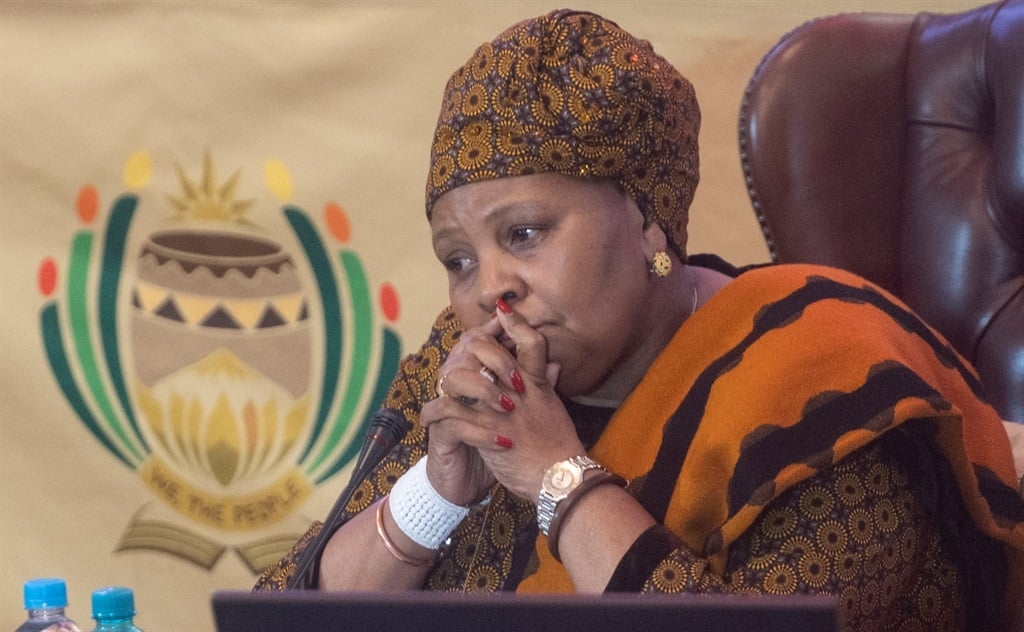
Former National Assembly Speaker Nosiviwe Mapisa-Nqakula may petition the country’s top prosecutor to withdraw corruption charges against her, as her multi-million rand case faces further delays.
Appearing in the Gauteng High Court in Pretoria today (18 August), Mapisa-Nqakula’s legal team indicated they may file representations with the office of National Director of Public Prosecutions Shamila Batohi. The move would attempt to have the criminal charges dropped before the matter proceeds to trial.
The case has been postponed to 21 November, to allow her attorney to consult with her on the docket provided by the state. Her R50 000 bail was extended until the next court appearance.
Mapisa-Nqakula faces 12 counts of corruption and money laundering, accused of soliciting and receiving R4.5 million in kickbacks during her tenure as Defence Minister. The state alleges she received R2.1 million in cash bribes from a former defence contractor.
According to the charges, Mapisa-Nqakula allegedly met with contractor Ntsondwa-Ndhlovu on 12 occasions in Pretoria and Johannesburg, where bribes totalling R4.55 million were solicited. The state contends the minister actually received R2.15 million of this amount.
Legal battles over evidence
The case has been marked by procedural delays, primarily stemming from Mapisa-Nqakula’s applications to force disclosure of key evidence. Her defence team has fought for access to various parts of the investigative docket, including Part C, which contains the investigation record and instructions to investigating officers.
In a significant development, the court heard that the defence had finally obtained a fraud and corruption docket in which the alleged key witness against Mapisa-Nqakula was himself an accused.
In April, Judge Mokhine Mosopa ruled against some of Mapisa-Nqakula’s disclosure applications, stating she had failed to demonstrate how the non-disclosure would impede her case or affect her right to a fair trial. However, the judge did order the disclosure of the Ntsondwa-Ndhlovu docket.
Mapisa-Nqakula’s legal team had argued there was “apparent obfuscation” in how the state gathered or “manufactured” evidence against her.
The court accepted that while the state had not denied requests for disclosure, decisions on such matters would be made once any representations to the NDPP were finalised.
READ ALSO: State entity senior executive allegedly caught on camera trying to bribe journalist