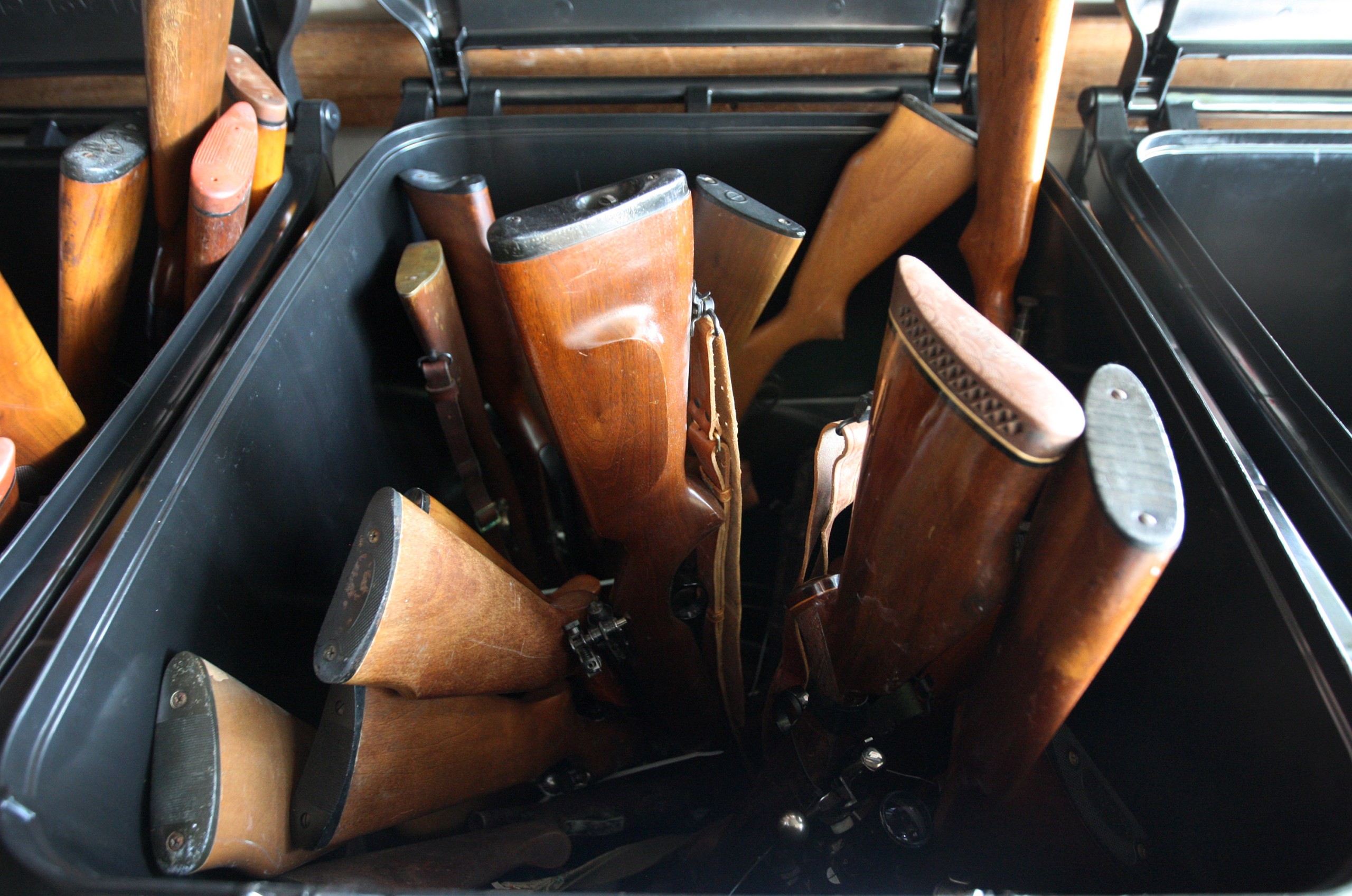
Licensed firearm dealers can now store, sell or transfer firearms with expired licences following a high court ruling that declared police restrictions unconstitutional.
The National Hunting and Shooting Association (Natshoot) and the South African Arms and Ammunition Dealers Association approached the Pretoria High Court over police guidelines, practices and computer systems that prevented dealers from receiving, registering, storing or including firearms with expired licences in their stock.
The court declared restrictions based solely on the previous owner’s expired licence or death “unconstitutional, unlawful and invalid”. It also ordered that police administrative rules and systems cannot create prohibitions that the law does not provide for.
“The expiry of the licence does not automatically destroy the person’s ownership. The person does not necessarily lose the value of the firearm,” says Wian Spies, an attorney at Hurter Spies Inc in Pretoria.
Firearms remain estate assets
A deceased person’s firearm now also remains an asset of the estate. A properly licensed dealer may receive such firearms from the owner or a properly appointed executor for purposes allowed by the Firearms Control Act.
The new owner will still need to apply for a licence before he or she may take possession of the firearm.
However, the ruling does not mean someone “may continue to use or possess a firearm after their licence has expired”, warns Spies, explaining there is a difference between ownership and lawful use.
Important for executors and heirs
The ruling is particularly important for executors and heirs, according to Spies.
“Upon death, the deceased’s property does not disappear. The assets form part of the deceased estate and are administered by the executor.”
The process had often been a nightmare until now. If a dealer could not receive the firearm, the executor could not easily sell it or have it safely stored within the regulated dealer system.
This could also complicate an heir’s future licence application and delay the finalisation of the estate.
The court gave the police 90 days to amend or withdraw contradictory guidelines, adapt their administrative and electronic systems, and communicate the ruling to firearm officers, provincial Firearms, Liquor and Second-Hand Goods Services offices (Flash) and the Central Firearms Register.
Ruling takes immediate effect
According to Spies, the 90-day period does not suspend the operation of the ruling for 90 days.
“The declaratory order has already come into operation upon issue, unless the ruling is suspended by a valid appeal process or changed by a higher court,” says Spies.
He warns that practical problems may arise in the meantime if a local firearm officer has not been informed of the ruling or police systems have not yet been adapted. However, this does not change the legal position.
Spies advises an executor who is turned away to take a copy of the court order along, document all attempts and refusals in writing, and escalate the matter to the provincial Flash office as well as the Central Firearms Register.
He also says that the firearm should not be informally handed over to an heir.
ALSO READ: Controversial gun control bill returns: DA and rights groups sound alarm