
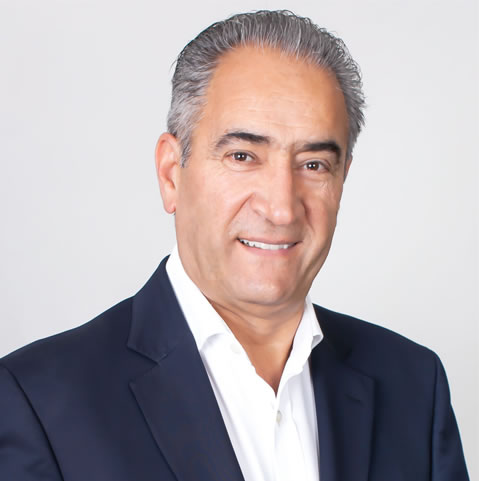
South Africa’s failure to condemn the Iranian government’s violent crackdown on its own people represents a moral failure that betrays the country’s constitutional commitment to human rights, economist Dr Iraj Abedian told the Cape Town Press Club on Friday.
Abedian, an Iranian-born economist and outspoken critic of the Tehran regime, delivered a scathing address in which he detailed allegations of mass killings, arbitrary detentions and systematic human rights violations by Iranian authorities whilst questioning why South African government officials, religious leaders and human rights organisations have remained largely silent.
Mass killings and detentions
The founder and chief executive of Pan-African Investment and Research Services cited figures from the UN Human Rights Council indicating that an estimated 30 000 to 40 000 Iranians were killed on 8 January, with victims reportedly shot in the head as hospitals were raided and the wounded executed. A further 220 000 people have been detained or remain missing since late January, according to UN figures.
“Families are being charged for the bullets used to kill their children. Bodies are being held and burial rights denied,” Abedian said, describing what he termed the regime’s systematic brutality against its own citizens.
The violence erupted after mass protests spread across more than 230 locations throughout Iran in late December 2025, triggered by economic collapse and a currency crash that saw the rial lose approximately 90% of its value.
Abedian, who served as professor of economics at the University of Cape Town before entering the business sector in 2000, argued that South Africa’s stance on Iran mirrors past Western appeasement rather than defending human rights principles the country championed during its own struggle against apartheid.

Moral failure and selective silence
“South Africa is failing to apply its own constitutional commitment to human rights,” he said, describing the government’s position as one of “moral ambivalence” and “selective silence”.
The economist traced Iran’s current crisis to deep historical roots, noting the tension between Persian civilisational traditions and clerical rule dating back approximately 500 years to the Safavid era. He pointed to the role of Western powers, including the United States, France, the United Kingdom and Germany, in enabling Ayatollah Khomeini’s return and the 1979 revolution that installed the current theocratic system.
Since then, Abedian said, the regime has pursued an agenda of exporting revolution through proxies in Iraq, Syria, Lebanon and Yemen whilst declaring Israel a principal enemy. He cited figures indicating that more than 2 000 US soldiers have been killed by actions linked to the Islamic Revolutionary Guard Corps (IRGC) in Iraq, Lebanon and elsewhere.
The regime’s political legitimacy has collapsed dramatically, he noted, with its own statistics showing support falling from a reported 80% in 1979 to just 22% currently. Iran’s population of 92 million is young, with 65% to 70% under the age of 30.
Economic devastation and control
Despite possessing what Abedian described as the world’s second-largest oil and gas reserves, Iran suffers from electricity and water shortages, widespread unemployment and widening inequality. The IRGC controls 60% to 80% of the economy, he said, whilst tens of billions are spent on nuclear and missile programmes instead of public goods.
“Inflation is running at 40% to 60%. Prices of food and medicine have increased by over 100%, with severe shortages common,” Abedian told the audience, detailing the economic devastation facing ordinary Iranians.
He described systematic suppression of women’s rights, with women beaten and blinded for showing their hair, and noted that Nobel laureates, writers and social activists have been imprisoned in their tens of thousands. Doctors and nurses have been threatened or killed for treating wounded protesters.
The war in Iran has produced the biggest disruption to the global economy since Covid-19, making Abedian’s analysis particularly relevant for understanding the wider implications of what he termed a “seismic event” with regional and global repercussions.
Abedian, who also served as a consultant on economic policy both in South Africa and internationally and was a member of the advisory board of the Auditor-General from 2006 to 2025, called for fact-based public discourse rather than analysis driven by ideology or geopolitical calculations.
He drew parallels between the contemporary Iranian regime and apartheid-era South Africa, suggesting both represent human rights failures that demand global condemnation rather than silence or tacit support.
The economist questioned why South African religious leaders, activists, human rights organisations and media outlets have failed to speak out against documented atrocities, arguing that the country’s own history should make it particularly sensitive to systematic oppression.
Parallels with apartheid South Africa
Whilst Abedian did not spell out detailed policy prescriptions regarding sanctions, diplomatic recognition or intervention, his address focused on what he described as the moral and diplomatic necessity of realigning South Africa’s foreign policy to support victims rather than their oppressors.
He suggested that successive US administrations have often prioritised geopolitical calculations over supporting Iranian civil society, though he noted that the Trump administration broke with this pattern by aligning more closely with the Iranian people.
The regime’s ideology and actions have destabilised the Middle East and threaten regional neighbours whilst creating global repercussions through terrorism, proxy wars and potential refugee flows, Abedian warned. He highlighted the risk of broader regional war and humanitarian catastrophe as the conflict draws in the United States and Israel.
Abedian’s critique extends beyond government policy to encompass what he sees as a broader failure of South African civil society to engage with the Iranian people’s struggle. He asked rhetorically why organisations and individuals who championed human rights during the anti-apartheid struggle have remained silent in the face of comparable atrocities.
The economist’s personal connection to Iran, where he was born, adds weight to his analysis of a regime he characterises as having lost legitimacy amongst its own people whilst maintaining power through violence and economic control exercised primarily by the IRGC.
His address to the Cape Town Press Club represents a direct challenge to South Africa’s foreign policy establishment and civil society organisations to reconsider their stance on Iran and to align their positions with the constitutional principles of human rights and dignity that underpin the country’s own democratic foundation.
ALSO READ: DA demands action on Iranian human rights crisis as death toll mounts



You must be logged in to post a comment.