


An Iranian protester who the United States feared faced imminent execution will not be sentenced to death, the judiciary announced on Thursday, while President Donald Trump said he would “watch it and see” regarding threatened military action against the Islamic Republic.
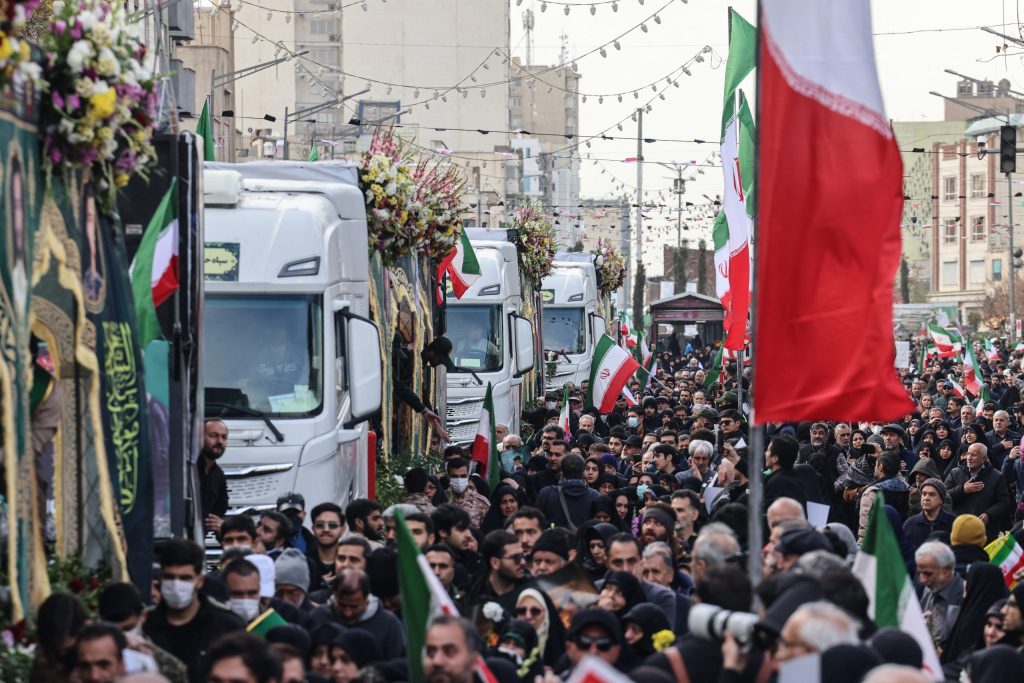
Trump had repeatedly discussed coming to the aid of Iranian protesters in recent days following a violent crackdown that rights groups say has left at least 3,428 people dead. The demonstrations, initially sparked by economic grievances, rapidly evolved into a nationwide movement to unseat the Islamic republic that has ruled since 1979.
Assurances from ‘important sources’
Speaking at the White House, Trump revealed he had received assurances from “very important sources on the other side” that executions would not proceed. Until Wednesday, the United States had been threatening military action should Iranian authorities execute protesters.
The focus centred on Erfan Soltani, 26, imprisoned in Karaj outside Tehran since his arrest on charges of propaganda against Iran’s Islamic system and acting against national security. On Thursday, Iran’s judiciary clarified that Soltani “has not been sentenced to death” and that if convicted, “the punishment, according to the law, will be imprisonment, as the death penalty does not exist for such charges.”
Oil markets react
The developments, coming hours before a UN Security Council meeting on Iran requested by the US, sent oil prices plunging Thursday as concerns eased over potential supply disruptions. Iran accounts for approximately 3% of global oil production.
“They’ve said the killing has stopped and the executions won’t take place,” Trump stated. When asked by an AFP reporter if US military action was off the table, he replied: “We’re going to watch it and see what the process is.”
‘No hanging today or tomorrow’
Iranian Foreign Minister Abbas Araghchi told Fox News there would be “no hanging today or tomorrow,” while accusing US ally Israel of orchestrating violence in Iran without providing evidence. He claimed protests between January 7-10 were infiltrated by external “elements who had a plan to create a big number of killings in order to provoke President Trump to enter into this conflict and start a new war against Iran.”
Iran’s judiciary chief Wednesday promised fast-track trials for arrestees, with prosecutors indicating some detainees face capital charges of “waging war against God.” State media reported hundreds of arrests and detention of a foreign national for espionage.
Internet blackout and regional tensions
Authorities imposed an unprecedented internet blackout January 8 as protests intensified, severely hampering demonstrators’ ability to communicate. Rights monitors say officials are using the blackout to conduct their harshest repression in years.
Iran maintained a defiant stance regarding potential US attacks, with senior adviser Ali Shamkhani warning Trump that previous strikes on US bases demonstrated “Iran’s will and capability to respond to any attack.”
Regional fears prompted Britain to temporarily close its Tehran embassy, while the US embassy in Saudi Arabia urged caution. Germany’s Lufthansa suspended flights through Iranian and Iraqi airspace “until further notice.”
International response
G7 nations expressed being “deeply alarmed at the high level of reported deaths and injuries,” warning of additional sanctions if the crackdown continues. Monitor NetBlocks reported Iran’s internet blackout had lasted over 156 hours.
Despite the shutdown, verified videos showed bodies at Tehran’s Kahrizak morgue as distraught relatives searched for loved ones. The US-based Institute for the Study of War noted authorities were using “unprecedented brutality” to suppress protests, with Iran Human Rights reporting security forces killed at least 3,428 protesters and arrested over 10,000.
ALSO READ: Iran declares readiness for war amid growing protest crisis
The South African government this week came under fire about their inclusion of Iran in the “Will for Peace 2026” naval drills in Simon’s Town, in which Russia and China are also participating.
This morning President Cyril Ramaphosa broke his silence about the Iran protests, calling for “restraint and dialogue” in Iran.
“The South African government is following the developments in Iran with concern. The reports of unrest and the subsequent loss of life are concerning, and South Africa urges all parties to exercise maximum restraint.
“South Africa firmly believes that the right to peaceful protest, freedom of expression, and freedom of association are universal human rights that must be upheld without exception.
“We therefore call on the Iranian authorities to ensure that citizens exercise their right to protest in peace. Sustainable peace and stability can only be achieved through solutions that center the agency of the Iranian people.”
ALSO READ: South Africa faces US pressure: Iran withdraws from controversial naval exercises


You must be logged in to post a comment.