


The Democratic Alliance (DA) has intensified pressure on South Africa’s government, formally demanding that Minister of International Relations and Cooperation Ronald Lamola report Iran to the UN Human Rights Council as the death toll from ongoing protests in the Islamic Republic approaches 3 000 casualties.
The Iranian government’s violent crackdown on civilian protesters has reached alarming proportions, with activist reports indicating the death toll has surpassed 2 571 as of 13 January. The widespread demonstrations, which have swept across the country since late last year, have been met with what the DA describes as “rampant” state violence orchestrated under the leadership of Supreme Leader Ayatollah Ali Khamenei.
The scale of the casualties has drawn international attention, with Iranian state television acknowledging significant fatalities while independent sources suggest the numbers may be even higher.
In a statement, DA spokesperson on International Relations Ryan Smith positioned the demand as a matter of constitutional obligation. “The principles of freedom, democracy, and human rights enshrined in the South African constitution compel Lamola to execute his sworn duty, as the custodian of our foreign policy, to protect any and all global citizens against autocratic regimes which seek to stifle their right to freedom,” Smith declared.
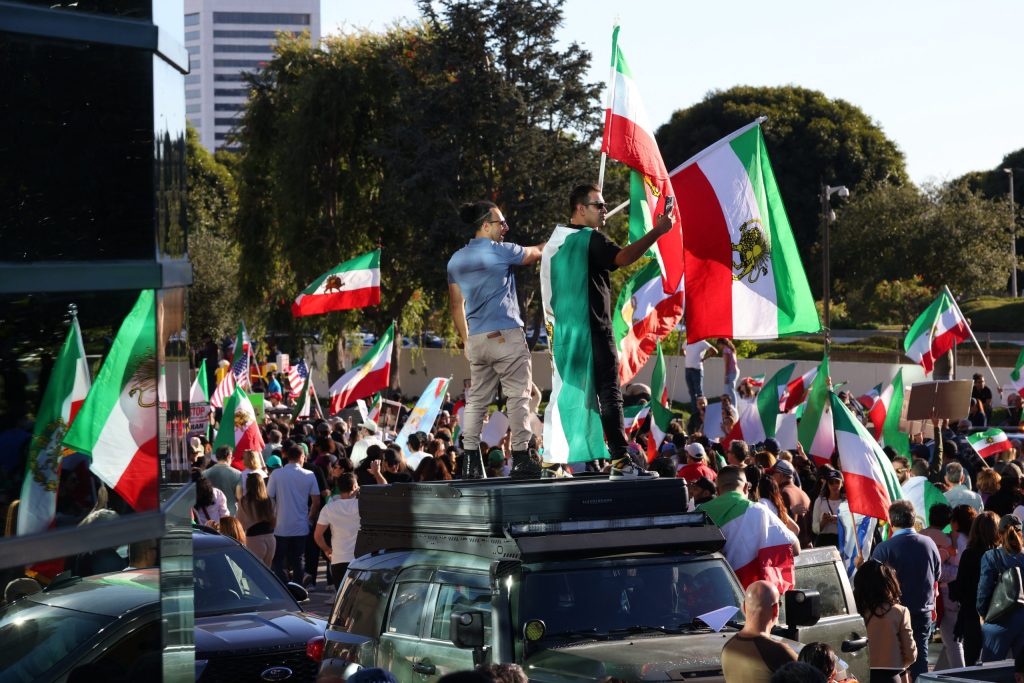
The DA’s intervention comes at a particularly sensitive time, given Iran’s recent accession to the BRICS+ bloc, of which South Africa is a founding member. This development has complicated South Africa’s diplomatic positioning, especially given what the DA characterises as the African National Congress’s (ANC) “very public and unapologetic proximity to Iran.”
The DA drew powerful historical parallels between the current Iranian situation and South Africa’s own struggle against apartheid. Smith specifically referenced the Sharpeville massacre of 21 March 1960, and the Soweto uprising of 16 June 1976, noting how “peaceful civilian protest was met with brutal state violence.”
“At those moments, the international community stood with the people of South Africa, not with the apartheid regime,” the statement emphasised. “Today, DIRCO and the ANC face the same moral test: whether they stand with the people of Iran, or with those who repress them.”
South Africa’s foreign policy faces a complex balancing act. Lamola has previously clarified that South Africa’s foreign policy is guided by “active non-alignment,” seeking to maintain relationships that contribute to economic growth while respecting national sovereignty.
The government has supported Iran’s inclusion in BRICS, with South African leaders having met with Iranian officials to discuss cooperation. However, Lamola’s office has also emphasised that implementation of foreign policy remains the responsibility of the Presidency and the Department of International Relations and Cooperation, particularly after controversial statements by military officials regarding solidarity with Iran.
The DA’s call aligns with broader international efforts to address Iran’s human rights record. The UN Human Rights Council expanded its investigations into Iran’s violations in April 2025, broadening the scope of its Fact-Finding Mission to monitor and investigate allegations of serious human rights violations. This mission, initially established following the 2022 protests, aims to address impunity for gross violations and facilitate future legal proceedings.
ALSO READ: Iran declares readiness for war amid growing protest crisis


You must be logged in to post a comment.