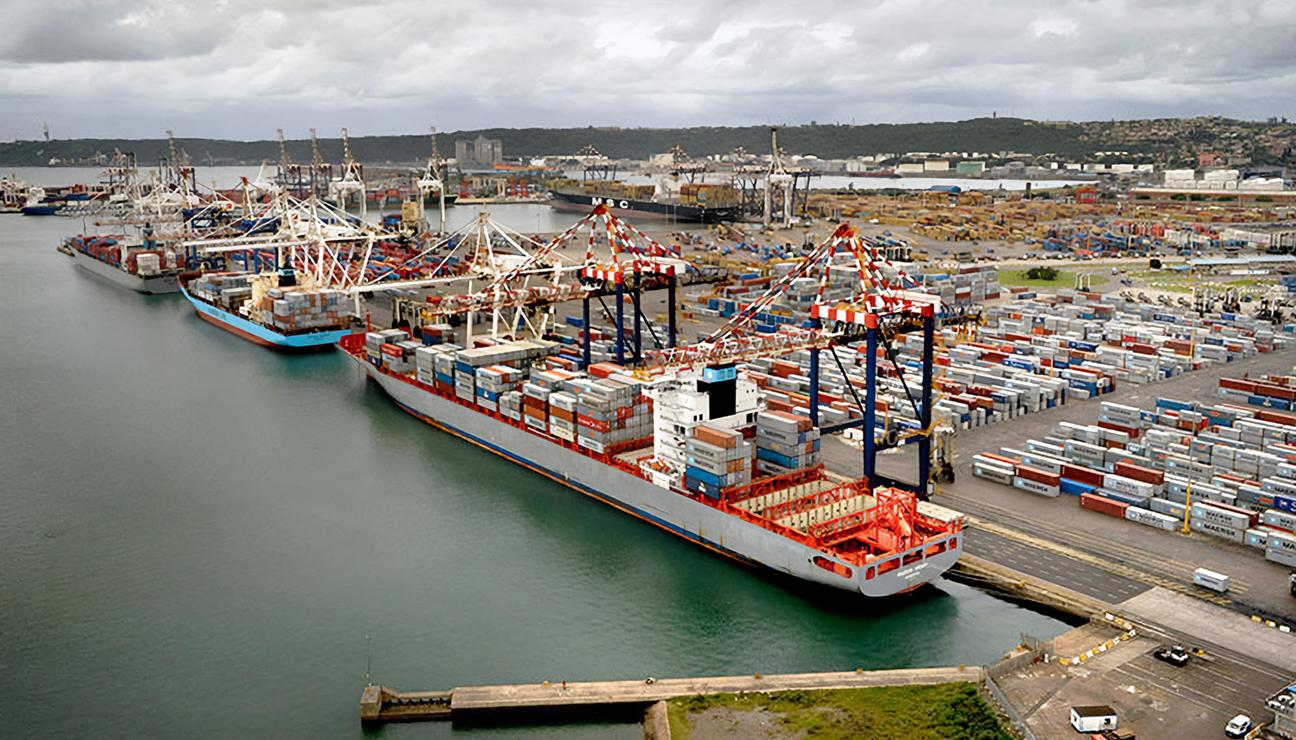
ActionSA has demanded that Parliament debate the worsening operational crisis at the Port of Durban, as new data reveals ships are waiting more than nine days to berth at South Africa’s busiest container terminal.
The political party submitted a notice of motion on 30 September calling for parliamentary intervention after industry reports showed average anchorage times of 214 hours, berth times of 123 hours, and a vessel queue of 33 ships waiting outside Durban harbour.
“The Port of Durban handles 60% of South Africa’s containerised cargo and while it increased efficiency last year we cannot allow it to take a single step backwards,” ActionSA said in a statement.
Crisis threatens fragile economy
The renewed port delays come at a critical time for South Africa’s struggling economy. With an expanded unemployment rate of 43.6% and weak economic growth, ActionSA warned the country cannot afford what it called “own goals” that undermine business operations.
“Business and industry organisations representing those affected have repeatedly called for urgent government intervention,” the party said. “Parliament cannot sit on the sidelines while a strategic economic gateway deteriorates and businesses, jobs and livelihoods are placed under increasing pressure.”
The operational breakdown has placed strain on the national supply chain, disrupting businesses across nearly every sector and imposing extra costs on thousands of small, medium and large enterprises.
Software change triggers collapse
The latest crisis erupted in mid-August when Durban Gateway Terminal, which operates Pier 2, switched to a new operating system called Navis N4. What should have been a 12-hour changeover instead led to cargo handling grinding nearly to a halt for more than a month.
Between 14 August and 10 September, cargo handled at the terminal dropped to about 30% below the preceding four-month average. During the week of 14 to 20 September, vessels waiting to berth at Durban Gateway Terminal spent an average of 214 hours – nearly nine days – at anchorage.
Transnet National Ports Authority has identified multiple problems contributing to the delays, including equipment failures, ageing infrastructure, reduced crane availability, faulty refrigerated container units, tidal restrictions and weather disruptions.
At Pier 1, two cranes were offline for planned maintenance while weather stoppages and equipment breakdowns added to the problems.
Economic damage mounts
The port inefficiency is costing the economy dearly. Research estimates that failures across Transnet’s freight system, including port and rail problems, cost about 7.43% of South Africa’s gross domestic product.
Industry estimates suggest logistics delays cost the economy between R100-million and R1-billion per day, with more than R8-billion worth of goods potentially blocked each day when ports are inactive.
Importers and consumers pay higher prices for goods, while exporters face mounting port, terminal and logistics costs that undermine South Africa’s competitive position.
Trucking companies report valid bookings can involve four to 22 hours of waiting time. Securing a booking can take one to two days, followed by service wait times and the time needed to unpack and return empty containers.
Some businesses have resorted to expensive airfreight to protect production schedules, while the landside supply chain impact has been estimated at 18 to 20 days in some chains.
Partial recovery underway
By late September, there were signs of improvement. Durban Gateway Terminal reported its outer anchorage count had fallen to eight vessels by 28 September, down from higher levels earlier in the month.
However, the South African Association of Freight Forwarders cautioned that a single-day reduction does not establish a sustained recovery. Different vessel counts on the same dates suggest the situation remains fluid and difficult to assess.
The crisis follows what had been a recovery year for South African ports. Transnet reported 8 630 vessel arrivals in the 2025/26 financial year, up 9% from the previous year. Cargo throughput across eight commercial ports rose 4.2% to about 304-million tonnes, with container volumes increasing 7.1%.
ALSO READ: Durban named world’s most improved port as Cape Town ranks worst globally
Durban was ranked 403rd out of 405 ports in the 2024 Container Port Performance Index published by the World Bank in September 2025, making it one of the worst-performing container ports globally.
The port has been plagued by persistent equipment failures, shortages of ship-to-shore cranes and rubber-tyred gantry cranes, adverse weather including strong winds and dense fog, and high container volumes that led to significant vessel backlogs.
ALSO READ: Dead in the water: Why South African ports can’t stay afloat
Private sector deal under scrutiny
The latest crisis has raised questions about Transnet’s partnership with International Container Terminal Services, a 25-year agreement for operation of Durban Container Terminal Pier 2 that took effect on 1 January.
Transnet has invested heavily in new equipment, including four new ship-to-shore cranes valued at R967-million launched at Pier 2 in October 2025. The state-owned company set aside R4-billion for equipment acquisition across its business in the 2025/26 financial year.
ActionSA’s parliamentary motion comes as pressure builds on government to address the port crisis before it inflicts further damage on an already fragile economy.
“Parliament must not be silent while our economy and the livelihoods of hundreds of thousands of South Africans hang in the balance,” the party said.
ALSO READ: Agriculture minister takes action as Cape Town port failures cripple fruit farmers