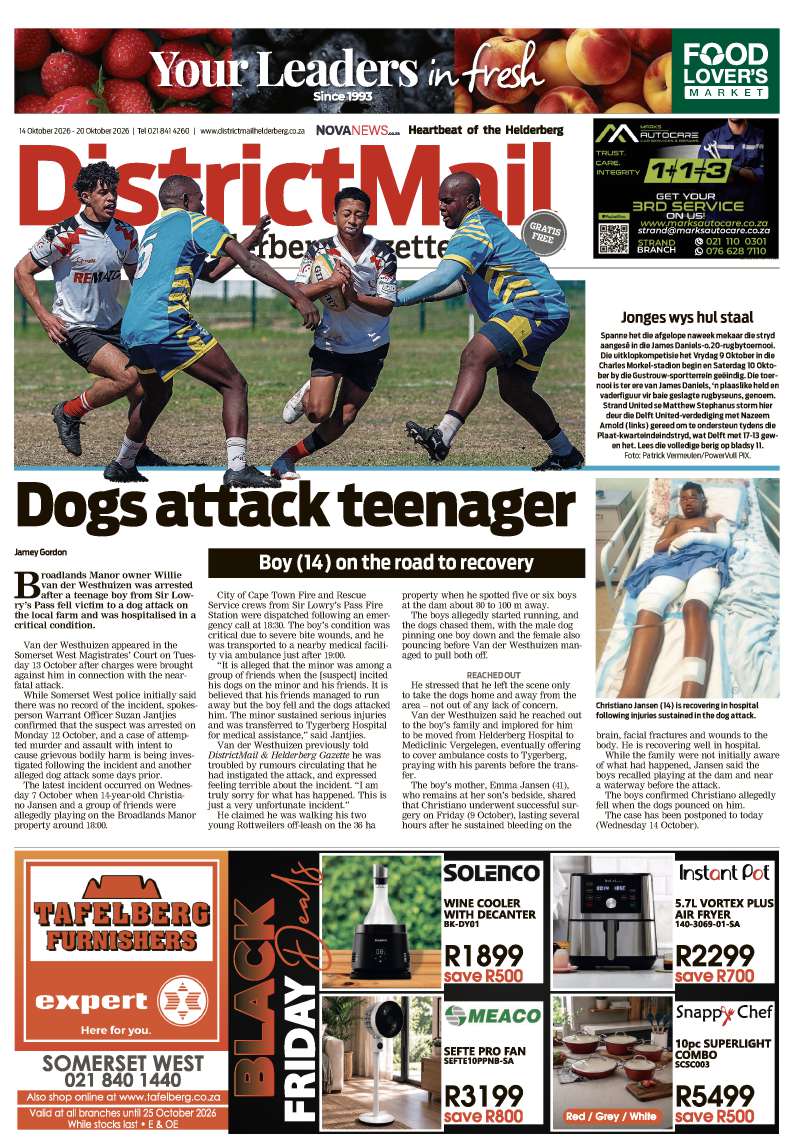

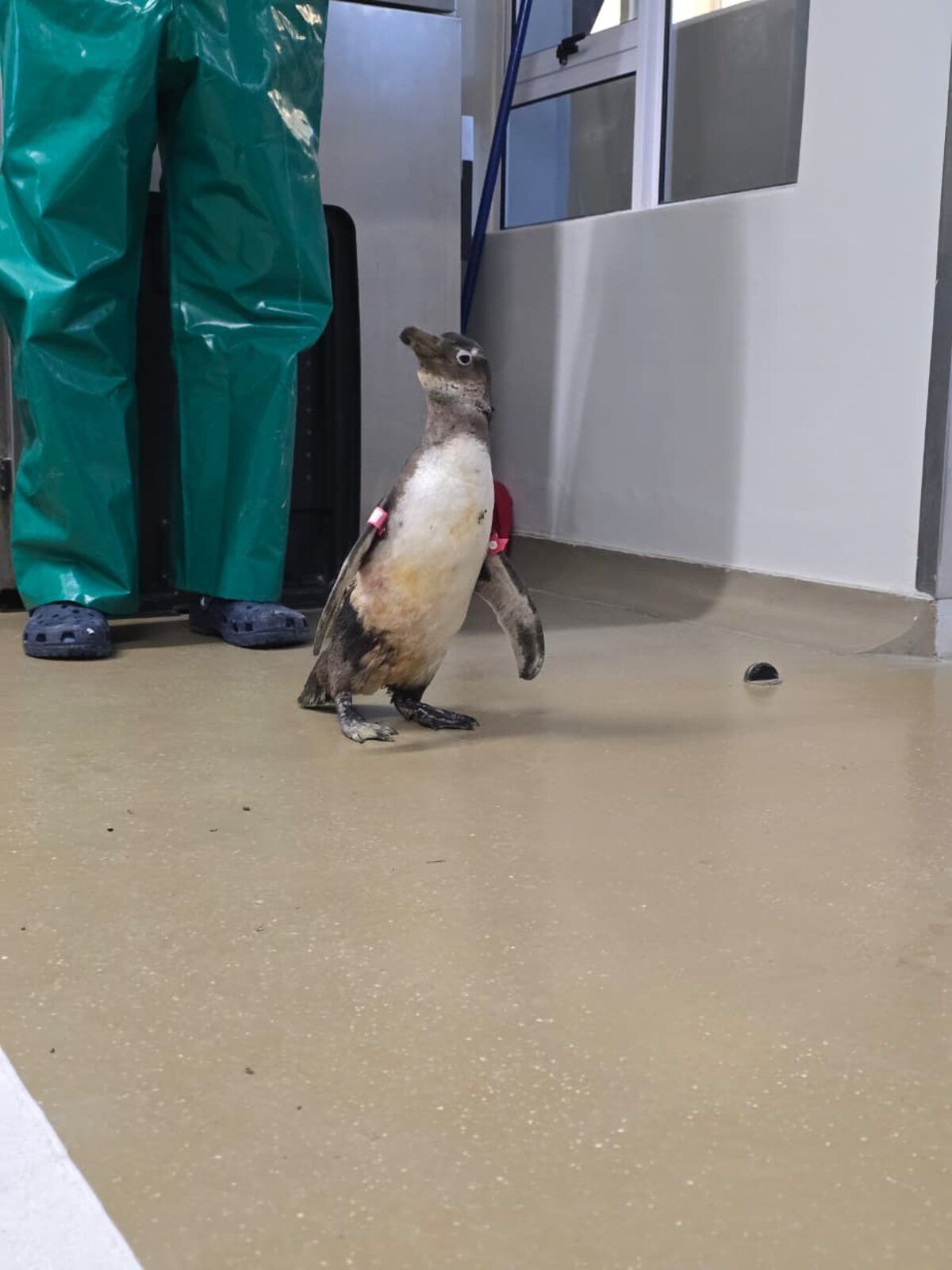
Jalapeño the penguin is on track to return to the wild after surviving a devastating injury on Gordon’s Bay Main Beach in July.
He was rescued on Friday 3 July after a suspected seal attack left his right leg degloved from below the flipper to the foot.
A community member spotted Jalapeño on the beach and reported him to the Southern African Foundation for the Conservation of Coastal Birds (SANCCOB)’s emergency line before staying by his side until help arrived.
First responder Taryn Flee rushed to collect a rescue box and headed straight to the shoreline in front of Trawlers restaurant.
Upon Flee’s arrival, she found the juvenile penguin on the rocks, barely moving. She prepared the box for comfort and then used it to secure the bird.
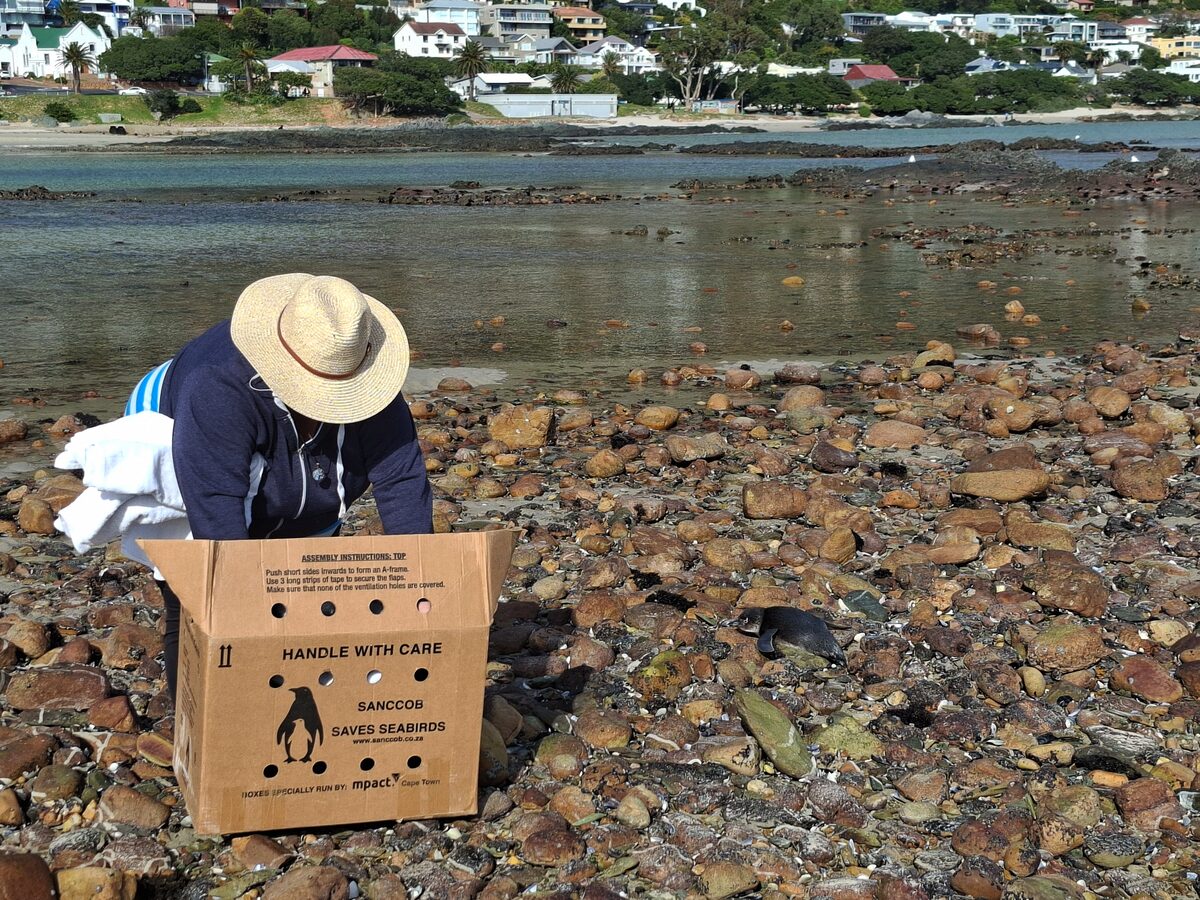
Despite his condition, Jalapeño still showed a fighting spirit as he nipped at Flee. That’s how he earned his spicy name.
A driver was dispatched from SANCCOB’s offices in Table View, transporting the bird to be admitted into quarantine and to receive emergency surgery.
After extensive surgery, anaesthesia, a blood transfusion and repeated wound cleaning over the following days in what SANCCOB describes as “touch and go,” the African penguin pulled through, defying the odds.
The injury was critical. Degloving injuries can quickly lead to infection and necrosis, and for a critically endangered species like the African Penguin, every bird counts.
Two months later, Jalapeño is closely monitored and making steady progress. It is expected that after a long rehabilitation, he will eventually be released into the wild.
But this isn’t Jalapeño’s first brush with fate.
It was later discovered that the penguin was no stranger to SANCCOB. He had been previously released at De Hoop Nature Reserve in Potberg and had been thriving in the wild before the devastating injury. This twice-saved penguin is now getting a second shot at life.
The fact that rehabilitated penguins such as Jalapeño are surviving and breeding in the wild offers hope for the species’ future. SANCCOB, whose mission is to conserve seabirds, has made the African Penguin its flagship species.
The organisatuon said the rescue was possible thanks to teamwork through a vigilant bystander, trained first responders, the organisation’s world-class veterinary team, dedicated staff and volunteers.
“It takes many hands and every little action counts,” Flee points out.
“Wildlife should be free and we need to respect the environment.”
There are six SANCCOB-trained first responders ready to respond to emergencies in the Helderberg.
If you would like to support SANCCOB, you can do so through donations, adoptions of birds or simply spreading awareness.
If you encounter an injured penguin or seabird, don’t attempt to handle it yourself. Call SANCCOB so that trained first responders can be dispatched. The 24-hour emergency numbers are 021 557 6155 or 078 638 3731.
For more information, to donate, to volunteer or to adopt a penguin, visit sanccob.co.za.