

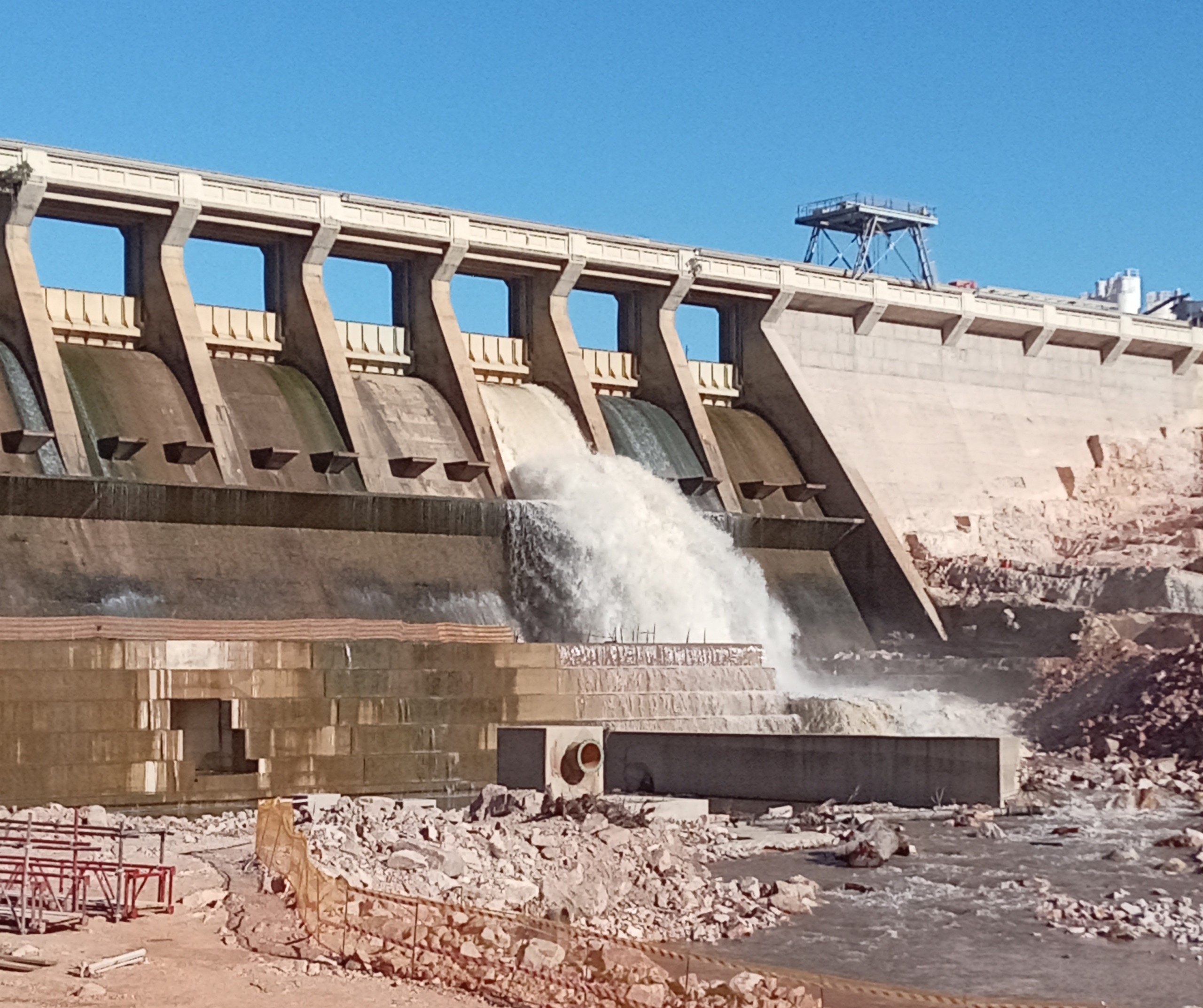
Water and Sanitation Deputy Minister David Mahlobo has praised progress at the long-delayed Clanwilliam Dam wall raising project during a site visit last week, assuring stakeholders that the R8bn infrastructure project is on track for completion in 2028.
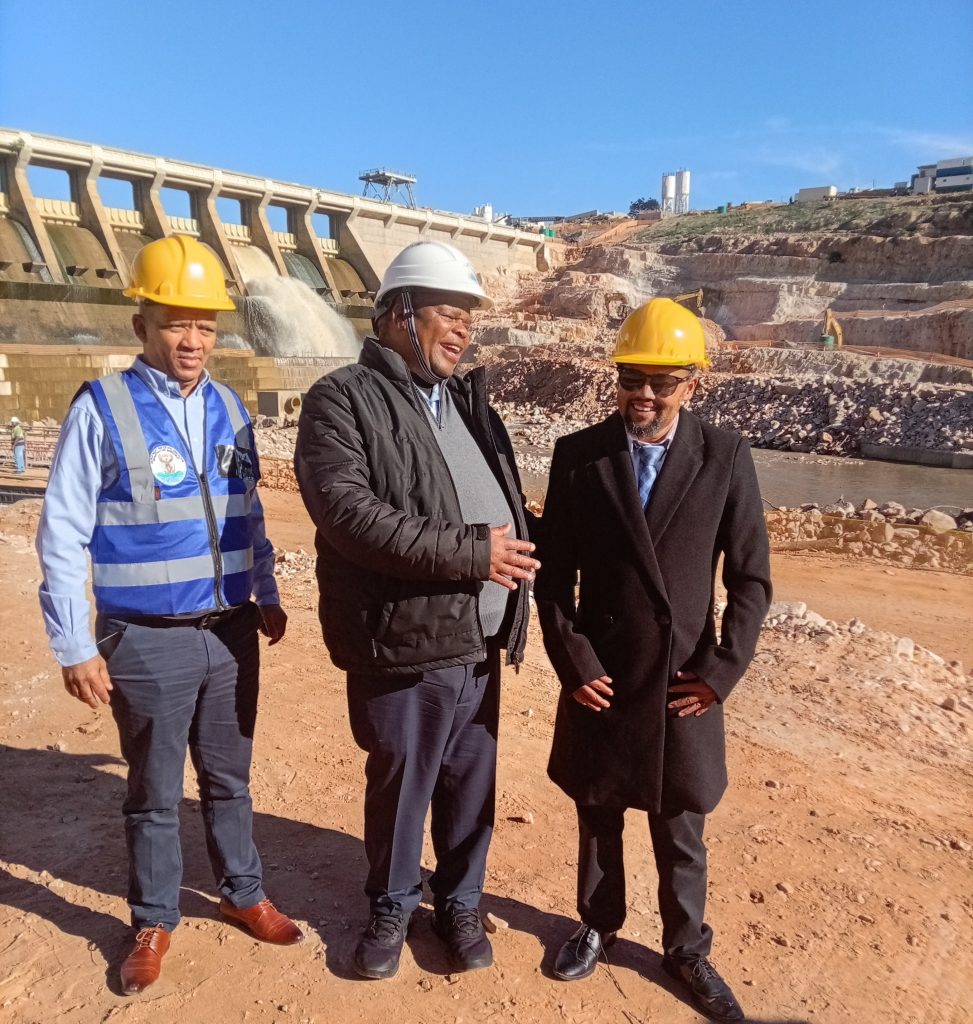
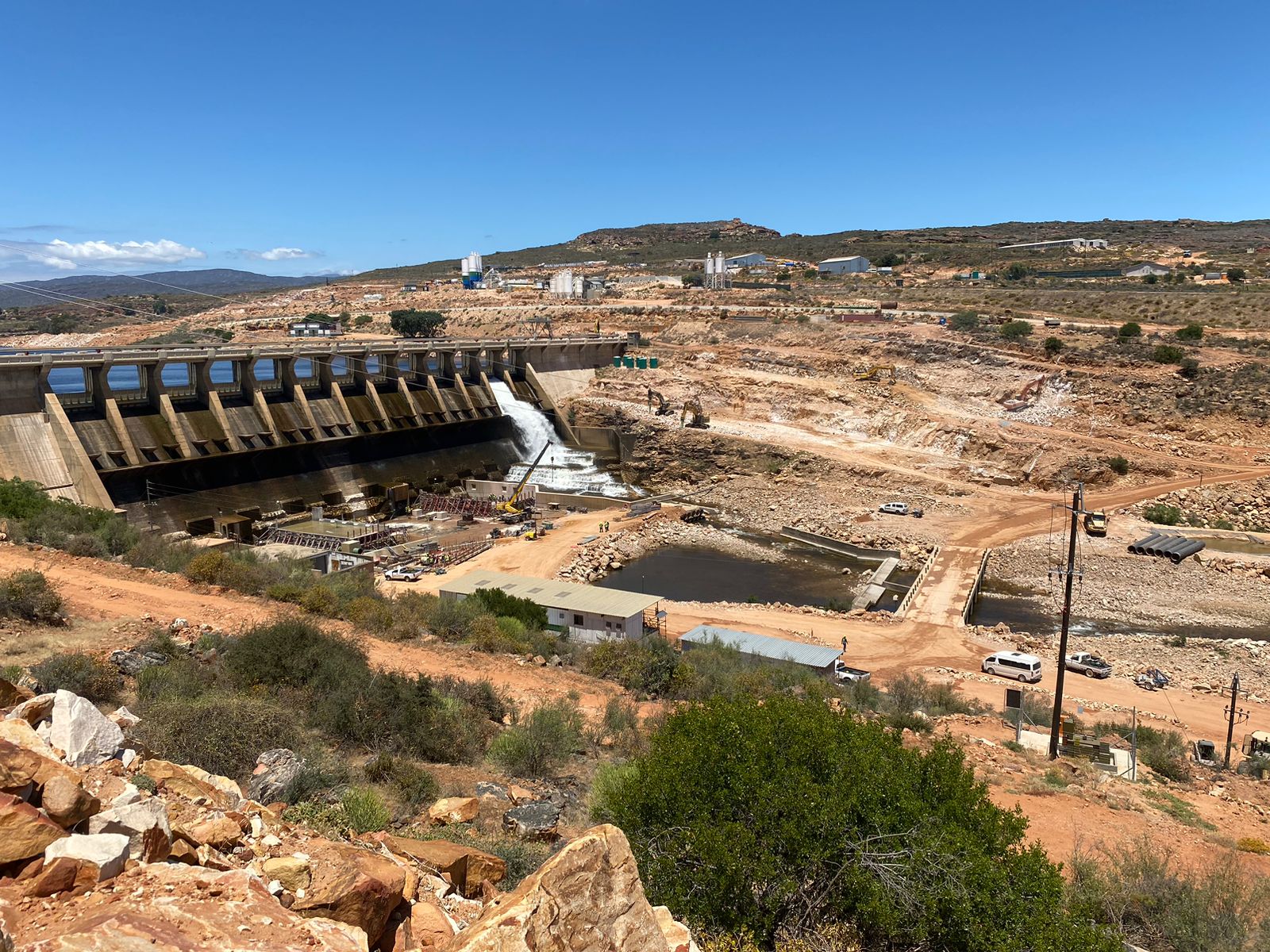
The deputy minister inspected the construction site in Cederberg Local Municipality, Western Cape, where he acknowledged key milestones including emergency work on the upstream coffer dam, completion of the lower spillway section, and demolition of parts of the old dam wall.
Concrete placement on the new dam wall has reached 21 998 cubic metres, whilst drilling and grouting of the foundation are at an advanced stage. Foundation excavations for the coffer dam resumed in February this year after delays caused by exceptionally high rainfall during last year’s rainy season.
“I am very pleased because it is not an easy thing, but the team that is working here is very experienced,” Mahlobo said. “It is an advantage that there is capacity within the state to do these kinds of major infrastructure projects.”
The deputy minister noted that water supply for both domestic and agricultural use has been maintained despite the construction work, with no reports of production slowdowns or job losses in the region.
Further construction milestones are scheduled for the coming months, with spillway pipes and gallery construction set to begin in November this year. Excavations of the tunnel and intake tower are planned for completion by June 2027.
Troubled history
The project has experienced significant delays since dam safety investigations in 2007 first identified the need for remedial foundation work and wall raising to meet modern flood design standards. A feasibility study was completed in 2008, but construction only began a decade later in 2018.
By 2021, work had stalled at approximately 12% completion due to severe procurement challenges and funding shortages. The initial tender issued in 2016 could not be awarded due to lack of available funds, whilst various national bids for critical goods and services failed.
The Covid-19 pandemic and land disputes further hampered progress on the project, which was originally budgeted at R2.2bn for completion in 2018. The estimated cost has since escalated through R4bn and R5.6bn to the current figure of approximately R8bn.
Former Water and Sanitation Minister Senzo Mchunu committed to resuscitating the project in 2023, and construction activities restarted. By December 2025, the project had reached 26% overall progress, rising to 47% by May 2026.
Water security boost
Upon completion, the dam wall will be raised by 13m, increasing storage capacity from approximately 122 million cubic metres to 344 million cubic metres – an additional 82 million cubic metres of water.
The enhanced capacity will significantly improve reliable water supply for irrigation, domestic use and economic development in the west coast region of the Western Cape. Main beneficiaries will include local farmers, households and historically disadvantaged farmers.
The raised dam wall will also improve compliance with dam safety standards during high flood conditions and maintain ecological requirements of the Olifants River.
During his engagement with contractors and stakeholders including the Clanwilliam Water Users Association and Lower Olifants River Water Users Association, Mahlobo called for continued cooperation.
“There is still more work to be done on this project and we encourage the coordination of cooperative governance with the stakeholders, as well as with the provincial government,” he said. “We therefore need to work together and be of one mind to ensure that we reach our targets and finalisation of the project within the planned timeframe.”
Total expenditure on the project reached R2.29bn by early 2026, with officials reporting that costs remain within revised budget estimates.
ALSO READ: Clanwilliam Dam upgrade at 26% completion, years behind original schedule


You must be logged in to post a comment.