

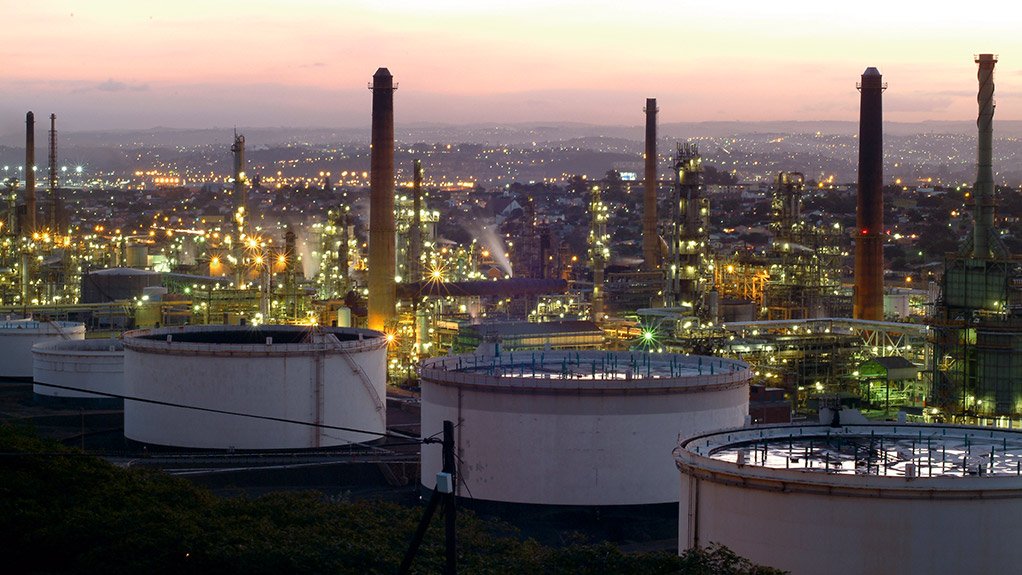
The national government has published a draft policy that could see South Africa build its largest strategic oil reserve in more than 40 years, a move designed to protect the country from fuel shortages during global supply crises.
The draft Strategic Petroleum Stocks Policy, now open for public consultation, proposes a mandatory fuel stockpiling system that would require both government and private industry to maintain emergency reserves totalling 81 days of national consumption.
Under the plan, the state would hold strategic reserves equal to 60 days of fuel demand, amounting to roughly 36 million barrels of crude oil and refined products. Fuel wholesalers and importers would be obligated to hold an additional 21 days’ worth of commercial stocks, creating a combined buffer designed to shield the economy from sudden disruptions.
The proposed government reserve would consist of 70% crude oil and 30% refined products such as diesel and jet fuel. These stocks would be stored at the Saldanha Bay and Milnerton facilities and released only during a declared national emergency triggered by severe supply disruptions or catastrophic events.
Shift from voluntary to mandatory stockpiling
Officials say the policy represents a fundamental shift from the current voluntary stockpiling framework to a mandatory regime, one that would significantly improve the country’s preparedness for fuel supply shocks.
The need for stronger energy security has become more urgent as South Africa’s reliance on imported fuel has deepened. Domestic refining capacity has halved in recent years following the closure of several refineries, forcing the country to import more petroleum products to meet annual demand of approximately 27 billion litres.
At present, South Africa holds only about eight million barrels in strategic crude reserves, despite having storage capacity for around 45 million barrels at facilities originally built during the 1970s. This leaves the country vulnerable to disruptions in global oil markets, particularly as geopolitical tensions in the Middle East continue to threaten shipping through the Strait of Hormuz, one of the world’s most critical energy chokepoints.
Aligning with global energy security standards
Authorities believe the expanded reserve would improve national resilience, reduce the likelihood of fuel shortages and help stabilise the economy during periods of international market volatility. The policy also brings South Africa more in line with global energy security standards, where many countries maintain strategic petroleum reserves to cushion their economies against supply interruptions.
If implemented following the public consultation process, the policy would mark the most significant reform to the country’s fuel security framework in decades. Beyond mitigating supply risks, the reserve is expected to strengthen overall energy resilience and support economic stability during future global crises.
August fuel prices expected to drop significantly
Meanwhile, South African motorists could see substantial relief at the pumps next month, with early projections pointing to significant fuel price decreases for August.
Based on mid-month data from the Central Energy Fund, petrol 93 is forecast to drop by between R1. 74 and R2.88 per litre, while petrol 95 could decrease by between R1.73 and R2.87 per litre.
Diesel prices are also expected to fall, with diesel 0.05% sulphur projected to decrease by between 158 and 380 cents per litre, and diesel 0.005% sulphur by between R1.91 and R4.31 per litre. Illuminating paraffin could drop by between R1.87 and R4.25 per litre.
Analysts caution that these projections remain subject to change, as geopolitical tensions in the Middle East and fluctuations in crude oil prices and the rand-dollar exchange rate could affect the final figures before the end of July. The Department of Mineral and Petroleum Resources is expected to announce the official adjustments early August, with new prices taking effect on 5 August.
ALSO READ: Fuel crisis looms as government is yet to reveal strategic reserves


