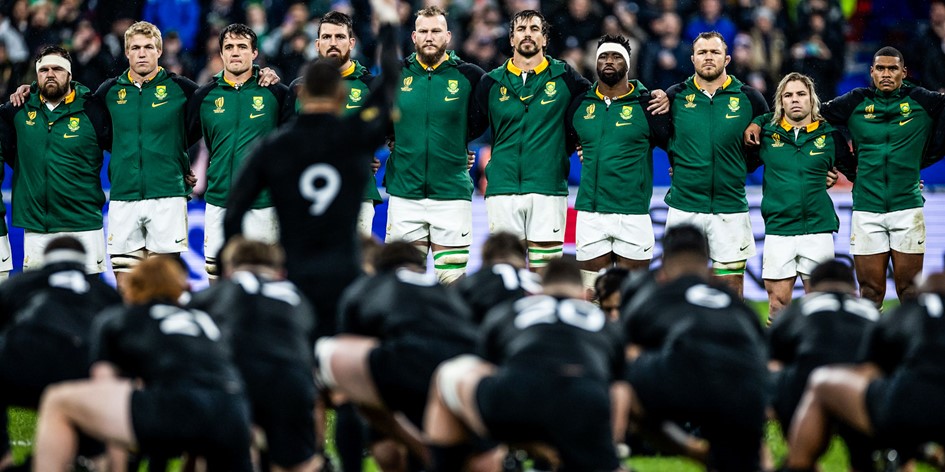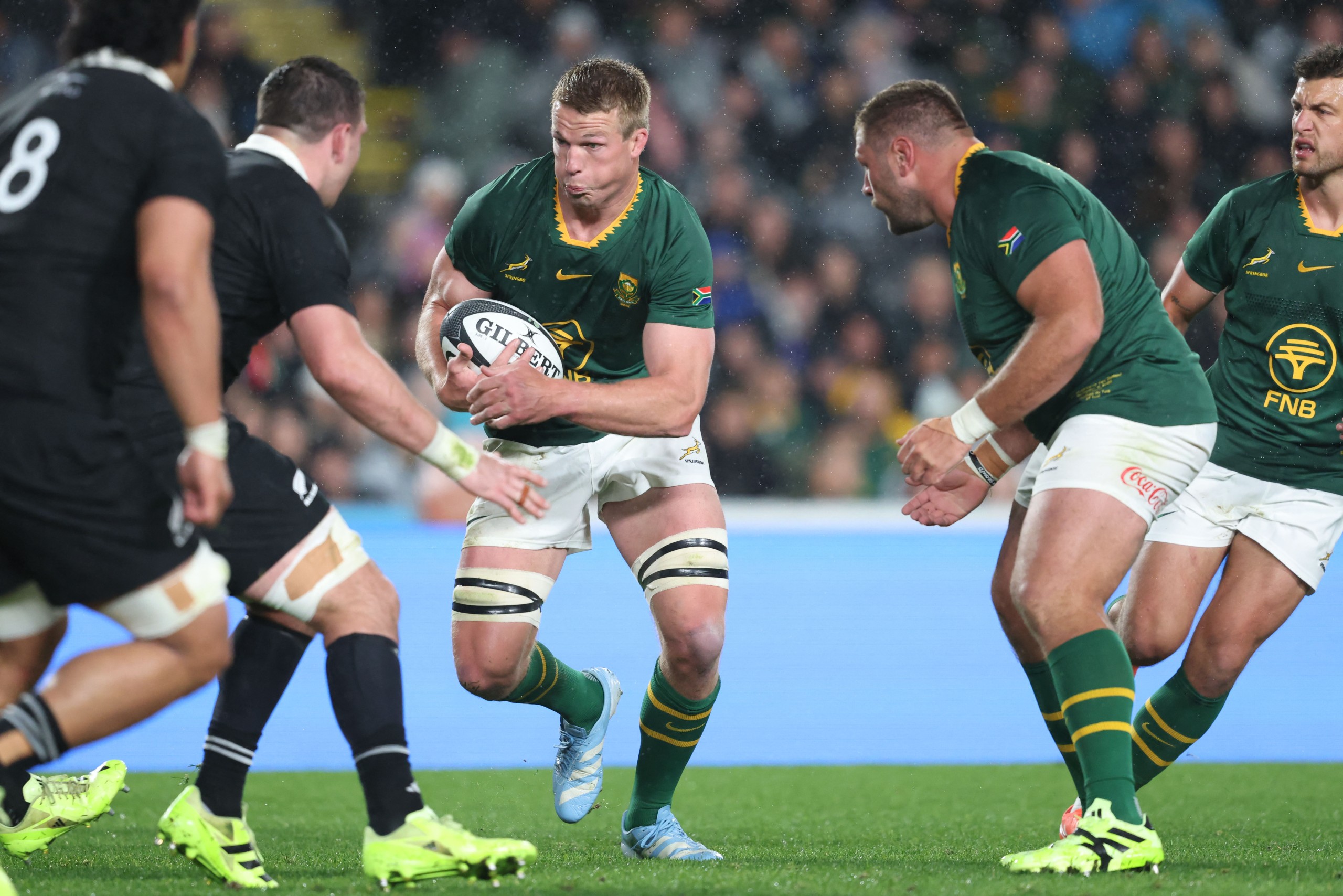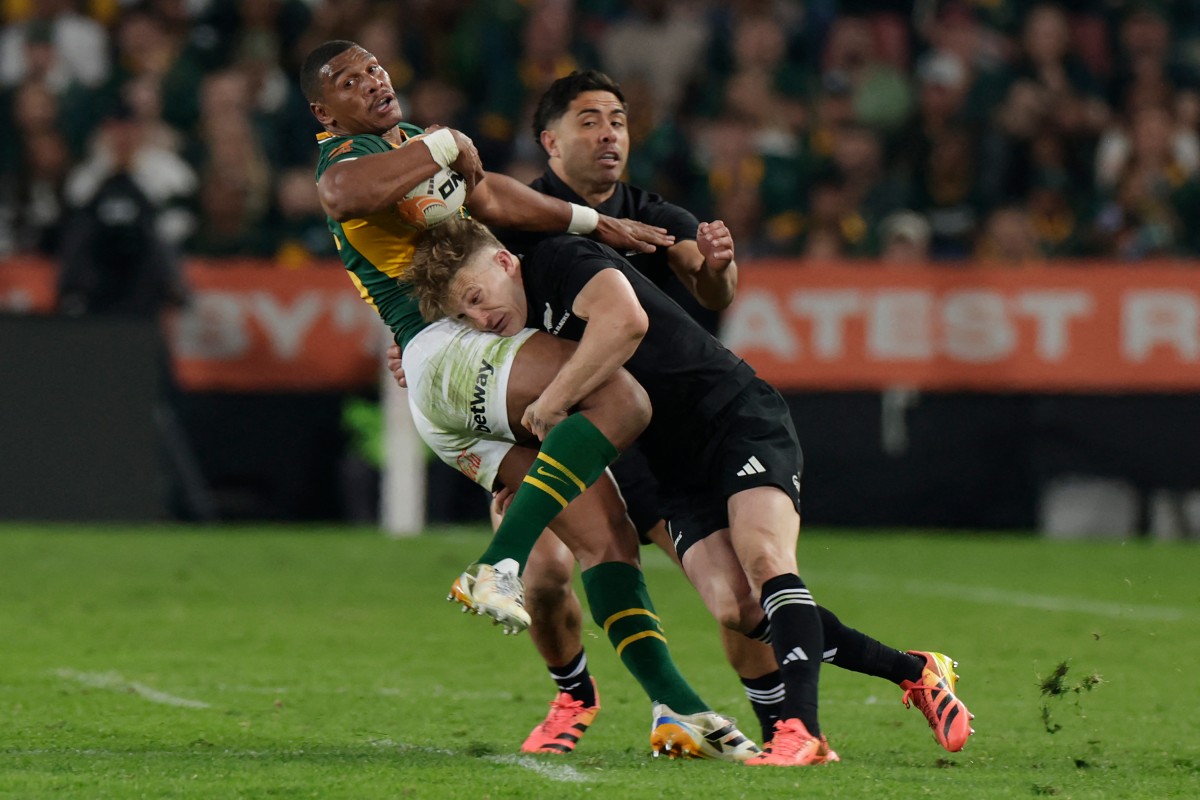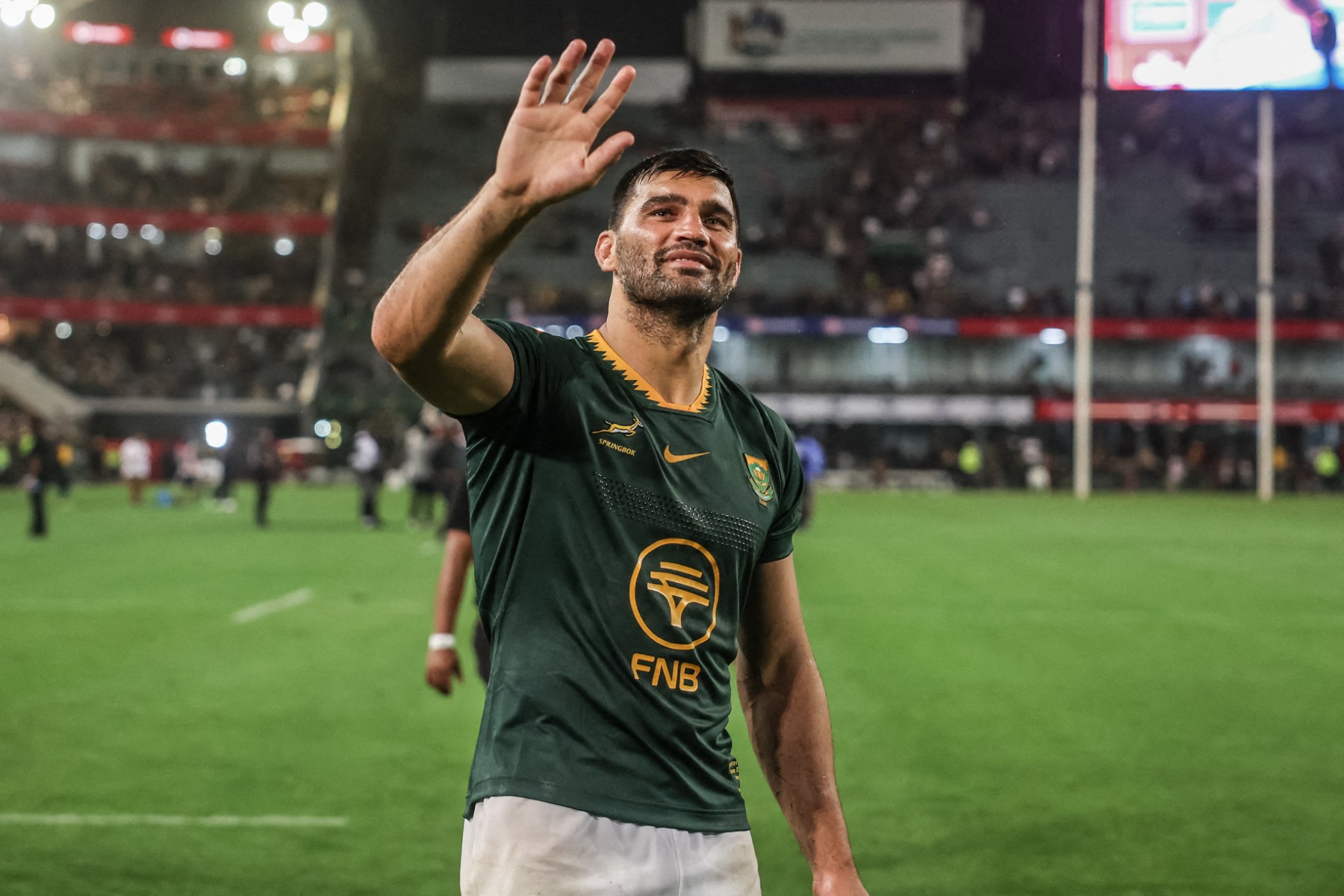
Damian de Allende will etch his name into South African rugby folklore on Saturday when he becomes only the 10th player in history to earn 100 Test caps for the Springboks in the opening clash of the inaugural Rugby’s Greatest Rivalry series at Ellis Park.
But the milestone, as significant as it is, represents just one storyline in a team announcement packed with intrigue, selection surprises and tactical statements from Rassie Erasmus.
Also read: All Blacks confirmed: Big names return to face Boks at Ellis Park
The Springbok coach has named a side that blends continuity from the Argentina Test with a host of players who remained behind in South Africa, whilst making the eyebrow-raising call to leave regular skipper Siya Kolisi out entirely and hand the captaincy to Pieter-Steph du Toit.
Perhaps most significantly, Sacha Feinberg-Mngomezulu gets the start at flyhalf with Manie Libbok relegated to the bench, a selection that speaks volumes about Erasmus’s tactical approach for the Ellis Park cauldron.
The split-squad strategy pays off
The majority of Erasmus’s starting XV, including captain Du Toit, began their preparations for the series in Johannesburg last week whilst the rest of the squad travelled to Argentina for the clash against Los Pumas, which the Boks won 17-10.
Also read: How the All Blacks could crack the Springbok code
That split-squad approach has allowed Erasmus maximum flexibility, with fresh legs for the All Blacks clash and match-hardened players from Buenos Aires providing bench firepower.
Only two players retain their starting berths from the Argentina Test, Eben Etzebeth at lock and Feinberg-Mngomezulu at flyhalf. A further seven players from that clash have been named on the bench: Jan-Hendrik Wessels, Marco van Staden, Cobus Wiese (all utility forwards), Gerhard Steenekamp, Zachary Porthen (both props), André Esterhuizen (flanker and centre), and Cobus Reinach (scrumhalf).
It’s classic Erasmus, rotating resources, managing workloads, and ensuring he can field his strongest possible side for what truly matters: toppling the All Blacks at altitude.
The De Allende milestone
De Allende’s century is a testament to durability, consistency and world-class quality sustained over a decade of international rugby. The powerful centre made his debut in 2014 and has been a cornerstone of Springbok success ever since, including two World Cup triumphs.
He’ll form a record-breaking centre partnership with Jesse Kriel, a pairing that’s become synonymous with South African midfield excellence, defensive steel married to attacking intelligence.
That combination will be crucial against an All Blacks backline built for pace and precision. De Allende and Kriel’s ability to dominate the gain line, make crucial tackles and provide go-forward ball will set the platform for everything the Boks want to achieve.
The Feinberg-Mngomezulu call
Erasmus’s decision to start the 23-year-old at flyhalf ahead of the more experienced Libbok is perhaps the selection’s biggest talking point.
Feinberg-Mngomezulu will join forces with Grant Williams at halfback, forming a relatively inexperienced but supremely talented combination. The youngster’s game management, tactical kicking and composure under pressure clearly impressed Erasmus enough to trust him in rugby’s most demanding arena.
Libbok’s relegation to the bench suggests Erasmus wants territorial control and tactical kicking precision from the opening whistle, attributes Feinberg-Mngomezulu has demonstrated consistently at Super Rugby level.
It’s a bold call, but Erasmus didn’t build back-to-back World Cup-winning sides by playing it safe.
The back three and firepower out wide
Cheslin Kolbe and Kurt-Lee Arendse occupy the wings, with Damian Willemse at fullback, a back three combining world-class finishing, electric pace and playmaking ability.
That trio can turn half-chances into tries from anywhere on the field. Against an All Blacks side that will look to play with tempo and width, having finishers of this calibre becomes absolutely critical.
The pack returns to full strength
Ox Nche makes a welcome return from injury, linking up with Wilco Louw and Malcolm Marx in the front row. That’s serious scrummaging power and ball-carrying threat across all three positions.
Etzebeth reunites with Ruan Nortjé in the engine room, providing the lineout dominance and physicality South Africa’s game plan demands.
The loose trio of Paul de Villiers, Du Toit and Jasper Wiese offers work rate, breakdown expertise and ball-carrying grunt. Du Toit’s elevation to captain in Kolisi’s absence hands leadership to a player who leads by example through relentless effort and rugby intelligence.
The Bomb Squad awaits
The bench carries the kind of firepower that’s become Springbok trademark. Fresh forwards to maintain or increase physical intensity in the final quarter, with Libbok and Reinach providing experience and playmaking options if tactical adjustments are needed.
It’s a 23-man squad built to win the moments that matter, to impose South African physicality from first whistle to last, and to celebrate De Allende’s milestone with the result it deserves.
Saturday at Ellis Park can’t come soon enough.
Springbok team to face the All Blacks
Starting XV:
15 Damian Willemse, 14 Cheslin Kolbe, 13 Jesse Kriel, 12 Damian de Allende, 11 Kurt-Lee Arendse, 10 Sacha Feinberg-Mngomezulu, 9 Grant Williams, 8 Jasper Wiese, 7 Pieter-Steph du Toit (captain), 6 Paul de Villiers, 5 Ruan Nortjé, 4 Eben Etzebeth, 3 Wilco Louw, 2 Malcolm Marx, 1 Ox Nche.
Replacements:
16 Jan-Hendrik Wessels, 17 Gerhard Steenekamp, 18 Zachary Porthen, 19 Cobus Wiese, 20 André Esterhuizen, 21 Marco van Staden, 22 Cobus Reinach, 23 Manie Libbok.