

The City of Cape Town has announced a targeted action plan to capture and relocate a baboon troop currently frequenting the Gordon’s Bay urban area, primarily around Mountainside and up to Gordon’s Bay Primary School.
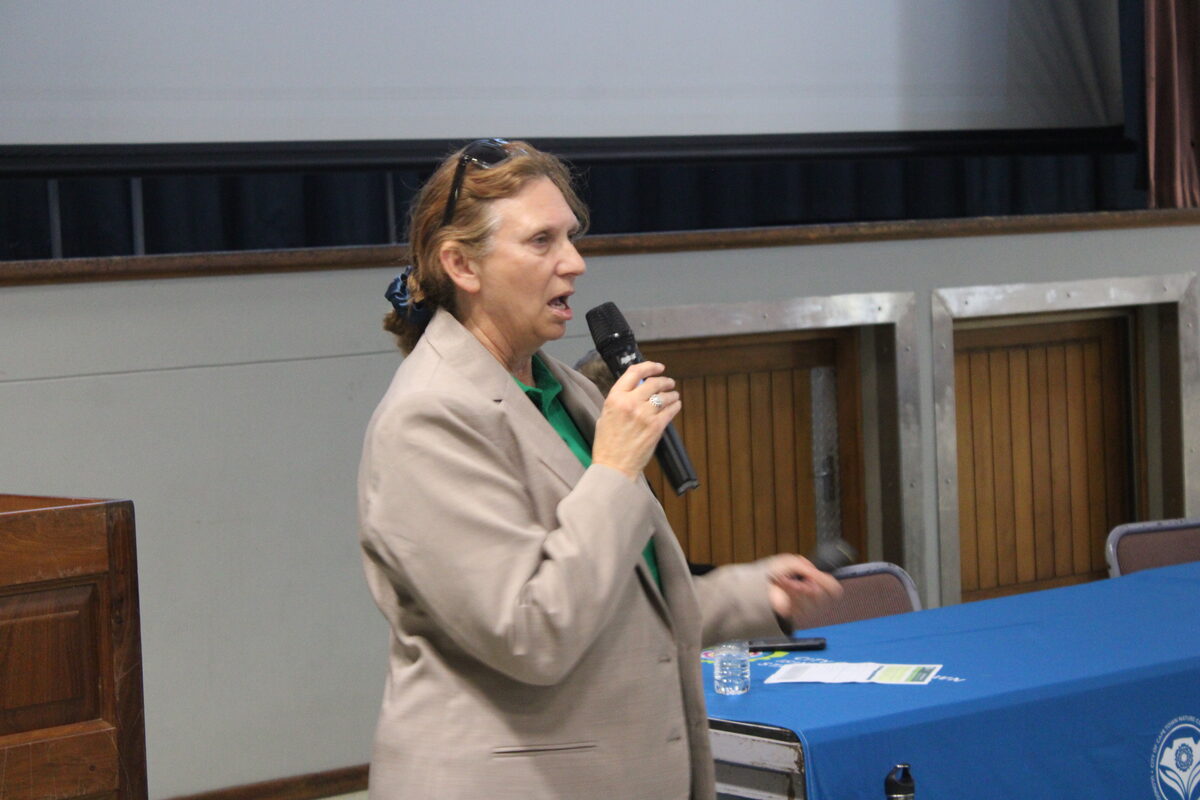
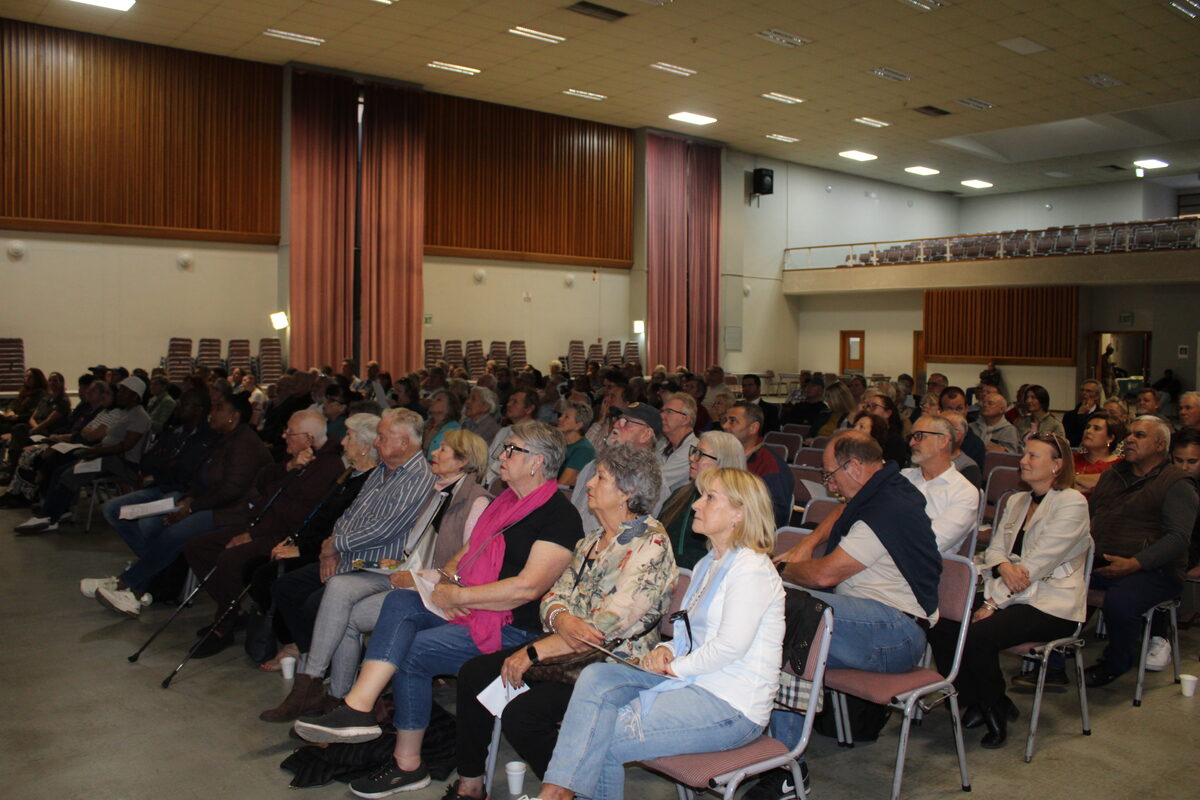
The plan was presented at a well-attended Ward 100 Baboon Activity Meeting at Strand Town Hall on the evening of Wednesday 26 August.
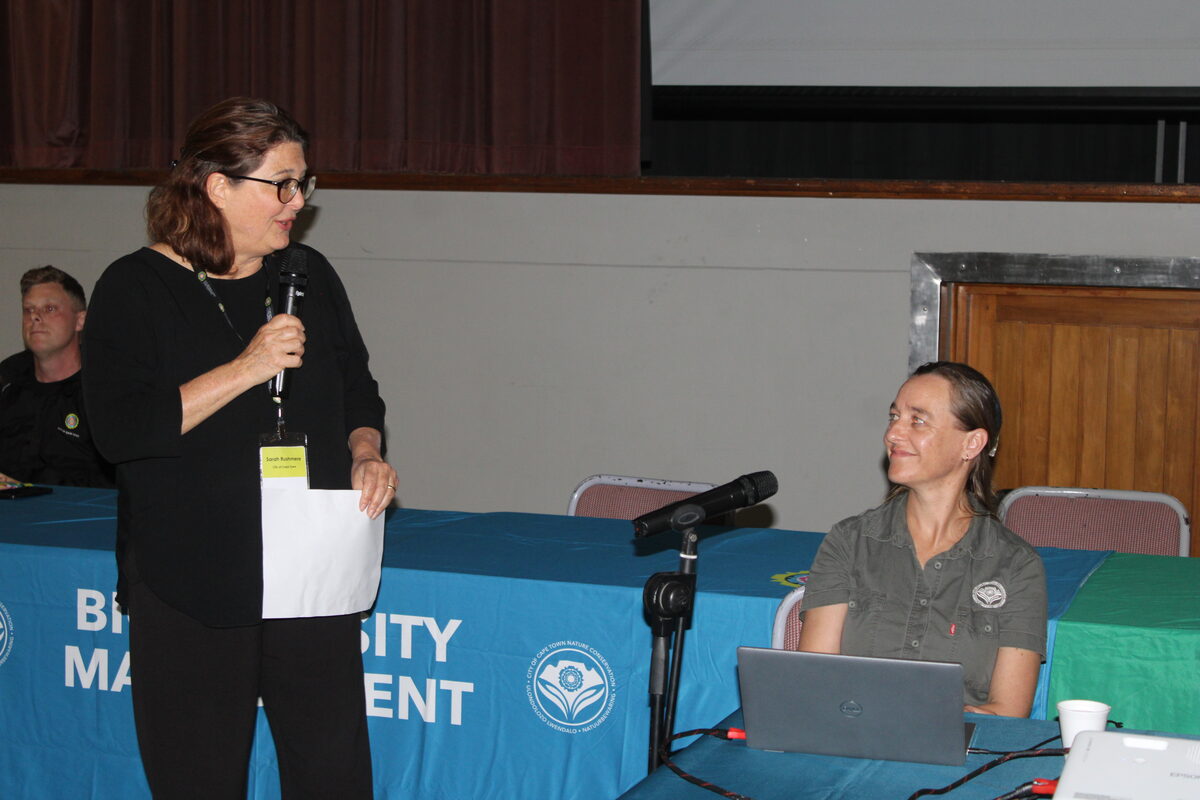
Chaired by Sarah Rushmere from the City’s stakeholder engagement department, the meeting included key municipal representatives, including Biodiversity Management manager Julia Wood, Coastal Management manager Gregg Oelofse and the director of Spatial Planning and Environment, Robert McGaffin.
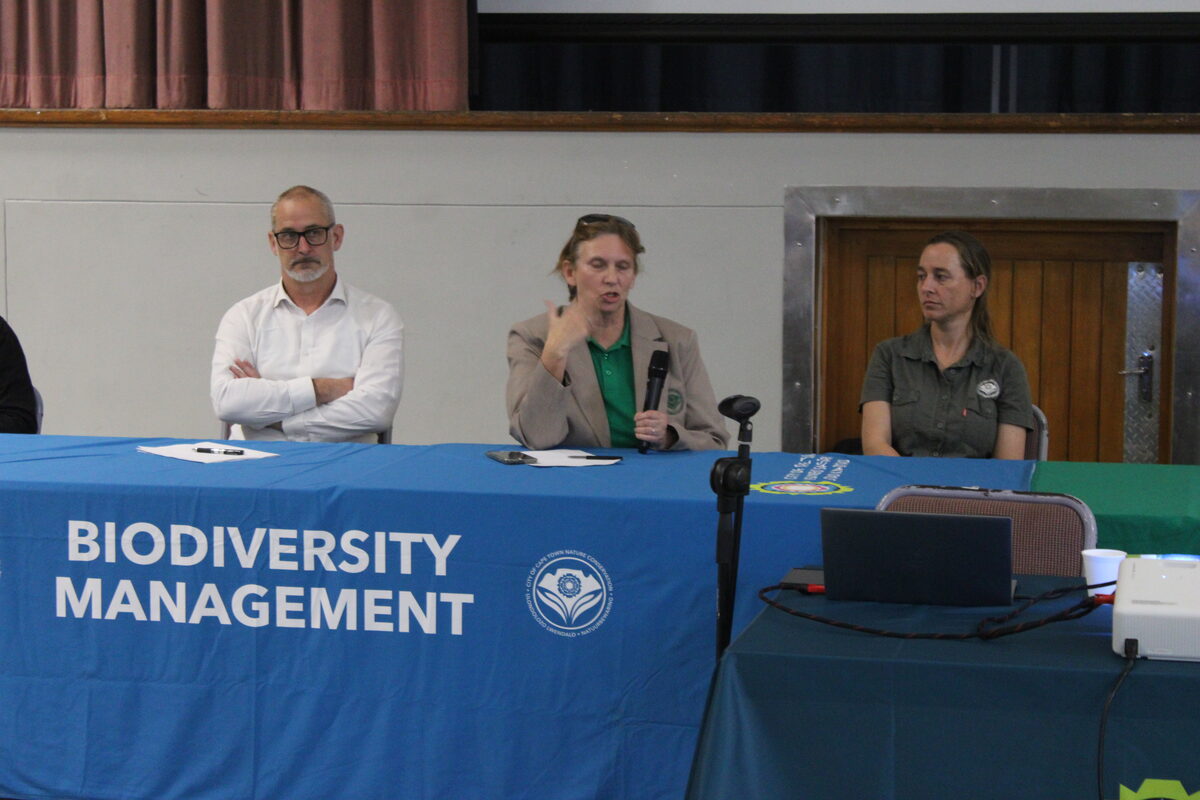
Wood stated that the City’s vision is the complete removal of baboons from the Gordon’s Bay urban zone. She highlighted that urban environments harm the animals through junk food consumption and lead to frequent conflicts with pets, among other risks.
The announcement of the relocation plan was met with enthusiastic applause from attendees.
Elana Kellerman, site co-ordinator at Steenbras Nature Reserve, outlined the broader context, noting four main baboon troops in the western Kogelberg area alongside one occasional visiting troop. Management is complicated by multi-jurisdictional land boundaries along the urban edge, spanning City, provincial and private land.
Urban incursions are predominantly food-driven, as baboons roost on high ground and descend into neighborhoods to feed on household refuse, fruit trees and vegetable gardens.
Incursions are aggravated by intentional feeding and low public awareness of waste management duties under the Integrated Waste Management Bylaw (2016), Animal Keeping Bylaw (2021) and CapeNature Ordinance.
Between January and December last year, the hotline recorded 50 complaints of baboons on private property in Gordon’s Bay, 30 waste complaints and 10 home invasion attempts. Out of 123 total logged concerns, 54 focused on action plans, 18 on human safety and 15 on pet conflicts.
Leveraging strategies from multi-year Cape Peninsula operations, the City outlined the following timeline:
- From September to October this year, a national specialist consultant will be appointed to deliver a finalised capture plan as the City currently awaits permit approval from CapeNature.
- During October and November, the City will execute cage-capture of the Gordon’s Bay troop and relocate them to another part of Steenbras Nature Reserve, after which they will conduct an intensive three-month monitoring period, backed by a 12-month ranger presence.
- From November onward, they will also relocate returning animals continuously (using darting if necessary) and maintain waste education.
ALSO READ: Conservancy launches App and demands action as Clarence Drive bin crisis persists
Officials addressed past management hurdles, including virtual fences that failed when baboons remained on the urban side, ranger limitations on steep terrain and baboon-proof bins from 2013-’14 that broke or faced tender delays.
The proposed strategy carries specific operational risks, including equipment delays, and relocated baboons may attempt to return immediately. If animals become “trap shy,” staff must switch to darting, a slow technique restricted to individual animals.
Regarding long-distance relocation, McGaffin explained that moving animals far outside their region involves complex legal and environmental barriers, making local containment in the reserve area the practical approach.
Oelofse noted that while living near nature requires baseline tolerance, property damage crosses acceptable limits. “People and baboons cannot coexist [in urban areas]; we have to make difficult management decisions,” Ohe pointed out.
In response to questions about immediate relief, Wood emphasised that the City hotline is dedicated to tracking sightings rather than interior home removals. She urged residents to baboon-proof their properties and consider electric fencing as interim measures until the relocation is executed.



You must be logged in to post a comment.