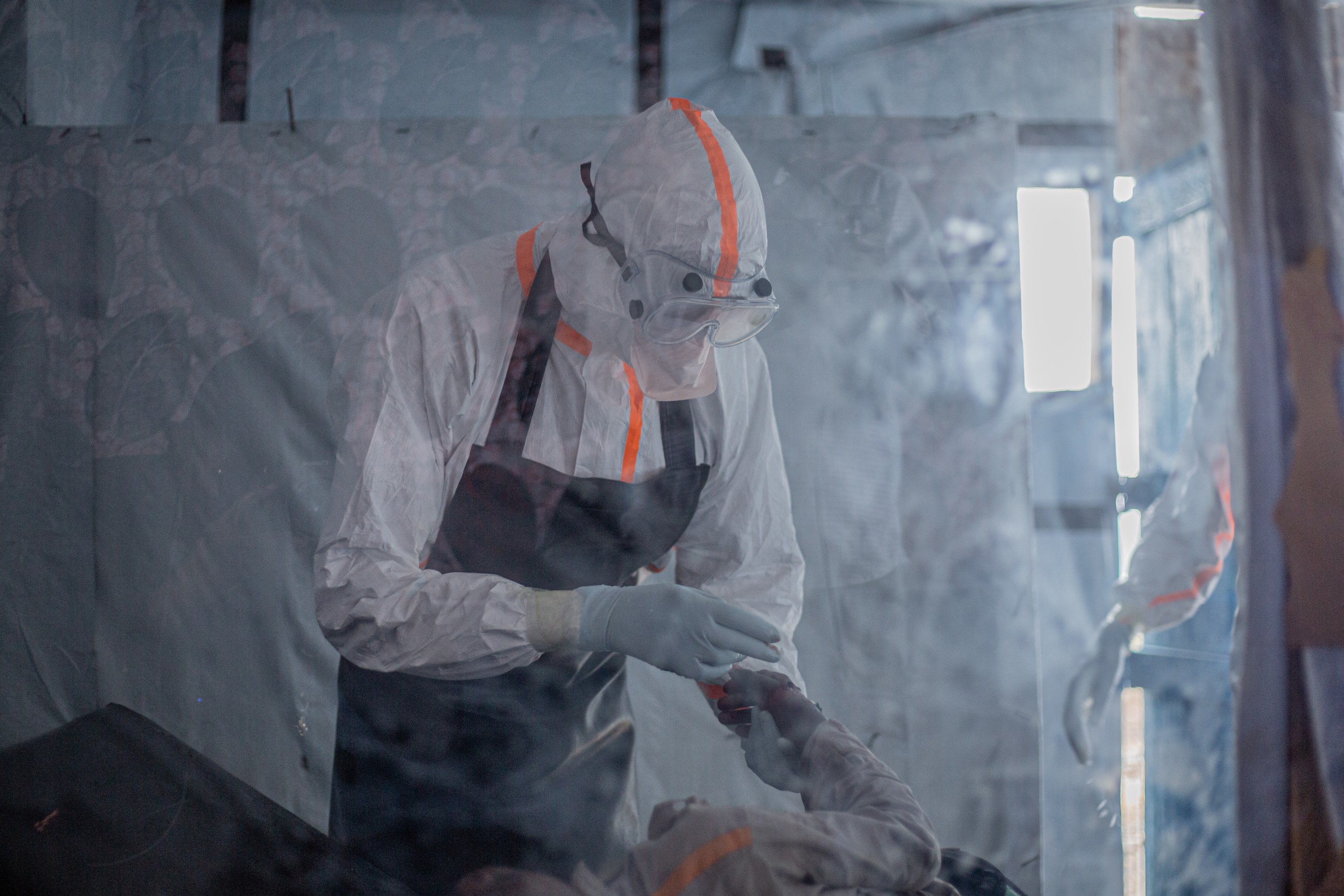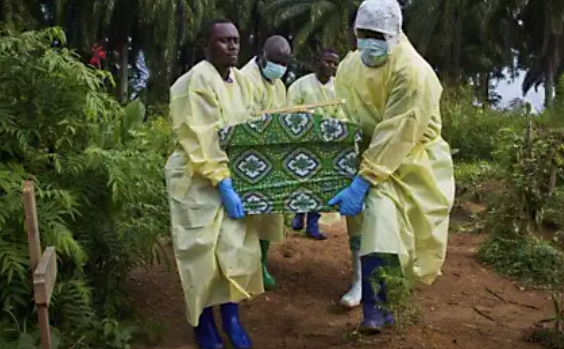
The latest Ebola outbreak sweeping across Africa has infected more than 10 000 people, with the Democratic Republic of Congo bearing the brunt of the epidemic that has killed almost 5 000 people.
Congolese health authorities said on Tuesday that 10 060 people have caught the virus since it first appeared in May. The outbreak has killed 4 887 people in what has become the DRC’s deadliest Ebola epidemic on record.
The virus has spread beyond the DRC’s borders to Kenya, Nigeria and Uganda. The World Health Organization warns that Africa faces a tough job containing an outbreak that spans the east, west and centre of the continent.
High death rate despite recoveries
While 2 684 people have recovered from the virus in the DRC, the death rate sits close to 50%, according to the Congolese National Institute of Public Health.
Health workers face a major hurdle – no approved vaccines or treatments exist for the rare Bundibugyo species of Ebola driving this epidemic.
The virus spread undetected for weeks before health officials found it in Ituri, a northeastern Congolese province. This triggered the DRC’s 17th Ebola outbreak.
Armed groups complicate response
The disease has swept across large parts of the country’s north and east, regions that suffer from violence by armed groups. Many people in these areas distrust a government they see as distant and absent.
Ituri and the eastern North Kivu province report the most cases. The Rwanda-backed M23 militia controls parts of North Kivu.
Neighbouring countries affected
Uganda recorded 20 cases and two deaths before the WHO declared it Ebola-free in late August.
Kenya reported its first case on 6 October. The country has since seen nine infections and two deaths. Most of those who caught the virus had recently travelled to the DRC.
Swiss patient evacuated from Nigeria
Nigeria confirmed its only case in a Swiss woman (42) who caught the virus after visiting Uganda with her husband. Doctors evacuated her to a hospital in Geneva on Monday.
Nigerian health authorities have tracked down 53 people who had contact with the patient to stop the virus spreading in Africa’s most populous country.
Some experts worry the virus – which spreads through contact with bodily fluids – may have spread after the Swiss couple landed in Nigeria on 3 October.
The WHO said the patient, whose husband works at the Swiss embassy in Abuja, developed symptoms on 7 October. She went to a clinic in Abuja on 11 October and tested positive for Bundibugyo on 20 October.
A Ugandan government spokesperson rejected suggestions that the Swiss woman caught the disease in the African Great Lakes nation.
Distrust hampers outbreak response
Parts of the population don’t trust health workers, which has slowed the response to the DRC’s outbreak.
Attackers killed a nurse and seriously wounded a health worker in Tshopo province on Saturday, the WHO reported.
ALSO READ: Ebola outbreak spreads to five countries as South Africa steps up vigilance
Doctor Marcel Likolo, chief medical officer of the Bafwasende health district, told AFP that young people from the area accused the victims of trying to infect locals with tablets before attacking them.
The Ebola treatment centre where the attack happened has closed.
Ebola has killed more than 15 000 people across Africa since it first emerged 50 years ago.
Scientists have started testing the Ervebo vaccine in recent weeks. The vaccine works against the more common Zaire strain of the virus. Researchers want to find out if it can also protect people against the Bundibugyo variant.
ALSO READ: DR Congo Ebola outbreak passes 9 000 cases as vaccine trial set to begin