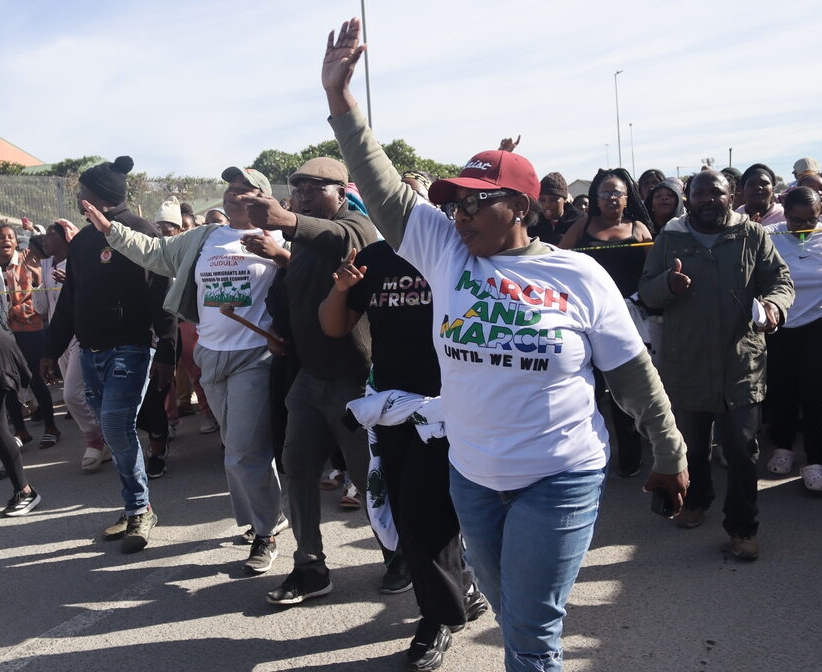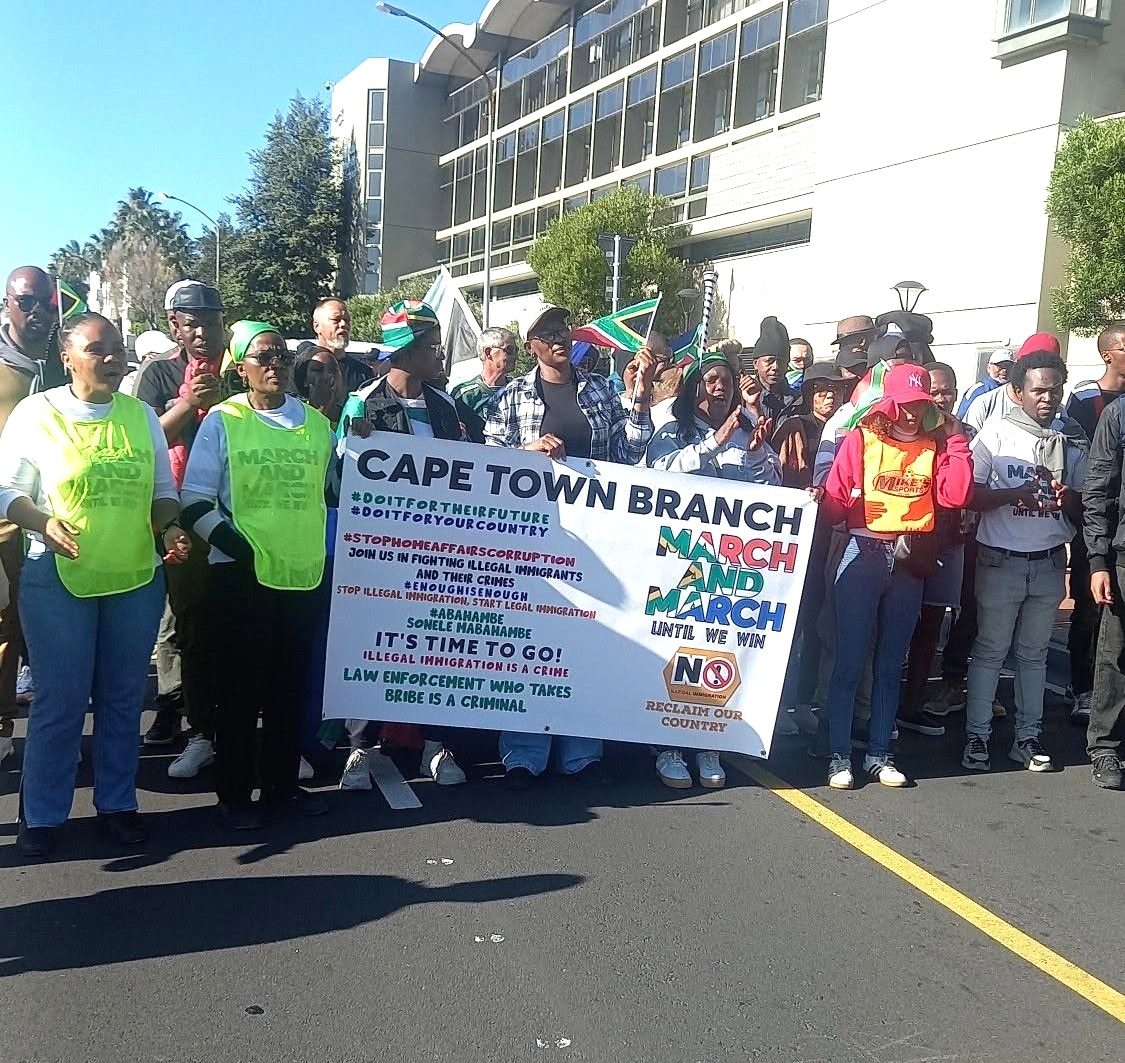
CAPE TOWN – Chanting “#Abahambe” (go home) and carrying banners reading “It’s Time to Go!” and “Illegal Immigration is a Crime”, hundreds of Cape Town residents marched peacefully to Parliament on Saturday, 13 June, in the latest and most visible action yet by the March and March movement. Green-vested marshals ensured order as the crowd moved through the city centre, South African flags flying overhead.
The march followed a similar action on Saturday, 23 May, when around 100 supporters marched along Voortrekker Road from Bellville to Parow Police Station — a demonstration that also drew participation from Operation Dudula and prompted urgent government talks.
A formal list of grievances
The latest march was accompanied by a detailed set of integrated grievances and demands. Protesters called for an immediate, transparent digital audit of all business permits, work permits, and asylum documentation issued in recent years, with any fraudulently obtained permits revoked and all implicated Home Affairs officials criminally prosecuted.
They also demanded urgent reform of the asylum and refugee processing system, citing abuse that had created backlogs that “undermine the credibility of the refugee protection system”, and called for intensified — but constitutionally lawful — immigration enforcement operations against undocumented individuals. “Individuals found to be in the country illegally should be processed in accordance with the law,” the spokesperson told the crowd.
Background and government response
March and March Cape Town first made national headlines in May, when leader Jacinta Ngobese-Zuma led the Bellville march. She told the crowd: “Ubuntu is suspended until further notice! We don’t want a situation where foreign nationals are always painted as the victims and we are the villains. It’s our country, and we’re tired of explaining there is no xenophobia in the country.”
ALSO READ: Anti-immigrant marches prompt urgent government talks
Civil society organisations, including Kopanang Africa Against Xenophobia, Chronicles of Refugees and Immigrants, and Africa Unite, condemned the marches in a joint statement, arguing that March and March “fuels hostility and violence towards migrants as a whole, especially poor African migrants.”
The South African Human Rights Commission (SAHRC) urged peaceful conduct, with Commissioner Aseza Gungubele warning against scapegoating while acknowledging that underlying service-delivery grievances are real.
Next stop: Sea Point on Youth Day
The movement has already announced its next action. March and March Cape Town has called on supporters to gather at the Mandela Glasses in Sea Point on Youth Day (16 June) — which commemorates the 1976 Soweto uprising. “We said until we win, comrades!” the movement declared. “South Africa is not an orphanage home for failed African countries.”
ALSO READ: Ramaphosa condemns violent anti-immigrant protests, vows to uphold rule of law