

Nearly two weeks after devastating floods tore through the Western Cape, approximately 30% of affected households remain without electricity as repair teams grapple with submerged infrastructure and destroyed pylons in remote mountain regions.
The crisis began on 7 May when severe weather warnings escalated into reality across Cape Winelands, West Coast and the City of Cape Town. What followed were two consecutive weather events that would push Eskom’s network to breaking point, triggering 200 major trips and leaving repair crews scrambling to address 9 000 reported faults.
For communities in the Garden Route, the wait has been particularly gruelling. Residents entered their 16th day without power on 22 May, watching freezers full of food spoil whilst living in darkness.
Anton Bredell, Western Cape MEC for Environmental Affairs and Development Planning, acknowledged the mounting frustration but defended the pace of repairs given the scale of destruction.
“As soon as power is restored in one area, Eskom redirects those resources to other communities in need. We understand that some communities have been without electricity for almost two weeks and that people are frustrated. We ask the public to remain patient and to support officials who have been working under extremely difficult conditions to restore power across the province,” Bredell said.
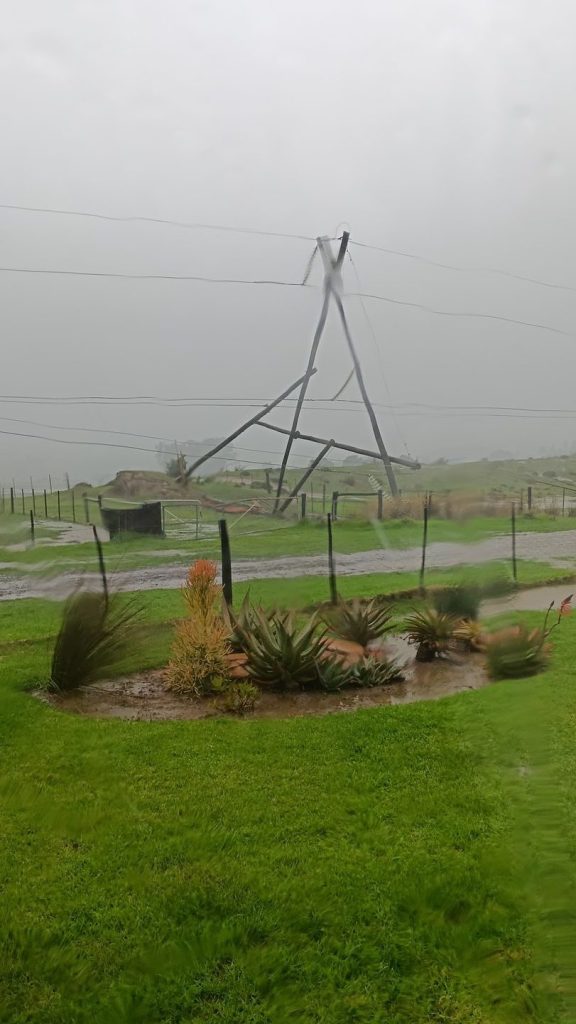
Eskom officials told the provincial Cabinet on 21 May that 70% of faults have now been resolved. However, the remaining 30% pose extraordinary challenges. Some areas remain underwater, making access impossible. High-voltage pylons lie destroyed in mountainous terrain where heavy equipment cannot reach. In other locations, secondary power lines were so comprehensively demolished that engineers must redesign entire routes from scratch.
The South African Weather Service had issued an Orange Level 8 warning on 10 May for disruptive rainfall across mountainous regions including Drakenstein, Stellenbosch, western Theewaterskloof, Breede Valley and Witzenberg. The warnings proved prescient as gale-force winds, intense rainfall and dam spillovers hammered the province.
By 11 May, thousands were plunged into darkness across Cape Metro, Cape Winelands, Garden Route, Overberg and West Coast. Recovery teams reported being unable to reach fault sites due to severe flooding and unsafe working conditions.
The provincial government classified the weather events as a provincial disaster between 10 and 14 May, activating a Joint Operations Centre through the Provincial Disaster Management Centre.
Beyond electricity, the province’s road network took a battering. Infrastructure officials reported 400 roads affected by flood damage, though 61% have since been reopened to traffic.
ALSO READ: Overberg electricity remains in shambles after the recent storms
To speed up recovery, the Department of Environmental Affairs and Development Planning issued 56 Section 30A approvals, fast-tracking emergency construction work that would normally require lengthy environmental authorisation processes.
Humanitarian relief efforts continue across affected areas, with the Department of Social Development working alongside non-governmental organisations to support communities.
Restoration crews are now focused on reconnecting the remaining communities in Boland, Cape Winelands, Garden Route, Overberg, Overstrand and West Coast, redirecting resources as each area comes back online.
ALSO READ: Death toll climbs as Western Cape disaster teams continue recovery efforts



You must be logged in to post a comment.