


In the space of six months City Power dealt with more than a million outages, Johannesburg Water dealt with more than 4 000 pipe bursts every month and Pikitup continues to work with less than half its staff complement.
These astonishing figures were released in the quarterly reports tabled at the Johannesburg city council last week. Here’s a snapshot of how bad the entities are faring.
City Power
For many Johannesburg residents, a power outage is not a quick inconvenience but a prolonged disruption, and data from the latter half of 2025 shows that City Power is taking far too long to respond when electricity cuts.
According to the utility’s latest outage performance dashboard, a total of 1.29 million forced interruptions were recorded over the six-month period. While most outages were eventually resolved within 24 hours, the data reveals that restoring power within shorter timeframes, particularly within the first few hours, remains a significant challenge.
In the first quarter (July to September), City Power recorded 693 913 outages. Yet only 25% were restored within 1.5 hours, meaning three out of four customers were left without electricity beyond what is typically considered a rapid response window. Even within 3.5 hours, just 58.1% of outages had been resolved, leaving a significant portion of residents in prolonged darkness.
ALSO READ: Johannesburg’s terrible financial position
The situation worsened in the second quarter (October to December), despite a drop in the total number of outages to 597 844, according to the City Power dashboard. Only 19.2% of outages were restored within 1.5 hours, a sharp decline that points to deteriorating response capacity. Less than half, 45.6%, were resolved within 3.5 hours, suggesting that even moderate turnaround times are becoming harder to meet.
Monthly figures reinforce this pattern. In October, just 17.7% of outages were fixed within 1.5 hours, while December saw the worst performance at 13.6%. Even in months with fewer outages, such as December, rapid response did not improve, indicating that the issue is not only about volume, but also about operational efficiency.
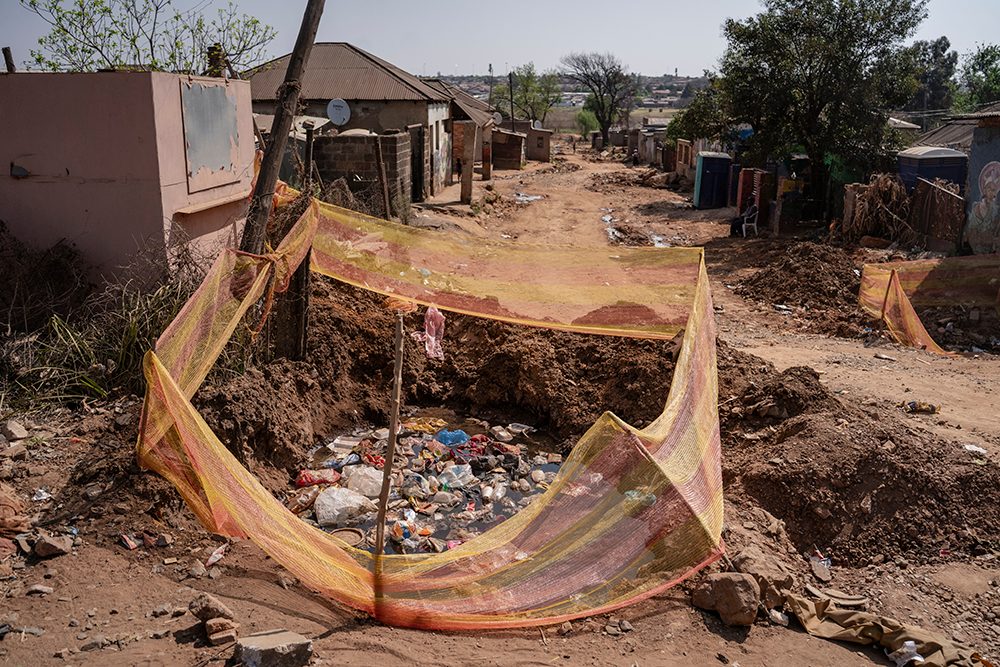
Although City Power manages to recover ground over time, restoring over 90% of outages within 24 hours, this does little to ease the immediate disruption caused in the first few hours.
According to the quarterly report, outages and slow response times are driven by pressure on the network and operational challenges. Illegal connections and backroom dwellings are overloading infrastructure, while theft and vandalism have depleted critical repair materials.
The report also highlights an increase in equipment out of service, further delaying restorations. In addition, the aging and outdated design of the low-voltage network often requires temporary connections, which slows down repair times and prolongs outages.
Johannesburg Water
Johannesburg Water’s infrastructure headache just keeps getting worse. In its latest report the entity says it is dealing with 4336 pipe bursts per month, up from 2960 a month for the 2024/25 financial year.
The response time for fixing these bursts stands at 43.7% as opposed to the target of 90%. Effectively this translates into 144 burst pipes across Johannesburg every day, or one burst per municipal ward per day.
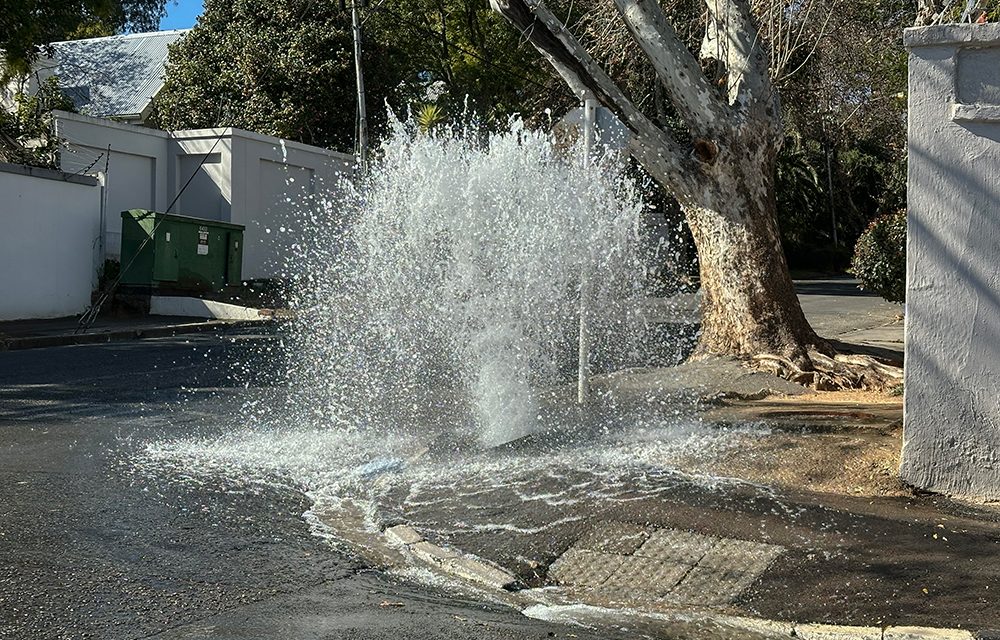
A real time illustration of this inability to fix water bursts played out last week Thursday when members of the OCN team found a massive water leak in Parktown in Anerley Street. The water coming from it was so clear that passersby stopped to take a drink from it. The matter was reported to JW by members of the Water Crisis Committee on Thursday and escalated. By Tuesday, this week nothing had been done.
ALSO READ: Johannesburg residents ‘desperate’ as taps run dry
The same situation played out at a massive “river” of a leak in De Korte Street in Braamfontein. It was reported, escalated, re-reported and escalated. On Tuesday the leak was still pumping out water.
When it comes to sewage blockages the numbers are equally bad. More than 6100 blockages are reported every month, up from 4921 per month for the previous financial year. That’s 204 blockages per day in the city.
In its quarterly report for October to December 2025, JW noted that 10 187 water pipe bursts were repaired; 15 507 meters and connection failures attended to, and 18 338 sewer blockages were cleared.
JW said it had instituted “operational performance standards of attending to a minimum of at least three major bursts and three other water related jobs per team per day”.
This has resulted in its teams attending to 4.2 jobs per day, which is a slight decrease from last year’s performance.
The report noted that the main challenges were the intermittent delivery of goods and service, and the unavailability of hired services like welding machines and construction vehicles due to inconsistent payment of service providers caused by cash allocation constraints at CoJ.
ALSO READ: Access to water is a full-blown crisis in Johannesburg
The average number of sewer related jobs per team per day was 3.28 which was a decrease when compared to 4.33 sewer jobs per team per day achieved in the 2024/25 financial year.
To make matters worse, JW only spent 18% of its capital expenditure funds for the period October 2025 to December 2025. The Capex budget for the 2025/26 financial year is R1.7 billion, and the entity managed to spend only R314 million of its target of R596 million. Most of its Capex projects (infrastructure projects) are behind schedule because of the City’s cashflow problems and contractors suspending work because they have not been paid.
Pikitup
As disposal sites throughout the City get closer to full capacity, Pikitup, Johannesburg’s waste management organisation, is dealing with increasing operational difficulties that raise questions about its capacity to provide reliable services.
According to an October 2026 airspace study, the City’s landfill sites are getting closer to the end of their useful lives. Robinson Deep, the largest landfill site in the city, has about eight months of airspace left, while the Ennerdale dump has about two months. The Marie Louise dump is already at capacity, while the Goudkoppies landfill has around a year left.
These limitations align with the entity’s internal operating challenges, which were detailed in its second-quarter report for the 2025/26 financial year.
Lack of fundamental resources, such as low inventory levels of containers for bin replacements and fresh allocations, is one of the main issues. Pikitup’s capacity to sustain and grow service delivery has been impacted by this.
With a 56% vacancy rate throughout the company, staff shortages continue to be a major concern. The entity’s ability to run and maintain vital waste management infrastructure is hampered by roughly 70% of unfilled skilled technical positions. Only 4 400 of the 6 753 unskilled posts are filled, which results in continuous delays in service delivery and a greater need for temporary and overtime labour.
Financial limitations have also affected fleet availability.
Waste collection operations have been further disrupted by cash flow issues, which have led to the blockage of fuel cards, delays in the renewal of vehicle licence discs and the removal of ad hoc services. Due to capacity issues, the Johannesburg Metropolitan Police Department (JMPD) is unable to provide escorts, which has hampered transit arrangements and caused operational problems in Selby’s night shift services.
Infrastructure and compliance initiatives have also encountered difficulties. A landfill compliance audit revealed several unresolved problems, and important infrastructure improvements are still unfinished. At the Goudkoppies landfill site, the construction of a temporary leachate pond and associated infrastructure is currently 48% complete; however, work has been halted because of payment delays. Due to possible radioactive activity on the property, a boundary wall project at the Robinson Deep landfill has been put on hold at 31% completion.
The provision of customer service has also been impacted. Just 9% of service requirements were met in the second quarter. Only 240 of the 2595 registered requests were answered, leaving almost 2000 unanswered.
- This story was produced by Our City News, a non-profit newsroom that serves the people of Johannesburg.


You must be logged in to post a comment.