


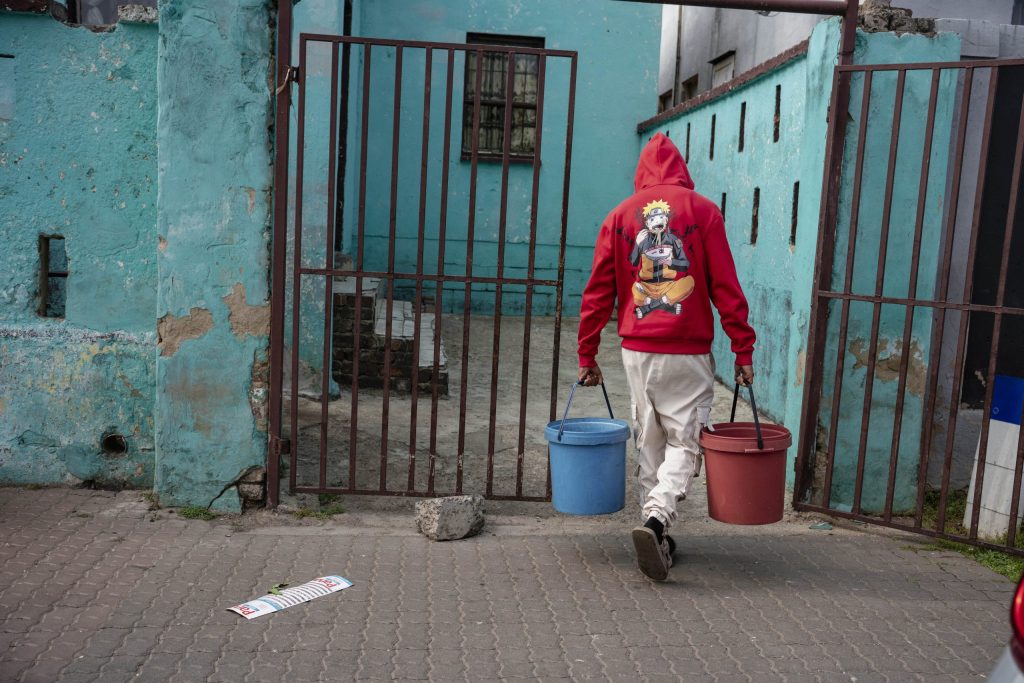
The fragility of Joburg’s water infrastructure was perfectly illustrated over the course of one weekend in September when multiple water pipe bursts left large parts of the city without water.
Burst pipes in Bryanston, Parktown North, Boskruin, the CBD and Eldorado resulted in little to no water for at least 50 suburbs.
Aside from the bursts, residents reported no water in the following areas: Berea, Bertrams, Bez Valley, Kensington (some streets have had no water since 28 August), Cyrildene, and Bruma.
Johannesburg has 98 water reservoirs. 21 are in urgent need of repair. Almost half the water Joburg buys from Rand Water is lost through leaks and illegal connections because much of the 12 364 kilometres of distribution pipes providing water across the city needs replacing. In the last financial year, the city managed to only replace 17km of pipe.
For the financial year starting 1 July 2025, Joburg reported 13 331 leaks, of which 8303 had been repaired, leaving a backlog of 5028, according to the Gauteng Water Security dashboard.
As of August, 2419.5 km of water pipelines was surveyed, and 616 burst pipes, 2055 leaking meters, 105 leaking valves and 59 leaking hydrants have been repaired, JW reported.
In August this year JW replaced 446 stolen water meters. While theft and vandalism add to the financial burden faced by Joburg Water, it also takes workers away from the major repairs that have to be done.
Over the last 15 years investment in infrastructure replacement has declined rapidly. Joburg Water needs more than R27 billion to repair and upgrade its infrastructure, the current financial year’s budget is R1.7 billion.
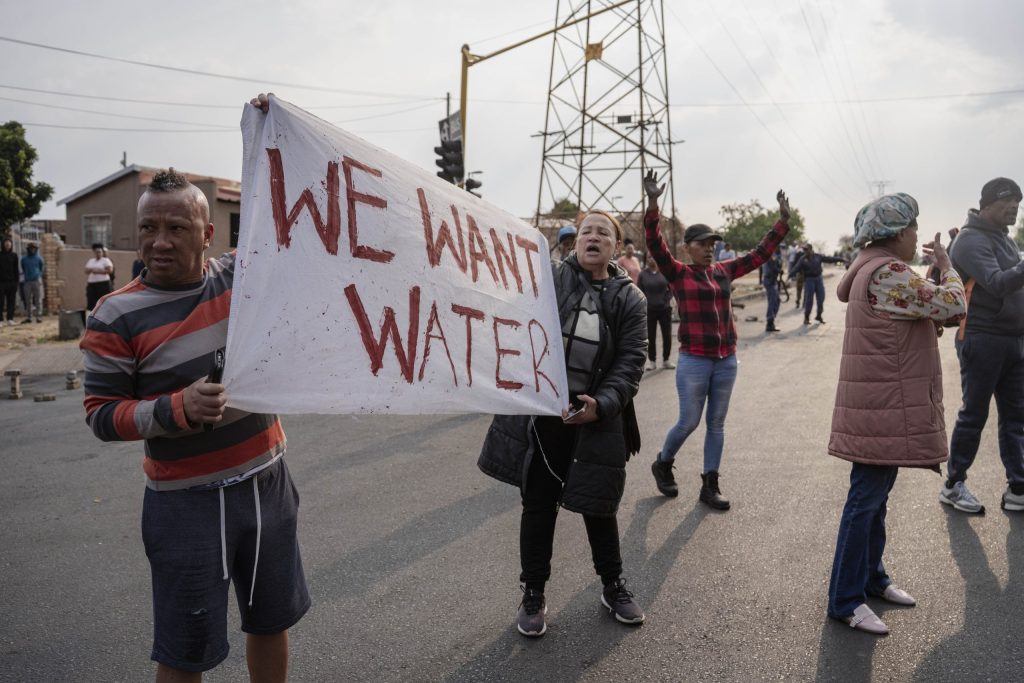
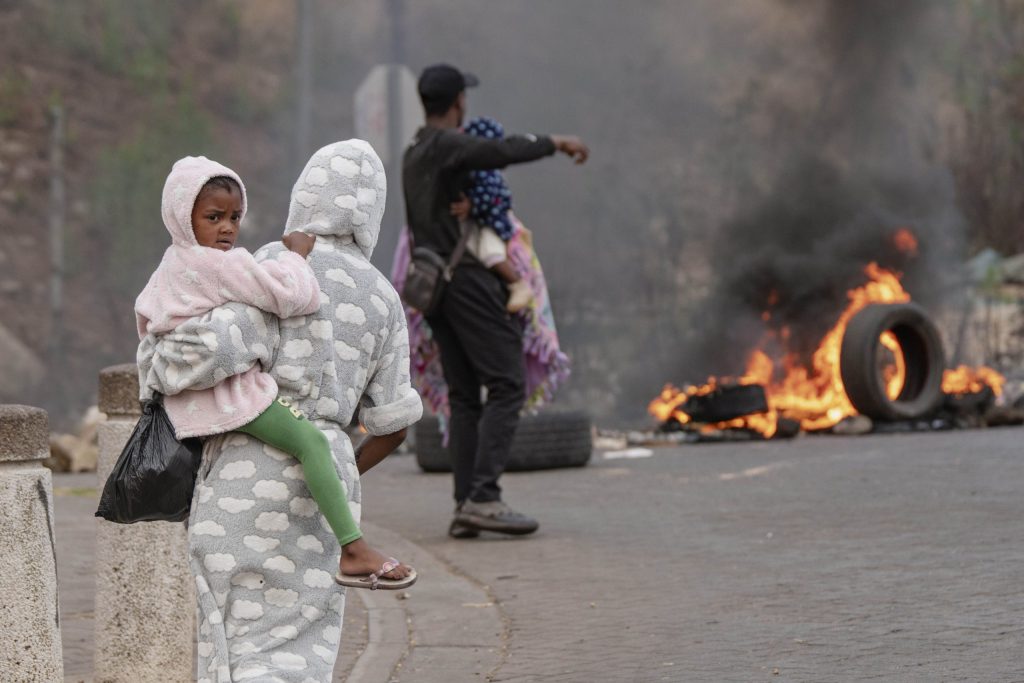
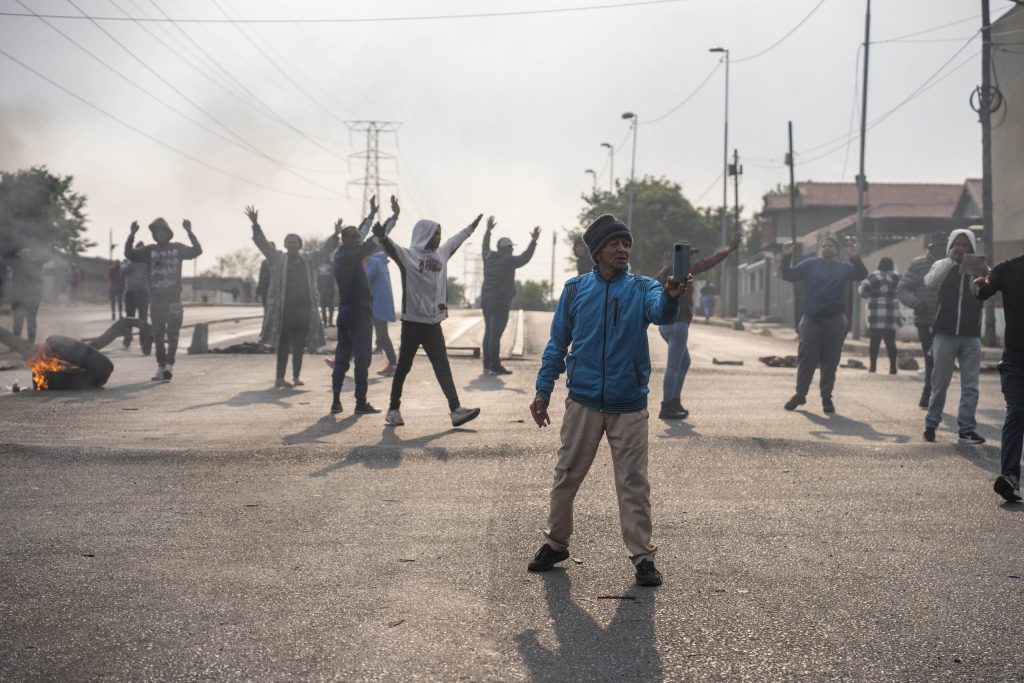
While the violent protests in Coronationville and Westbury last week shone the spotlight on the fragility of the Commando system, the rest of the city’s water systems are not in much better shape.
In the east, Kensington, Bez Valley, Berea and Bruma have dealt with significant water outages over the past month. Interventions by the city to mitigate the water crisis so far has only meant more water tankers to the affected areas. The Commando system’s upgrade – which includes a new water tower and reservoir in Brixton – is expected to start coming online from October this year but only be completed by the end of next year.
Already the Brixton project has been bedevilled by non-payment of contractors and is four months behind schedule. The Commando upgrades will cost in excess of R600 million, taking a chunk out of the already constrained infrastructure budget.
The leaking reservoirs waiting to be fixed
The leaking reservoirs are a perfect illustration of the city’s crisis. Six of the projects were started in the 2021/22 financial year, yet none have been completed.
- The Jabulani reservoir needs sealing, a new bypass and inlet. It has not been completed.
- The Aeroton reservoir needs new pipework, repair to the concrete and resealed floor joints. According to Joburg Water the inception phase is complete, a detailed design report was completed in June last year and now the consultant is waiting for a contractor to be appointed so work can start.
- Power Park reservoir – leaking valves and pipes need replacing. The design report has so far been approved.
- Hurst Hill 2 (part of the Commando system) needs structural leaks of the concrete walls sealed.
Projects started in the 22/23 financial year include:
- Zondi reservoir – needs a leaking bypass replaced before the reservoir is cleaned. No progress.
- Ennerdale 2 reservoir – needs new inlet pipework and the resealing of floor joints. No progress.
Projects for the 23/24 financial year:
- Blairgowrie reservoir needs resealing of the joints and roof. No progress.
- Linden 1 reservoir needs rehabilitation of the water tower and resealing of the floor joints. No progress.
- Fairlands reservoir – a leaking bypass has to be replaced. No progress.
- Glenvista reservoir – needs joints resealed. No progress.
- President Park 2 reservoir – the reservoir leaks and has to be resealed. No progress.
A plan to change, yet little has come of it
In August 2024 the CoJ approved a turnaround strategy for Joburg Water. This ambitious plan set out five key areas for the entity to concentrate on, including better financial management, better customer service, ramping up investment into infrastructure and ensuring the entity has to the proper technical skills to do its job.
The strategy called for an increased annual capital investment from R1 billion in 2023/24 to R2 billion in 2024/25 and R3 billion in 2025/26, with further increases after that. This has not happened, the 25/26 budget is R1.7 billion.
The only tangible implementation of the turnaround strategy is the announcement that Joburg Water has taken over its billing function from the CoJ. This means that JW will be responsible for the water and sanitation billing on the monthly rates and services bill. Joburg Water’s MD Ntshavheni Mukwevho said this was done to improve service delivery, enhance operational efficiency, and improve accuracy in billing.
ALSO READ: Joburg mayor to face parliament over water crisis, missing billions
What is the solution to the Joburg water crisis?
Water expert Professor Mike Muller has been sounding the alarm over the state of Joburg’s water for the past 15 years. Given the growing problems, he is now emphasising the need to look at water usage and apply tougher restrictions to ensure equitable supply for all the city’s residents.
“It’s increasingly obvious that there’s a desire to pretend that the current water problems can be talked away. The reality is that they are going to get worse unless the system is more actively managed.
“Active management doesn’t mean more throttling of valves and redistributing water from one suburb to another. It’s about actively managing the use of water by telling people how much they can use and imposing consequences (higher tariffs for a start) if they don’t.
“We restrict use when there’s a natural climatic drought so why not when there’s a people-made drought (which is what we currently dealing have)?” he says.
Muller says the water issues in Joburg will only get worse as the weather gets warmer and more water is used.
Fact box: Joburg’s daily water usage
- Joburg Water has a standard license to receive 1356 ML per day with a maximum of 1600 ML/day from Rand Water.
- Under a temporary licence this has been increased to 1528 ML/day with a maximum of 1803 ML/day.
- The current consumption in Johannesburg is 1716 ML/day, exceeding the temporary license by 188 ML/day. (Figures supplied by Joburg Water. According to the Gauteng Water Security dashboard, the city is 346ML/day over the water efficiency use target of 1356ML/day)
Muller argues that it is not good enough for some in the city to carry on as normal because they get regular water supplies.
“There is not enough water to go around but only some people suffer the consequences. I am afraid that if we don’t recognise that we are all going to have to limit our water use (particularly those with an uninterrupted supply) we are not going to get water to everyone.
ALSO READ: Water as constitutional right flouted while Matjhabeng residents face ongoing restrictions
“Yes, the infrastructure is failing and needs replacement, but we can’t replace all the pipes overnight. Meanwhile, the system will get worse unless carefully managed. The network cannot cope with constant switching on and off, and fixing a new leak often provokes more leaks.
“Radical action – in the form or restricting water to everybody – is needed. Cape Town showed us how to do it by establishing water limits and implementing penalty tariffs for those who exceeded the limits. Consumption dropped by 50%,” he says.
“I am not hearing that language from Joburg yet, and what happened in Coronationville will be repeated if we don’t look at proper water restrictions.”
The Joburg Crisis Alliance (JCA), after executive mayor Dada Morero’s pledge during the water protests of restoring water to the affected communities by the end of seven days, says it intends to hold him accountable and is demanding his resignation if the promise is not fulfilled.
“Not having water is not just an inconvenience – it is a public health crisis. Families cannot cook, clean, or care for their children safely without reliable access to water. The JCA asks, if the city can’t provide water for its residents, is it fit to host the leaders of the world at the G20 Summit later this year?”
JCA is demanding the following:
- The mayor must resign if water is not restored within seven days as promised.
- The City must ensure sufficient budget and cash to pay contractors for agreed-upon projects.
- Officials must be allowed to plan and deliver in line with technical imperatives. Councillors, MMCs and board members should not interfere in the operations of Joburg Water.
- Legitimate, managed, and sufficient water tankers must be dispatched to all affected areas now. Throttling one area to assist another should be done with adequate notice to all concerned and phased out as soon as possible.
- Funds earmarked for sprucing up the City ahead of the G20 summit must be redirected to crucial needs.
- Proper communication with residents, including calls answered, and informing residents when water will be returned. Outages and leaks must be responded to speedily and not over weekends or at night when workers can claim overtime.
- A single, comprehensive, and accurate action plan to resolve the city’s water failures. The President’s Johannesburg Working Group (PJWG) must receive this plan, where civil society will hold the City accountable.


You must be logged in to post a comment.