


“How do we stop young people from joining gangs? How do we stop young people from killing each other? How do we stop young people from joining dynamics that might not be accepted in the community?”
These questions, asked by Alexandra Abello Colak, were at the heart of a pilot research project by the London School of Economics (LSE), conducted recently in Mitchells Plain and Medellín, Colombia.
What set this project apart from similar programmes was that it placed youth firmly at the centre.
“We wanted to create space and opportunities to invite young people into the conversation, and to team up in trying to understand what is happening, taking into account young people’s perspectives,” said Colak, the project’s lead researcher.
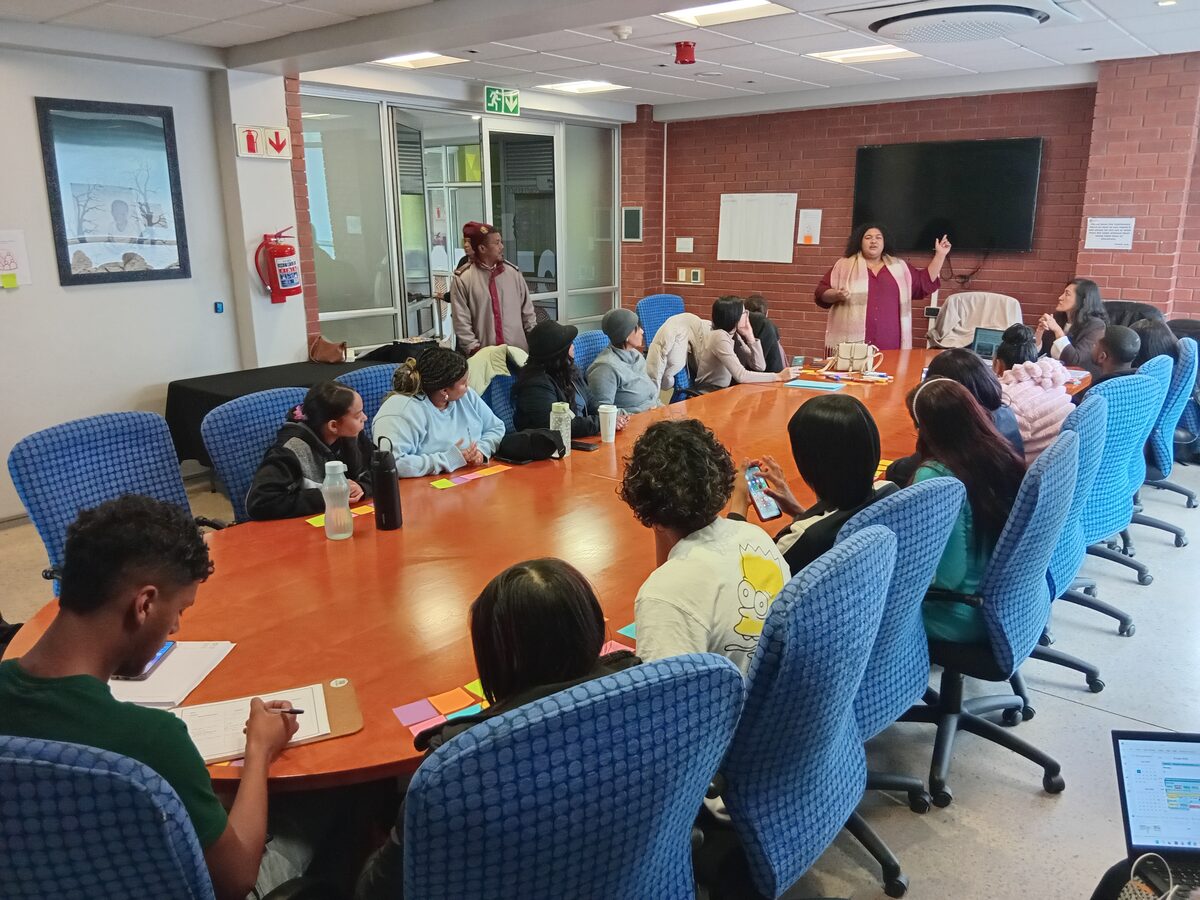
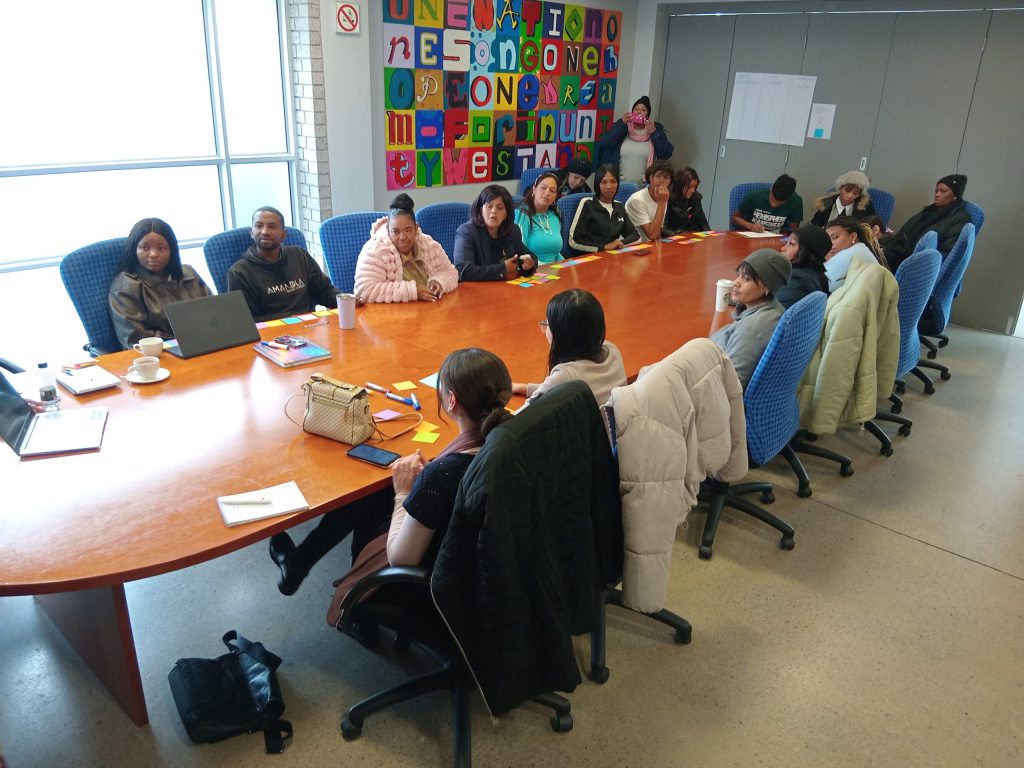
On Monday 8 June, the research team shared their findings with youth stakeholders at the Lentegeur Administrative building in a proactive dialogue bringing together five civil society organisations: the Safe Line, Amala Development, the YMCA, the Mitchells Plain Safety Development Forum, and the LNC programme. The research team presenting the findings included young people from Mitchells Plain and leaders of Voices of the Plain, a community initiative that had been central to the research process. Also present were community workers, social workers, and university students from Mitchells Plain. Together, the group workshopped possible solutions to the safety challenges identified by the research across five strategic areas: economic security, mental health and wellbeing, belonging and participation, community protection and care for young people, and relations with civil society and governmental institutions.
The year-long study, which was backed by Swedish institution the ICLD, ran alongside a similar process in Medellín, Colombia’s second-biggest city. Both communities have social challenges.
What the research found
The pilot survey reached 140 young people in Mitchells Plain. When asked what their biggest challenges were, they ranked unemployment first, followed by gangsterism, drugs, and poverty.
But the research also found that safety means far more to young people than simply not being shot or robbed. Colak said young people across both cities described security in ways that surprised many of the adults in the room.
“Everybody experiences insecurity and security differently, depending on their age, depending on their gender, depending on where they live,” she said. “Normally when we hear politicians or even experts in security talking about security, they speak about security as if we are all in the same situation.”
The research identified several layers of insecurity affecting young people: economic pressure on families, food insecurity, distrust of law enforcement, poor mental health support, and being shut out of the decisions that affect their lives. It also found that joining a gang is never a snap decision.
“It’s a process, driven by a very complex set of factors,” said Colak. “If we want to make young people less vulnerable to being involved in those dynamics, we need to first recognise all those factors and start treating them together.”
Rivonne Valentine, a YMCA youth representative and community facilitator on the project, said the research showed that organisations in Mitchells Plain too often work alone rather than together.
“Mitchells Plain is such a big place, if everyone just came together, it could be a much greater community.”
He added that decisions about young people’s safety are still being made largely without them. At a recent community safety meeting at the Mitchells Plain police, he said only three young people were present in a room packed with adults.
“They are making decisions that are going to impact the upbringing of young people and what Mitchells Plain looks like going forward, and it is a problem.”
Rethink
One of the most important shifts the research calls for is a change in how violence itself is understood.
“We need to rethink how we look at violence,” said Colak. “It’s not just a physical thing or a one-moment engagement. It’s something that is structural, something that is social, and it’s community-based. It’s not just about individual behaviour.”
Improving safety, the research found, requires far more than policing.
“It’s not just about crime, it’s not just about the police, you need a lot of things in order to guarantee the type of security that talks about emotional and health safety, or being able to feel that you have opportunities for the future,” said Colak.
From discussion to action
The workshop produced a wide range of concrete proposals across the five strategic areas. These included raising awareness of young people’s needs in the community, and providing training opportunities for educators, parents, and carers to strengthen their capacity to relate to young people. Participants called for the establishment of guided peer-to-peer support groups for young people’s wellbeing, and for young people to be guaranteed participation in spaces where decisions are made about programmes and initiatives that affect the community. Mentorship programmes to make positive role models more visible among young people, dedicated mental health support for young people and within the family space, and promoting an ethic of care among police officers to ensure respectful and positive interactions with young people and the community were also put forward.
Creating training and skills development opportunities that meet young people’s interests while contributing to the broader community was identified as a further priority.
ALSO READ: Mitchells Plain youth redefine safety narrative for international research


You must be logged in to post a comment.